
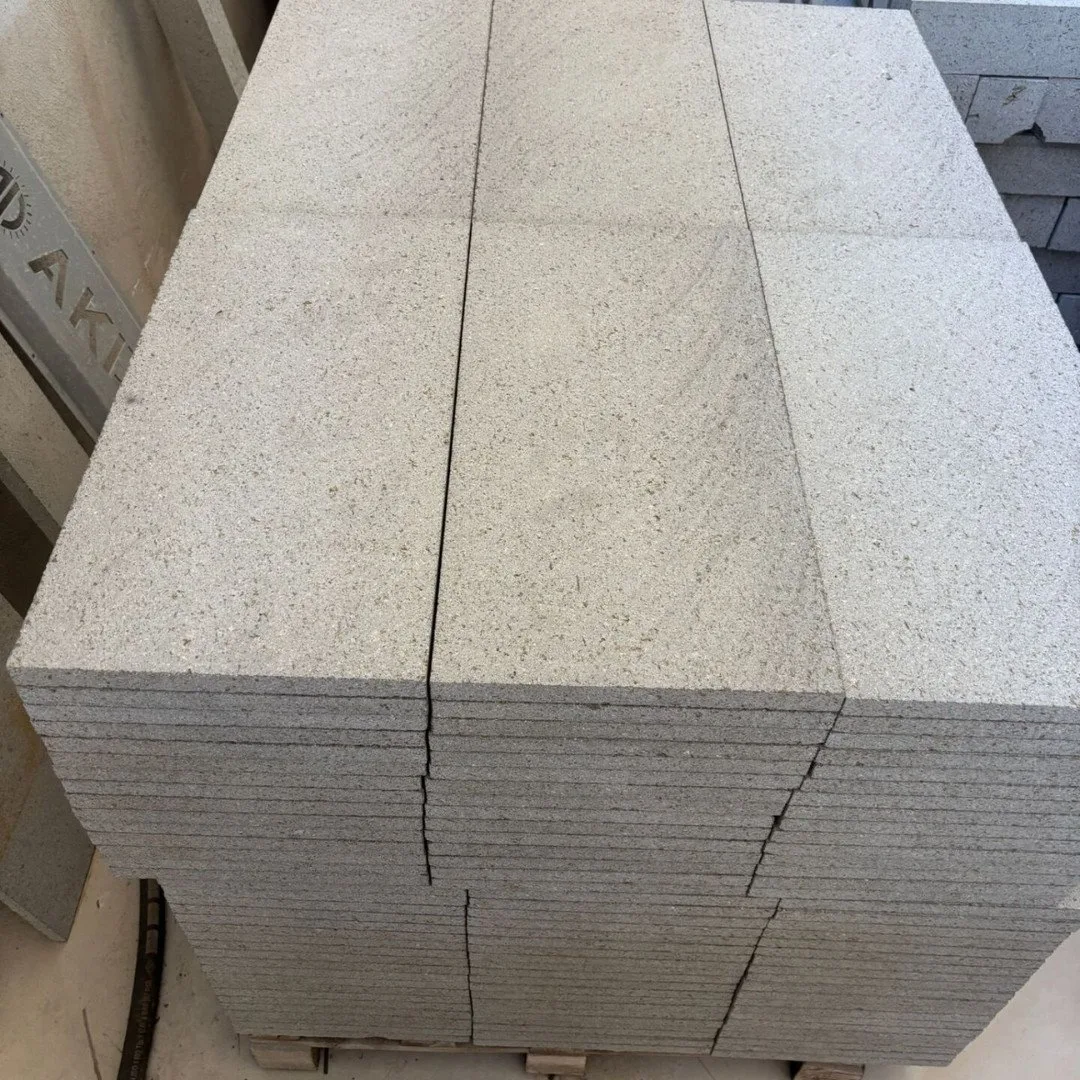
Natural stone heats up in the sun, and its color matters most for how hot it gets: dark tones absorb more light. For barefoot areas, choose light-toned, textured stone, keep dark stone for shade, and before deciding, test samples side by side in the midday sun.
Yes, natural stone in full sun can heat up on summer afternoons until it burns bare feet. How hot the stone gets depends mostly on its color: dark tones absorb more sunlight, light tones heat up less.
What heats natural stone in the sun?
Stone heats up from the sunlight falling on its surface. The more of that light the surface absorbs, the hotter it gets. Three things decide how hot it gets:
- Black, anthracite and dark gray surfaces absorb more light. White, cream and light beige surfaces reflect some of it back.
- Stone that gets sun all day approaches its hottest in the afternoon.
- Stone in the shade of a tree, pergola or building stays cooler than the same stone in the sun.
Summarize this article with AI Open a summary of this article in your preferred assistant
Color matters more than stone type
For heating in the sun, the color of the stone matters more than its type. The same type of stone can come in different tones, and its light and dark tones heat differently in the same sun.
So do not rely on generalizations like "this type of stone stays cool." Choose by the stone's own tone and where it will be used.
Some stones hold heat and release it slowly. Soapstone is known for this property, which is why it is chosen for kitchen countertops.
Stone for areas walked on barefoot
For barefoot areas such as pool decks, terraces and garden paths, choose a light-toned, matte, textured stone. In areas that stay wet, also check how slippery the surface is. Our slip-resistance comparison of stone and ceramic can guide you.
| Area | What to watch for |
|---|---|
| Pool deck | Light tone and a textured surface that grips when wet |
| Terrace | Light tone, with shade over the part that gets direct midday sun |
| Garden path | Shaded route and light-toned stepping stones |
| Decorative and planting area | Dark tones can be used since it is not walked on |
For wet areas, consider a textured finish rather than polished.
Our stones grouped by color tone
Our own stones sort into light, dark and mixed tones:
| Product | Color |
|---|---|
| Dolomite Pebble Stone | White and light tones |
| Basalt Natural Stone | Anthracite |
| Granite Pebble Stone | Gray, black and red tones |
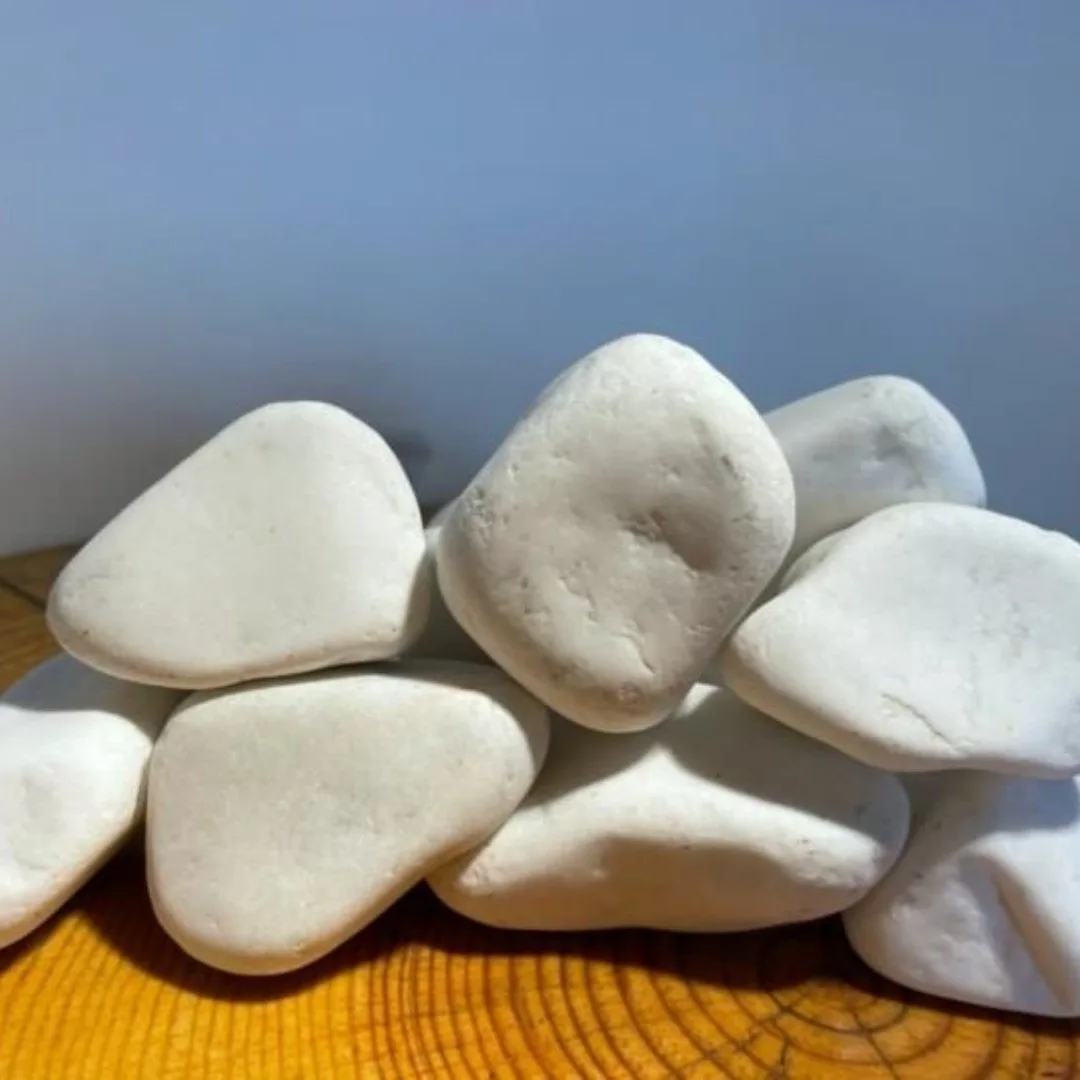
If you like the look of dark stone, keep it for shaded parts or decorative areas that are not walked on. Light-toned stone can pick up dirt and turn dull over time. To keep its color, follow the methods in our natural stone cleaning and care article. We explain how to wash light-colored pebbles in our pebble stone care guide.
How can you test how hot a stone gets before buying?
A practical way is to leave a piece of each candidate stone side by side in the midday sun on the same day and compare:
- Get a piece of each stone you are deciding between.
- Place the pieces in the same spot in direct sun at midday.
- A few hours later, touch each one in turn with the back of your hand.
- If you have a surface thermometer, measure each piece and note the readings.
- Wet the pieces and rub them by hand to see how slippery the surface is.
Keeping a stone floor cooler in summer
Without changing the stone, you can reduce the hot area with shade, routing and plants:
- Route walking paths through the shade of trees or a pergola.
- Use a spaced stepping-stone layout with grass between the stones.
- On soil, plan stone and planting areas together. Our ideas for laying stone on soil make this easier.
- At the pool, pave only the walking strip with stone and plant the rest.
Choosing garden stone
Where you will walk barefoot, choose light-toned, textured stone. Keep dark stone for shade and decorative areas. Test the stones you are unsure about side by side in the sun. You can find the other criteria for choosing stone in our guide to choosing garden paving stone.
Frequently asked questions
Is wet natural stone slippery?
Can I use dark stone around a pool?
At what time of day is natural stone hottest?




0 comments
Leave a comment
Your comment will be published after review.