
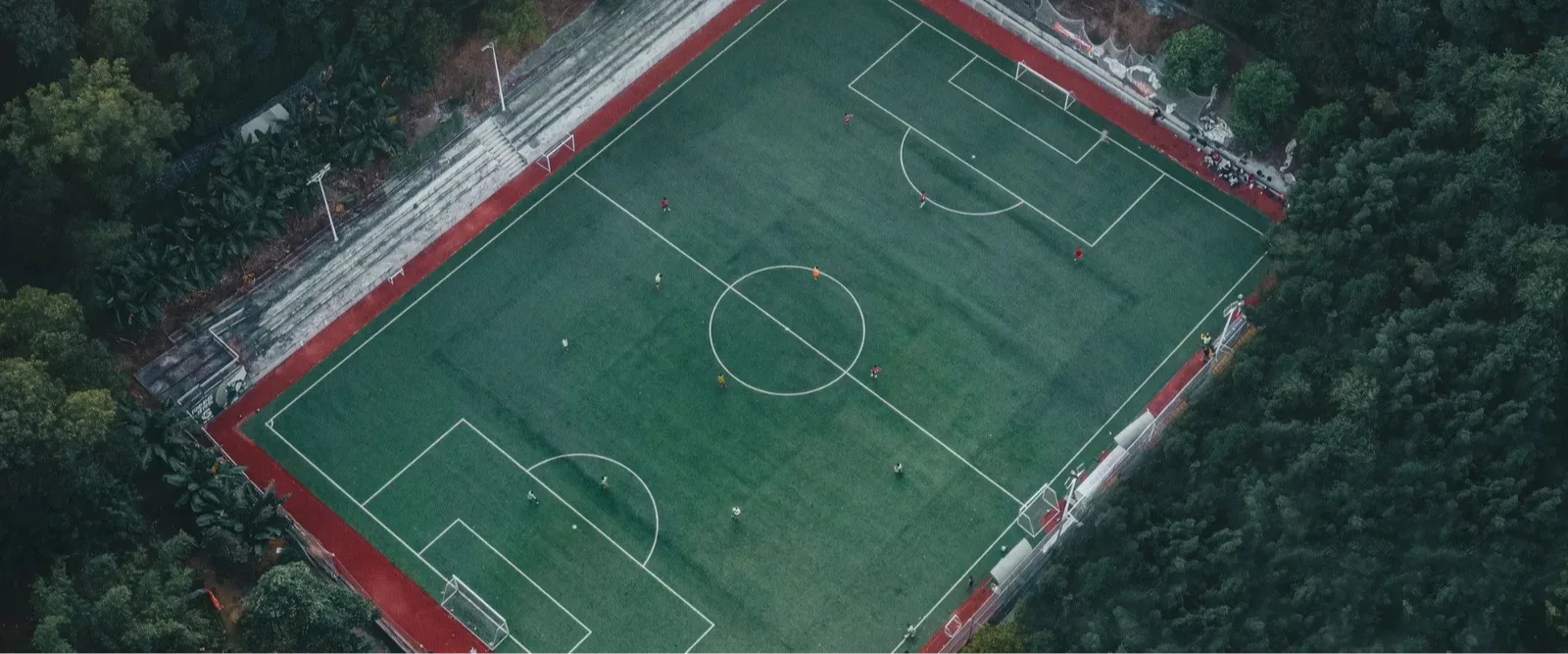
Football pitch construction in brief
To build a football pitch, we prepare the base, lay the artificial turf and install the goals, perimeter fence, ball netting and lighting. For an indoor pitch we cover the pitch with a Football Pitch Tent. We choose the turf model with you based on how heavily the pitch will be used, the infill preference and the budget.
- Scope
- Base, artificial turf, fence, lightingwith goals and ball netting
- Pitch type
- Outdoor or indoorpitch tent for indoor
- Turf system
- Infilled, non-infill, hybriddepending on model
- Perimeter fence
- Panel fencewith gate
Outdoor or indoor?
Both pitches start with the same base. The difference lies above the pitch and in the operating calendar.
Outdoor pitch
Fewer installation items: base, turf, goals, fence, netting and lighting. In winter and rain the playing schedule depends on the weather.
Indoor pitch
A pitch tent keeps play going in rain and snow. Interior ball netting, ventilation and lighting are planned together with the tent.
Deciding the size
There is no single official size for these pitches. The plot, the number of players (5-a-side, 6-a-side, 7-a-side) and the safety clearance around the pitch determine the size.
Permits
Before installation, ask the zoning office of your municipality whether the pitch, and especially an indoor pitch, needs a permit. Rules can vary from province to province.
How is a football pitch built? Step by step
Site survey and measurement
The width, length, slope and existing ground of the site are measured. Where rainwater will drain is decided at this stage.
Sub-base
The ground is compacted, the sub-base is laid and a slope is formed for drainage. This layer often determines how long the artificial turf lasts.
Laying the turf
The rolls are joined and the lines are inlaid. An infilled system gets sand and granules; a non-infill model gets sand only.
Goals, fence and netting
The goals are fixed, the panel fence and its gate are installed, and the ball netting is stretched. For an indoor pitch, the tent is set up before this stage.
Lighting and handover
Lighting poles and fixtures are connected, and the pitch is ready for play.
How to choose the artificial turf model
Three questions narrow the choice: will granules be used, how many hours a week will the pitch be booked, and will it work together with natural grass? The technical values of each model are on its own page.
| Need | Model to look at | Why |
|---|---|---|
| Classic infilled football pitch | Odin, Omega | Monofilament football turf; laid with sand and granule infill. |
| I don't want granules scattering | Non-Infill Grass | No granule infill is used; it is laid with only a small amount of sand. |
| Pitch combined with natural grass | Hybrid grass | Natural grass seed is sown into the carrier mat. |
| I want to compare models | Football Turf | A guide comparing football turf models on one page. |
What to prepare for a quote
- Width and length of the area (meters) and a sketch or location
- Whether it will be outdoor or indoor
- Existing ground: soil, compacted aggregate, asphalt or concrete
- Preference for infilled or non-infill turf
- Additional needs such as lighting and changing rooms
Products we use on football pitches
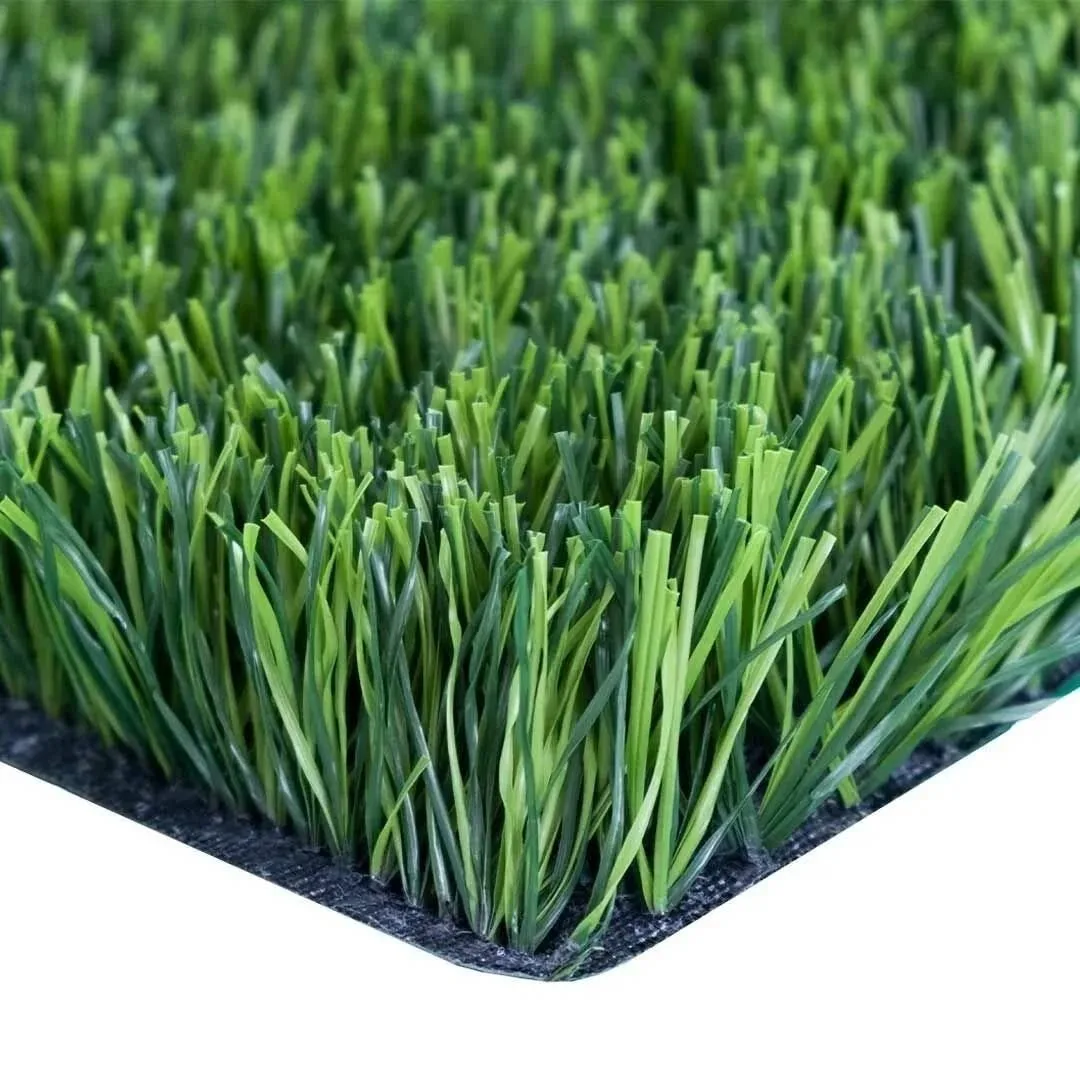 Football TurfGuide comparing football turf models
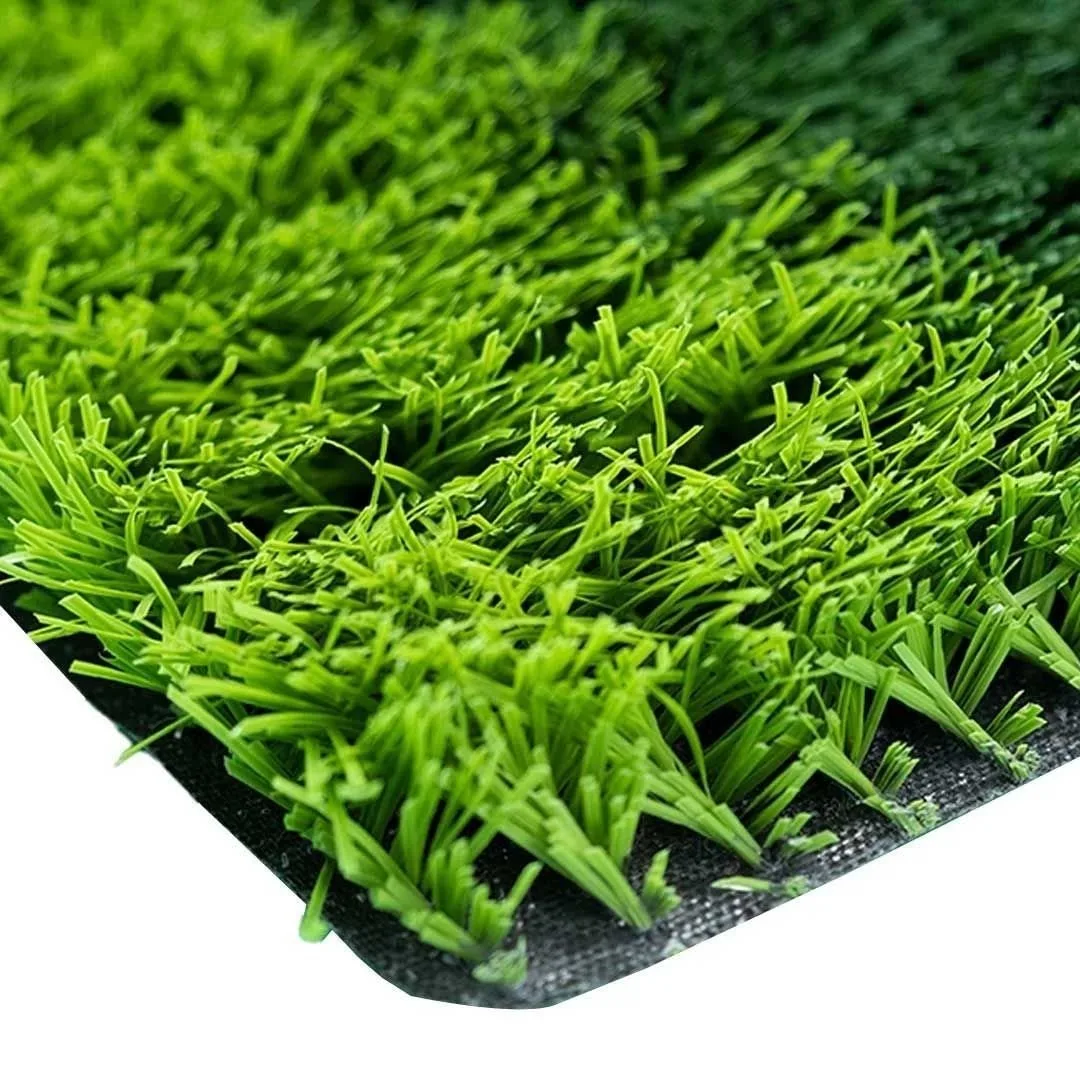 Odin Artificial GrassTwo-tone football turf with spine yarn
 Non-Infill GrassPitch turf without granule infill
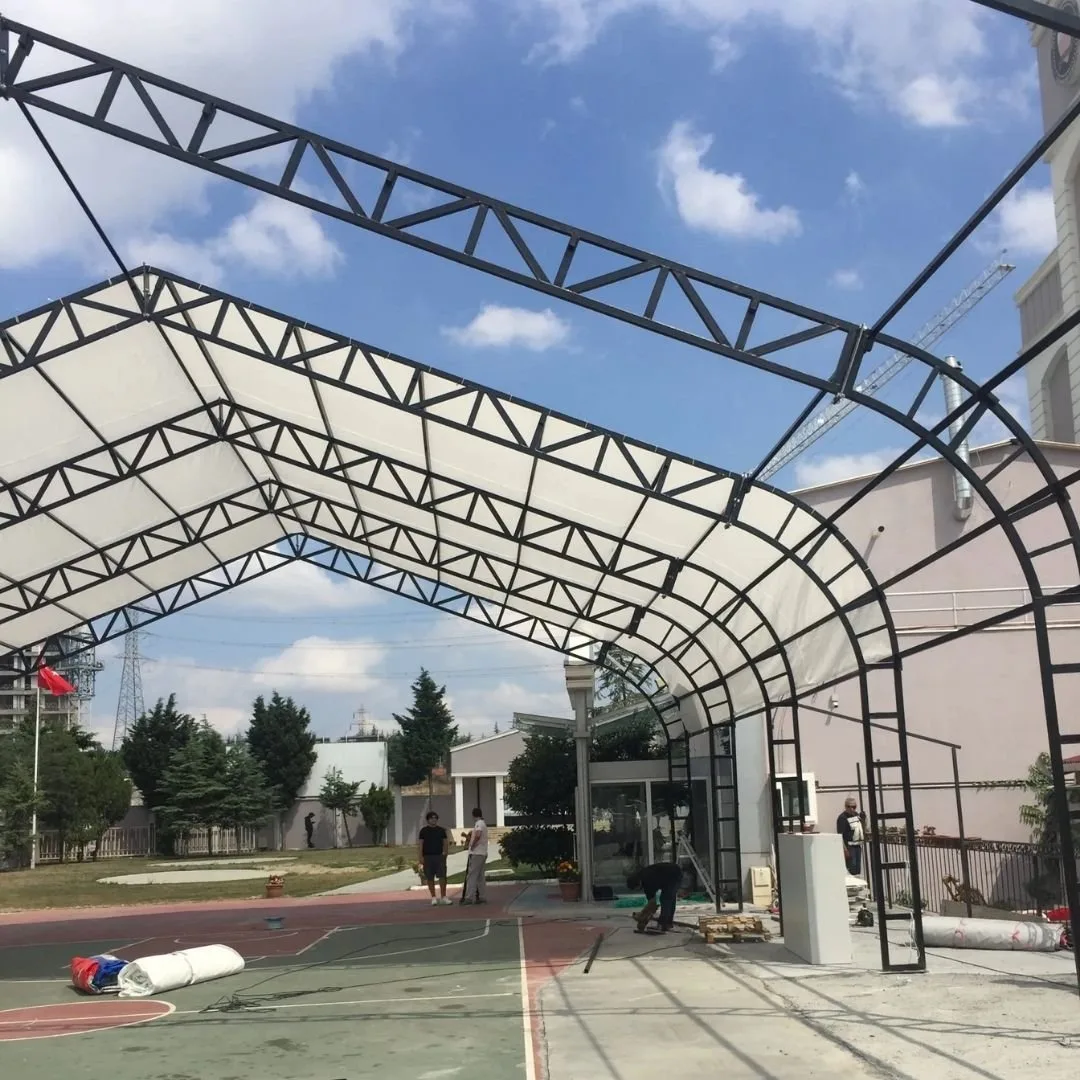 Football Pitch TentTent that turns a football pitch into an indoor pitch
 2D Panel Fence SystemFlat panel fence for around sports areas
 Player Tunnel - BellowsCovered walkway from the changing room to the pitch
Football pitch guides
- Choosing artificial grass: how to pick the right product
- How many mm should artificial grass be?
- What does dtex mean for artificial grass?
- How is a football pitch tarpaulin repaired?
Building a football pitch?
Send us the size of the area, whether you want it outdoor or indoor, and the condition of the ground; we'll plan the base, turf, fence and lighting together.