
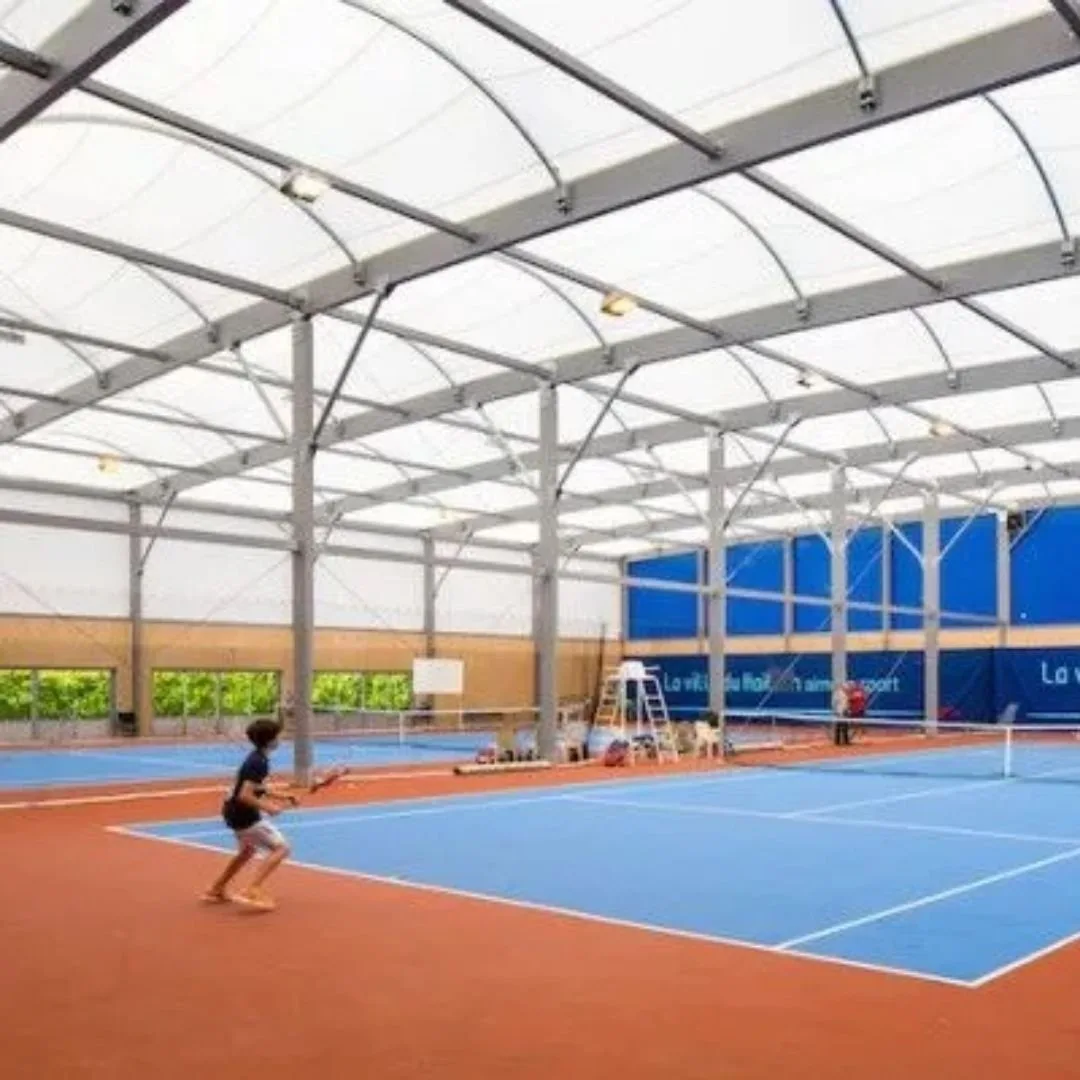
Tennis court construction in brief
When we build a tennis court, we prepare the base, apply the surface, mark the lines, and install the net and posts, the perimeter fencing and the lighting. Surface options are acrylic, cushion acrylic, artificial grass, polyurethane and clay. We can also cover the court with the Tennis Court Tent.
- Court (doubles)
- 23.77 × 10.97 munder ITF rules
- Singles width
- 8.23 mwithin the same court
- Surface options
- Acrylic, artificial grass, claycushion acrylic, polyurethane
- Indoor option
- Tennis Court Tentno intermediate columns
How do you choose a tennis court surface?
The surface determines how the ball bounces, how much maintenance the court needs and who it suits. The choice differs for club, hotel, residential complex and school courts.
| Surface | Build-up | Maintenance and use |
|---|---|---|
| Acrylic | Acrylic sports coating applied in layers over a concrete or asphalt base. | Needs regular cleaning; wide choice of colors and lines. |
| Cushion acrylic | An elastic intermediate layer is added beneath the acrylic layers. | Softer underfoot than standard acrylic. |
| Artificial grass (sand-filled) | Short-pile tennis grass laid with sand infill: Tennis Artificial Grass. | The sand needs to be redistributed regularly; chosen for school, hotel and residential complex courts. |
| Clay | A thin layer of clay over a compacted sub-layer. | Needs watering and rolling; the ball bounces slowly. |
| Polyurethane | An elastic polyurethane layer poured onto the base. | Also used in indoor and multi-purpose halls. |
How is a tennis court built? Step by step
Ground survey and base
A level concrete or asphalt base is prepared; on outdoor courts a fall is built in for drainage.
Primer
A primer is applied so the chosen surface bonds to the base.
Surfacing
Acrylic or polyurethane layers are applied; with artificial grass, the rolls are laid and sand infill is added.
Lines, net and posts
The court lines are marked and the net posts and net are installed.
Perimeter fencing and lighting
A wire fence is put up around the court and the lighting poles are installed. For an indoor court, the tent is erected before this stage.
Planning the dimensions
Court size
Under ITF rules a court is 23.77 m long; it is 10.97 m wide for doubles and 8.23 m wide for singles.
Around the court
Run-off space is left behind the baselines and outside the sidelines; the fence line runs outside this space.
Courts side by side
Several courts can be planned side by side within the same fence; the gap between them must cover the run-off space of both courts.
Indoor court
The interior height needed for lobs and the space behind the court are set in the tent design.
What to prepare when requesting a quote
- Number of courts and the width and length of the site
- Existing base: soil, asphalt or concrete
- The surface you want (acrylic, artificial grass, clay…)
- Whether the court will be outdoor or indoor
- Whether you need lighting and perimeter fencing
Products we use on tennis courts
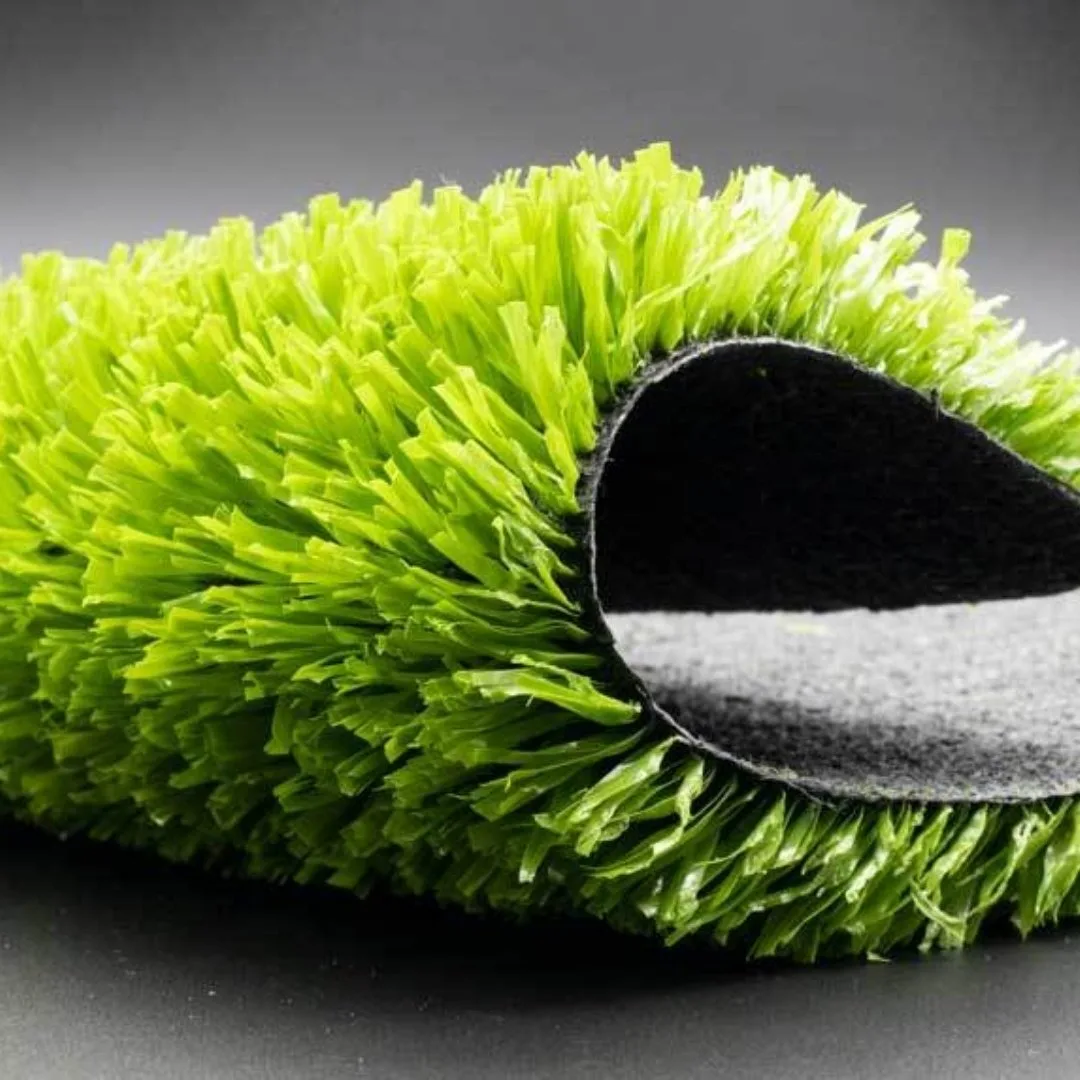 Tennis Artificial GrassTennis court grass laid with sand infill
- Tennis Court TentA tent that turns an outdoor court into an indoor one
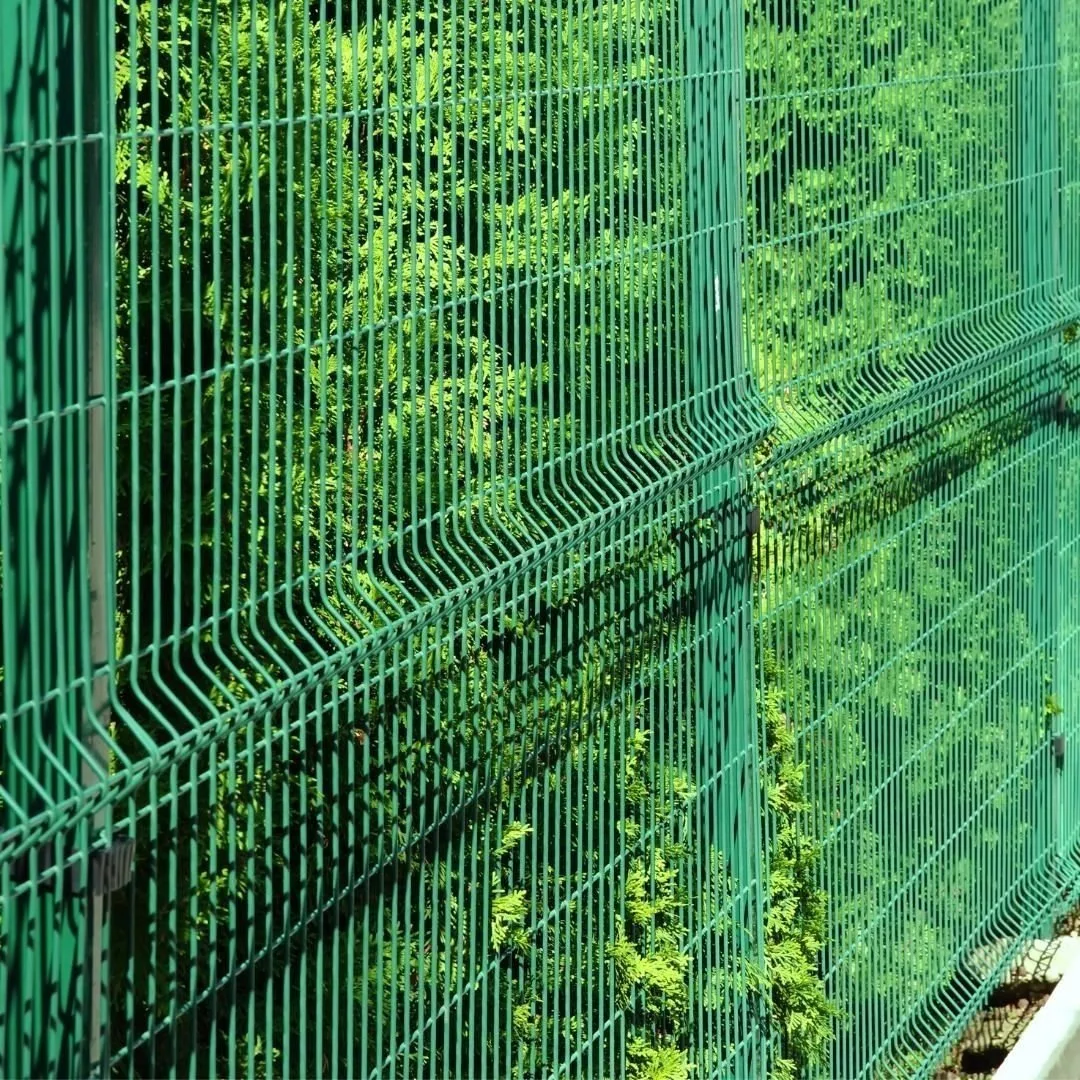 200x250 cm Panel FenceTall panel fence for around the court
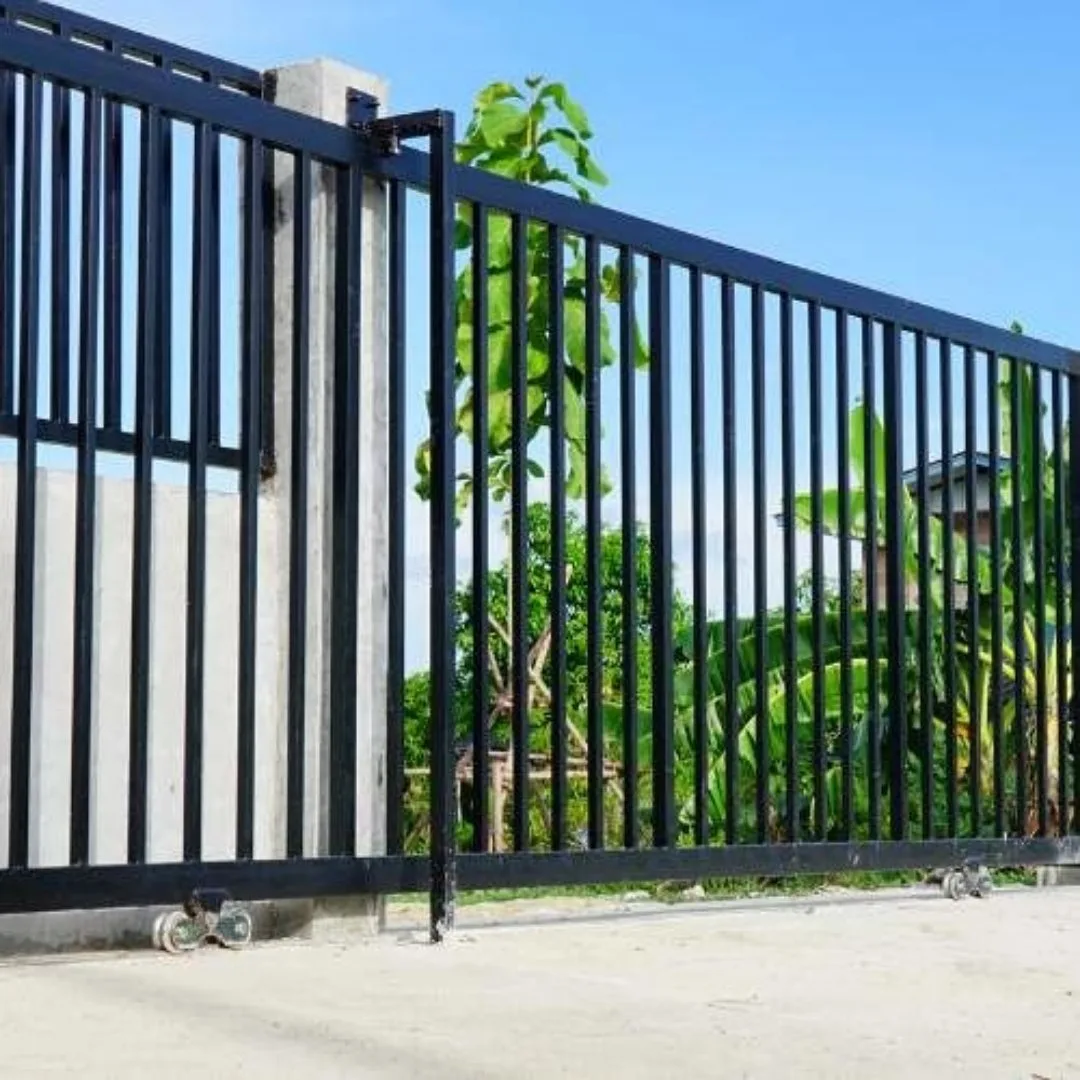 Panel Fence GatePedestrian gate for the court entrance
Related guides and services
- How many mm should artificial grass be? (pile height on tennis and padel courts)
- Padel court construction
Planning a tennis court?
Tell us the number of courts, the site dimensions and your preferred surface, and we will plan the court, fence and lighting together with you.