


Summarize this article with AI Open a summary of this article in your preferred assistant
Soapstone is a natural stone rich in the mineral talc. It holds heat, releases it slowly and withstands high temperatures; with low porosity, it does not absorb liquids or stain. As a soft stone it scratches more easily than granite, but scratches can be sanded out. It is used for kitchen countertops, stove backsplashes and laboratory surfaces and is oiled regularly with mineral oil.
Soapstone is a natural stone rich in the mineral talc, heat-resistant and low in porosity. It withstands hot pots, does not absorb liquids and does not stain, which is why it is used for kitchen countertops, stove backsplashes and laboratory surfaces. Because it is a soft stone, it scratches more easily than granite, but scratches can be sanded out.
This guide explains clearly what soapstone is, why it is chosen, how it is used for countertops and when it is the right choice.
What Is Soapstone?
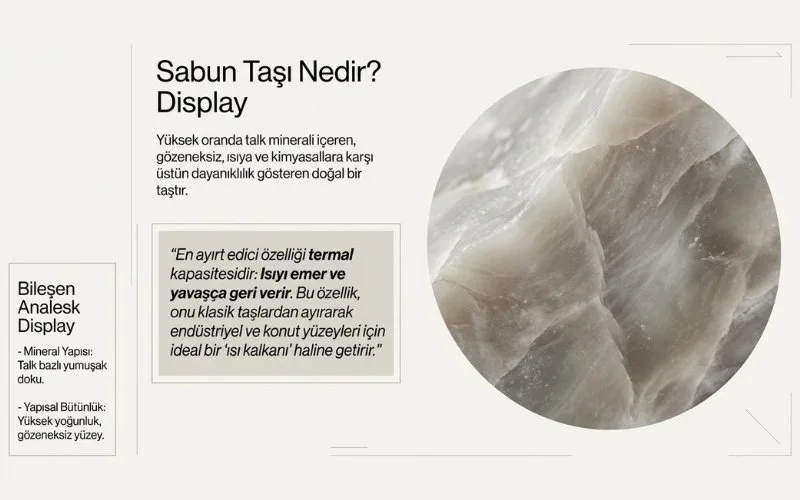
Soapstone is a natural stone with a high talc content, resistant to heat and many chemicals, and low in porosity.
Its best-known property is that it holds heat and releases it slowly, which makes it suitable for countertops and surfaces exposed to heat.
Technical Properties of Soapstone
Heat resistance: Withstands heat, holds it and releases it slowly
Low porosity: Absorbs little liquid and few stains
Chemical resistance: More resistant to acidic stains than marble
Softness: Scratches easily; scratches can be sanded out
These properties set soapstone apart from marble and granite: it does not stain as easily as marble and is not as hard as granite.
Where Are Soapstone Countertops Used?

Soapstone countertops are especially popular in:
Kitchen countertops
Commercial kitchens
Laboratory surfaces
Café and restaurant work areas
Stove backsplashes and heat-exposed surfaces
Advantages of Soapstone Countertops

Withstands hot pots and equipment
Darkens over time and develops a natural patina
Scratches can be repaired on site by sanding
Needs little maintenance apart from regular oiling
That is why soapstone is chosen for countertops that are used often and exposed to heat.
Soapstone or Granite? (Comparison to Help You Decide)

| Property | Soapstone | Granite |
|---|---|---|
| Heat resistance | Very high | High |
| Porosity | Low | Medium |
| Hardness | Low (scratches easily) | High |
| Maintenance | Oiling with mineral oil | Stain-protection treatment |
| Appearance | Develops a patina over time | Stays the same |
If heat and heavy use are your priorities, choose soapstone;
if you want a shinier, classic look, choose granite.
What to Watch for When Choosing a Soapstone Countertop
The mineral density of the stone
The heat and intensity of use in the area
Surface finish (matte / semi-matte)
Installation technique and joint design
Soapstone Care and Use Tips
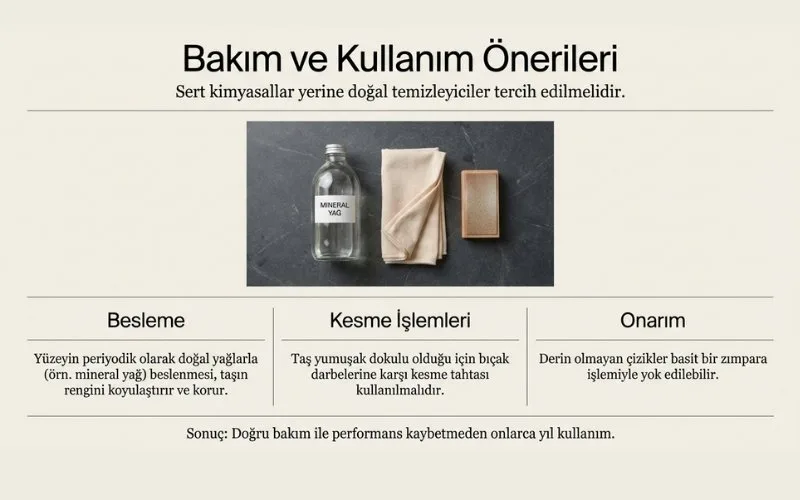
Use natural cleaners instead of harsh chemicals
The surface can be oiled periodically with natural oils
Always use a cutting board for cutting
With the right care, a soapstone countertop can be used for many years.
Conclusion: Heat-resistant and easy to care for, but soft
If heat resistance and stain resistance are your priorities, soapstone is a good option; if you want the most scratch-resistant surface, granite is the better fit.
Note: Soapstone is not in our product range. For gardens, walkways and landscaping, see our natural stone options such as basalt, slate and pebbles.



0 comments
Leave a comment
Your comment will be published after review.