

Summarize this article with AI Open a summary of this article in your preferred assistant
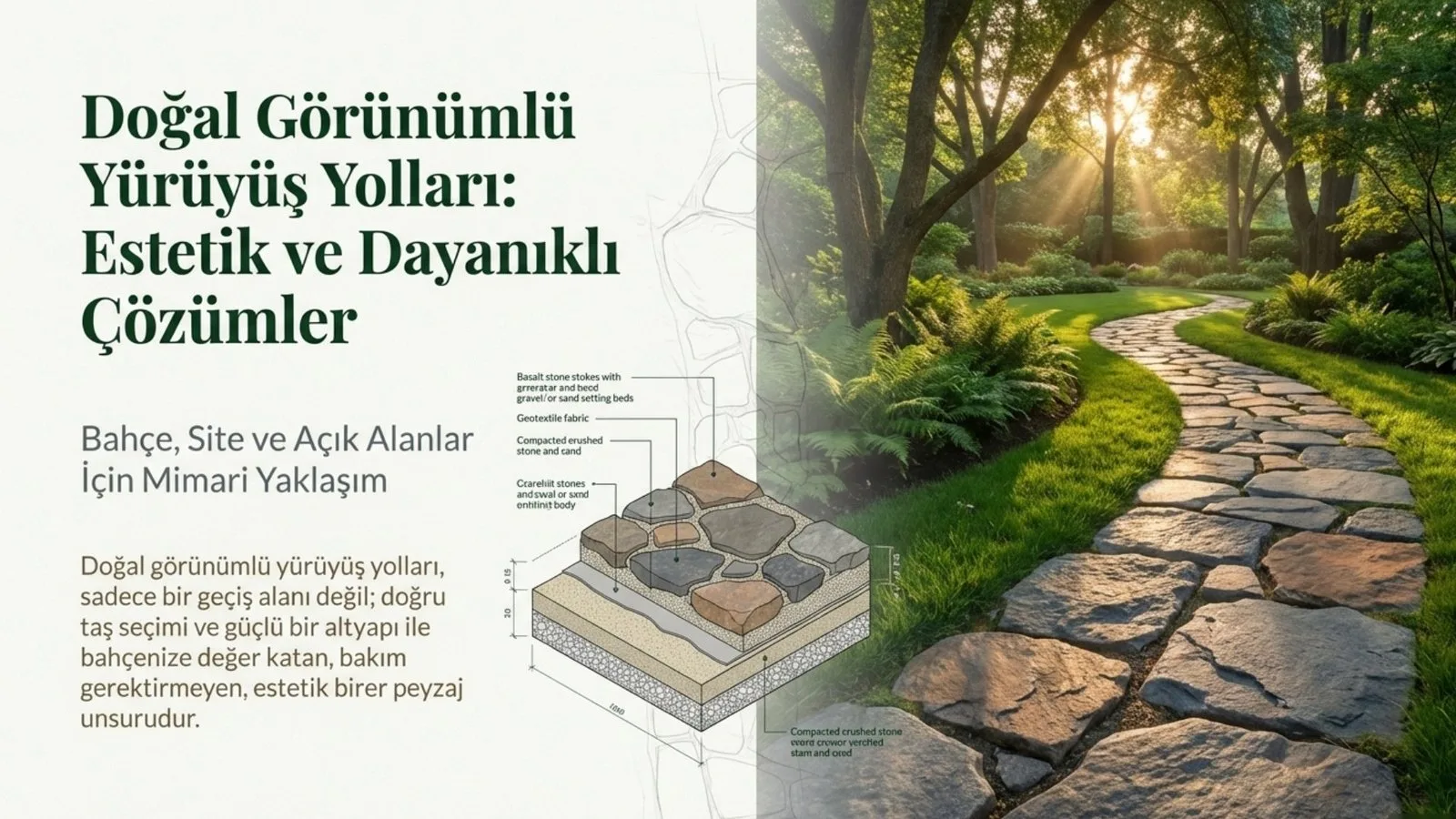
Three methods are common for a natural-looking walkway: natural stone paving in basalt, andesite or granite; earth-toned interlocking pavers in irregular patterns; and stepping stones spaced out in grass or soil. Stepping stones are usually set 50–65 cm apart. The sub-base order is: compacted stabilized base, drainage layer, fine sand or crushed stone, then stone.
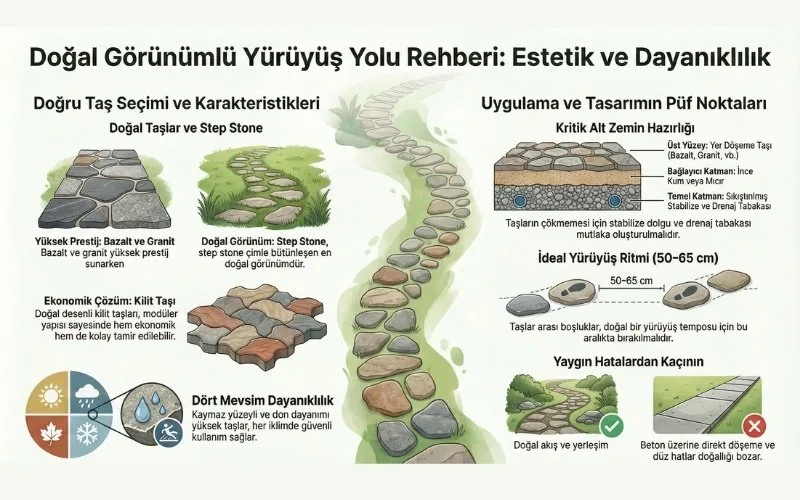
Natural-looking walkways are created by laying natural stone, interlocking pavers or decorative paving stones on a properly prepared base with the right spacing. With the right stone and base, walkways become long-lasting, attractive and maintenance-free areas.
What Is a Natural-Looking Walkway?
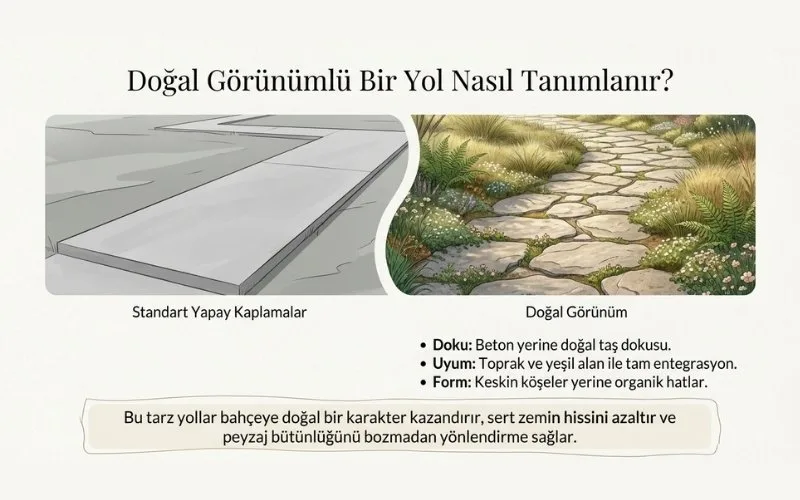
A natural-looking walkway is a garden and landscape passage designed with
Natural stone texture
Harmony with soil and green areas
Organic lines
instead of concrete or artificial surfaces.
Paths of this kind:
Give the garden a natural character
Soften the feel of hard surfaces
Guide movement without breaking up the landscape
Why Are Paving Stones Chosen?

They offer a natural look
They provide a non-slip surface
They last a long time with the right sub-base
They can be used in all four seasons
They fit with landscape architecture
The Best Paving Stones for Natural-Looking Walkways
Natural stones such as basalt, andesite and granite, along with interlocking pavers and stepping stones, are the best options for natural stone paving.

1. Natural Stone Paving (Basalt, Andesite, Granite)

The most natural and prestigious solution
Advantages
Natural color and texture
High strength
Keeps its form for many years
Where It Is Used
Villa gardens
Landscape projects
Prestigious walkways
2. Natural Patterns with Interlocking Pavers

An economical and durable solution
Advantages
Modular structure
Easy to repair
High load capacity
Tip for a Natural Look:
Choose earth tones and irregular patterns.
3. Spaced Paving Stones (Stepping Stones)
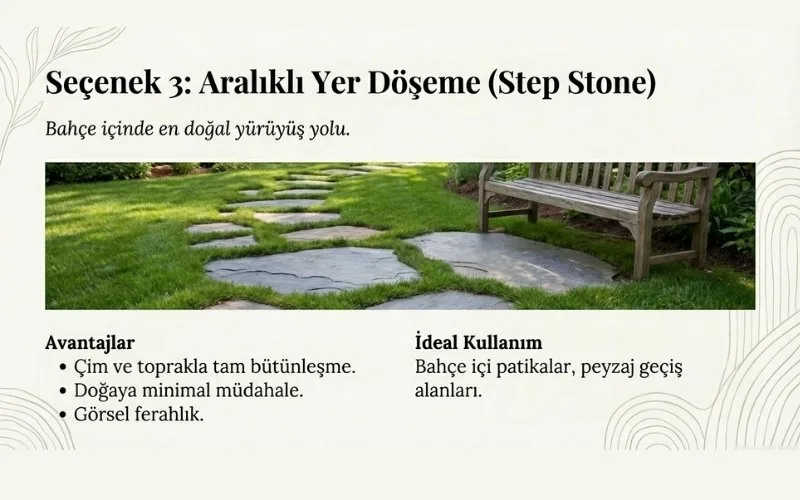
The most natural walkway within a garden
Advantages
Blends into grass and soil
Minimal intervention
Looks very natural
Where It Is Used
Garden paths
Landscape transitions
Why Does the Sub-Base Matter When Building a Walkway?

Without the right sub-base:
Stones sink
The path breaks down over time
Water collects
Ideal sub-base layers:

Compacted stabilized base
Drainage layer
Fine sand or crushed stone
Paving stone
Design Tips for a Natural-Looking Walkway
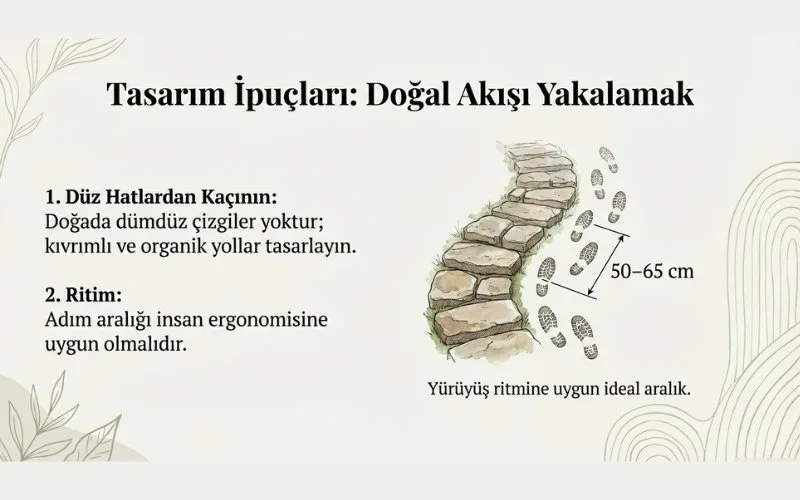
Avoid straight lines
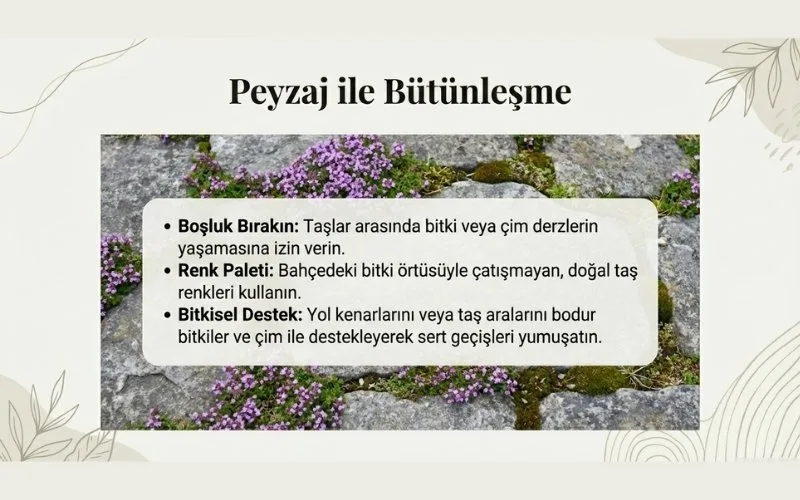
Leave gaps between stones
Add plants and grass
Use a natural color palette
Space stones to match a walking stride (50–65 cm)
The Most Common Mistakes

Laying directly on a concrete base
Neglecting drainage
Choosing the wrong stone thickness
Laying stones too close together and in straight rows
Not securing the edges
Jidar Group for walkway stone
We supply basalt, slate and pebble stones for gardens and landscaping and ship them to all 81 provinces of Türkiye. For paths, see slate and basalt. You can see the stone types on the natural stone page; send us the stone type, quantity and delivery province through the contact page and we will prepare a quote.
Conclusion: A natural look and durability come from the right stone
Natural-looking walkways built with paving stones:
Add value to the garden
Can be used without problems for many years
Combine looks and function
Send us the length and width of the path and the stone you want through the contact page, and we will calculate the quantity you need together.
Frequently asked questions
Which stone is used for a natural-looking walkway?
Basalt, andesite, granite and stepping stones are the most suitable options.
Are walkway stones slippery?
Stone with a non-slip surface and a base laid with the right slope reduce the risk of slipping; care is needed on any surface in wet and icy weather.
What is the most economical option for a garden walkway?
Interlocking pavers laid in natural patterns.
Are walkway stones damaged in winter?
Stone with high frost resistance and low water absorption (for example, basalt) and a well-drained sub-base reduce winter damage.

0 comments
Leave a comment
Your comment will be published after review.