

Summarize this article with AI Open a summary of this article in your preferred assistant
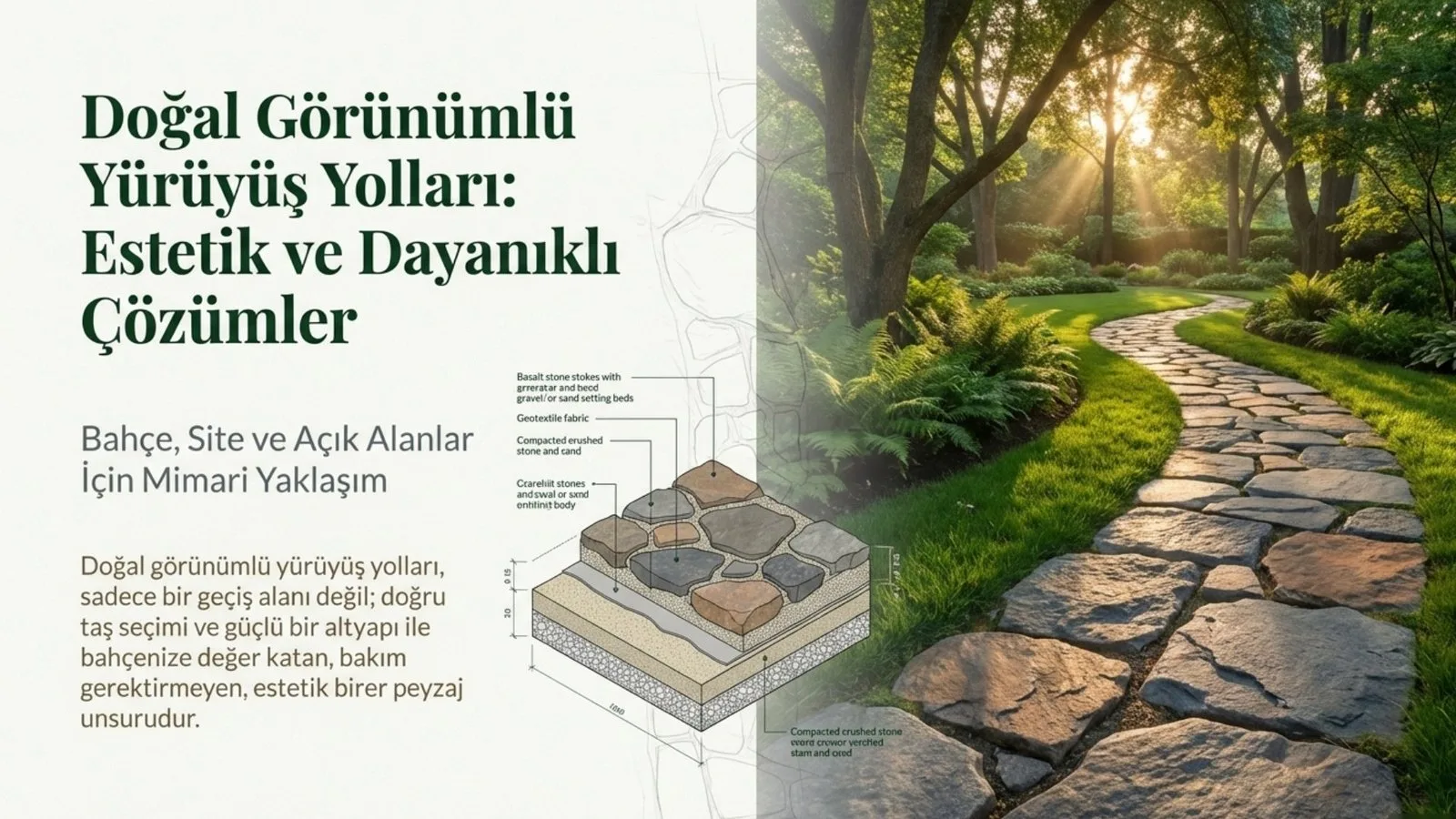
Soil settles over time, softens with rain and moves with frost, so stone is never laid directly on it. The correct order is: soil compaction, a stabilized (crushed stone) layer, leveling sand, stone laying and joint filling. Garden paths commonly use andesite or basalt slab stone with edge curbs; pedestrian walkways use concrete pavers or interlocking pavers.
The best result when laying stone on soil comes from
proper base preparation, the right choice of stone and a drainage system.
Andesite, basalt and concrete pavers are the stone types most often chosen for soil and give good results.

Why Is Laying Stone on Soil a Special Application?

Soil ground:
Settles over time
Softens with rain
Is affected by freeze–thaw cycles
So laying stone directly on it soon leads to:
Stones shifting
Sinking and breakdown
An uneven surface
The fix is a proper base, covered below.
The Best Stone Types for Laying on Soil
The best stone types for laying on soil are:
- Andesite
- Basalt
- Concrete Pavers
Let's look at each in detail.
Andesite Paving
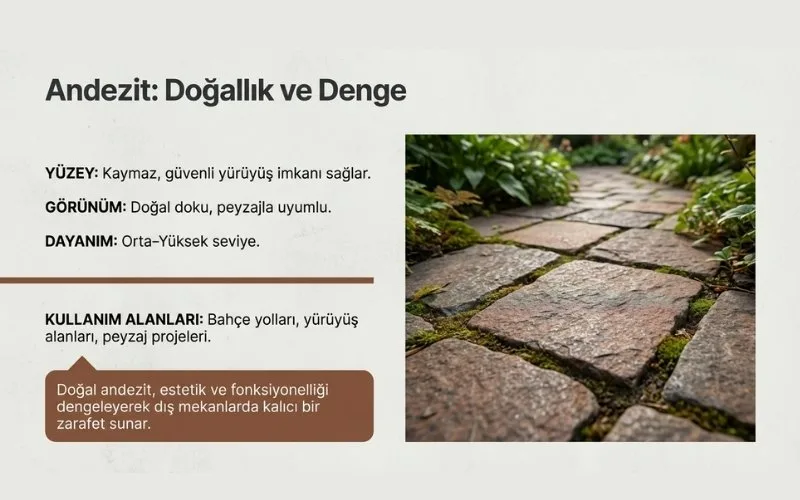
Why Is It Chosen?
Non-slip surface
Natural look
Medium–high strength
Where It Is Used
Garden paths
Walking areas
Landscape projects
Basalt Paving

Advantages
Very high impact and frost resistance
Low water absorption
Long service life
Where It Is Used
Open-air passageways
Heavily used garden paths
Outdoor steps
Concrete Paver Paving
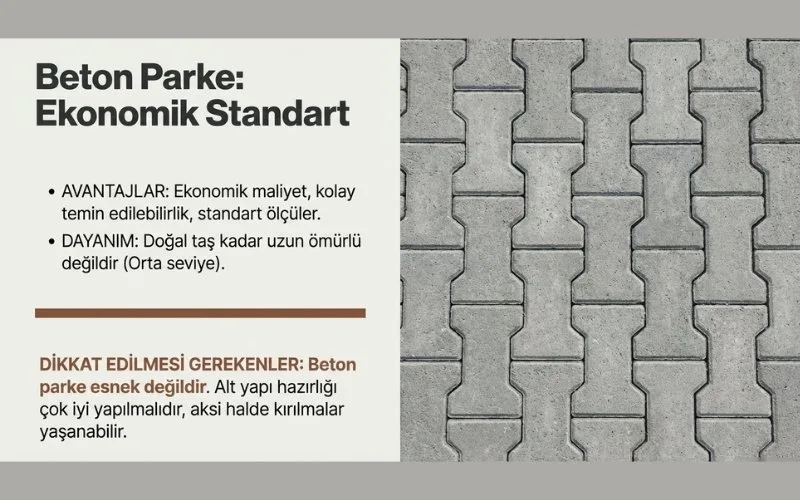
Advantages
Economical
Easy to source
Standard sizes
Points to Watch
The base must be prepared very carefully
Not as long-lasting as natural stone
Ideas for Laying Stone on Soil (Application Scenarios)
When laying stone on soil, you can create garden paths, pedestrian walkways and landscape-focused areas.

Garden Path Paving
Andesite or basalt slab stone
Edges secured with curbs
Pedestrian Walkways
Concrete pavers or interlocking pavers
Sand + crushed stone sub-base
Landscape-Focused Areas
Natural irregular stone paving
Stones set into grass
Base Preparation (The Most Critical Stage)
Base work is the most important stage of stone paving.
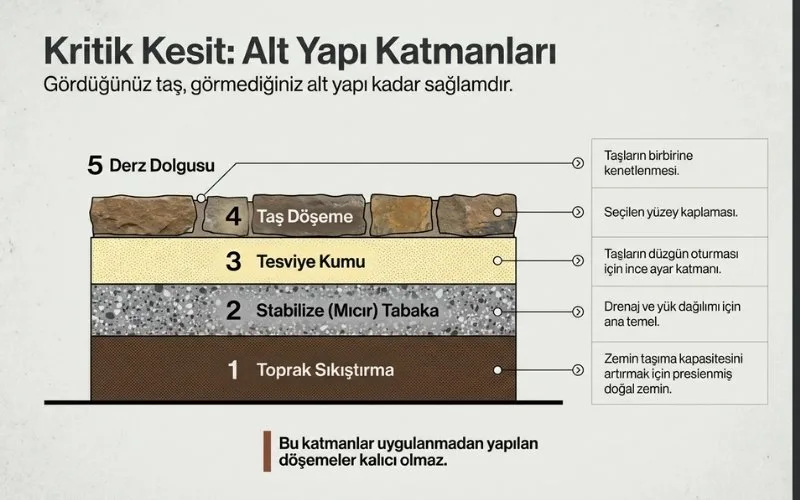
Correct Layer Order
Soil compaction
Stabilized (crushed stone) layer
Leveling sand
Stone laying
Joint filling
Paving laid without these layers will not last.
Strength Comparison by Stone Type

| Stone Type | Strength | Slip Resistance | Outdoor Suitability |
|---|---|---|---|
| Andesite | Medium-High | High | Very Suitable |
| Basalt | Very High | Very High | Very Suitable |
| Concrete Pavers | Medium | Medium | Suitable |
Stone for soil ground
We supply basalt, slate and pebble stones for gardens and landscaping and ship them to all 81 provinces of Türkiye. You can see the stone types on the natural stone page; send us the stone type, quantity and delivery province through the contact page and we will prepare a quote.
Conclusion: The right base and the right stone
When laying stone on soil, the base matters more than the stone in how long the paving lasts.
Send us the size of the area and your stone preference through the contact page, and we will calculate the quantity you need together.
Frequently asked questions
Can stone be laid directly on soil?
No. Paving laid without base preparation breaks down quickly.
Which stone is the most durable?
Outdoors, basalt is among the most durable options thanks to its low water absorption and frost resistance; andesite is also widely used for walkways.
Can concrete pavers be used on soil?
Yes, but the sub-base must be prepared very carefully.
How many layers are needed for paving on soil?
The common sequence has five steps: soil compaction, a crushed stone layer, leveling sand, stone laying and joint filling. In gardens where water collects, drainage is also planned.


0 comments
Leave a comment
Your comment will be published after review.