

Summarize this article with AI Open a summary of this article in your preferred assistant
Five steps of pebble stone maintenance: sweep away leaves and soil, prevent weeds by hand or with geotextile felt, spread piled-up stone with a rake, wash a dull surface or add new stone to the top layer, and check the sub-base if mud forms. Parking areas need compaction and a thick layer; walkways need edge curbs.
Pebble stone maintenance consists of regular cleaning, weed control, a proper sub-base and periodic renewal. With the right maintenance, pebble stones keep their shape, color and appearance for years.
What Is Pebble Stone and Why Is It Chosen?
Pebble stone is a low-maintenance surface material obtained by crushing or screening natural stone and used in
Garden landscaping
Walkways
Landscaped areas
Parking areas and site landscaping
and similar areas.
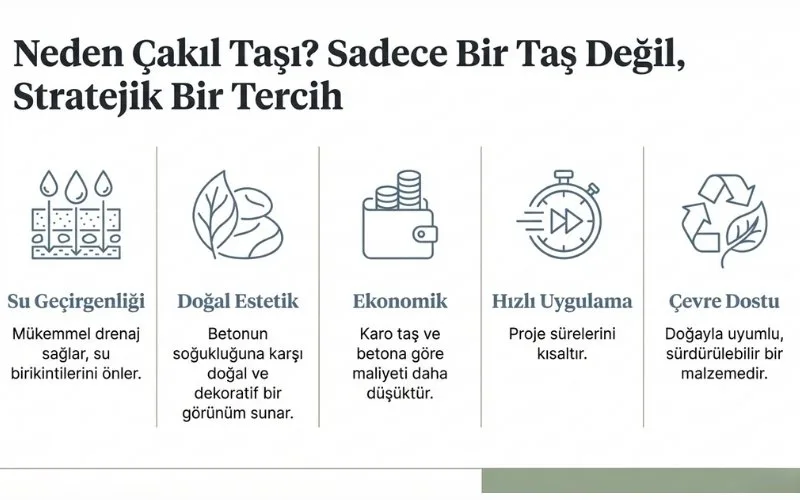
Advantages of Pebble Stone
Permeable to water (provides drainage)
Natural, decorative appearance
More economical than concrete and tile pavers
Quick to install
Environmentally friendly
Why Does Pebble Stone Maintenance Matter?
Without maintenance, pebble stones develop problems over time such as:
Color fading
Mud formation
Weed growth
Stones scattering
Loss of appearance
Regular care prevents most of these.
How Is Pebble Stone Maintained?
Surface Cleaning (Periodic)
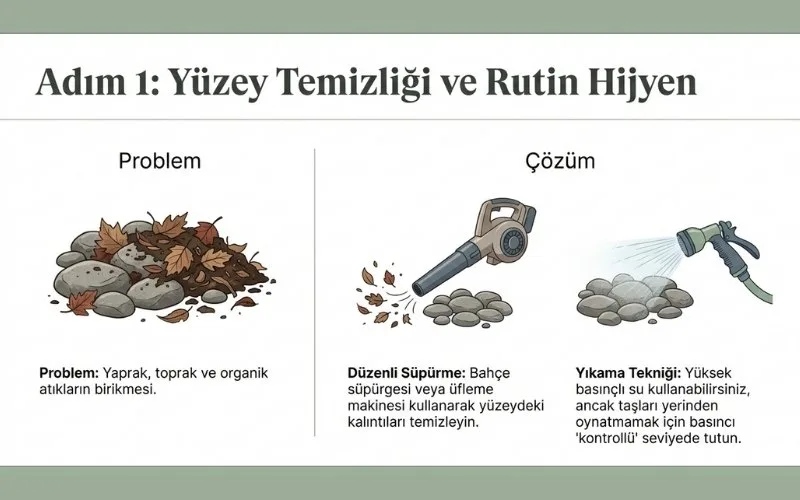
Leaves, soil, mud and organic debris should be swept up regularly.
A garden broom or leaf blower is ideal.
High-pressure water should be used carefully (so the stones are not scattered).
Weed Control
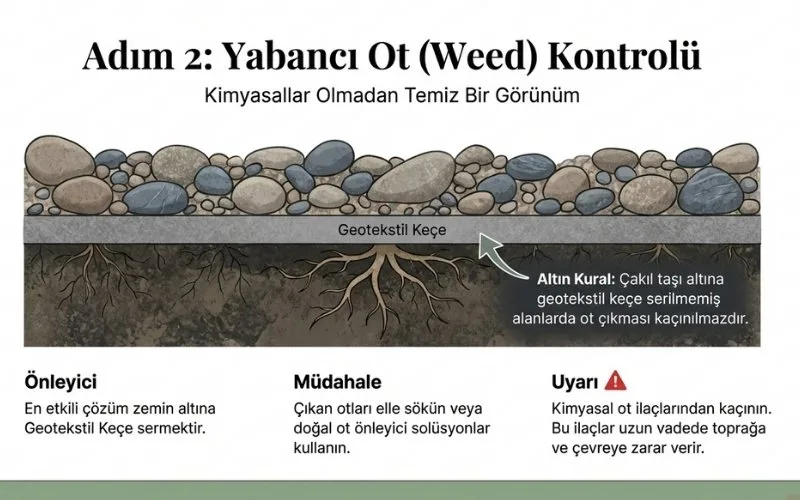
In areas where geotextile felt has not been laid under the pebble stone, weeds are unavoidable.
Solutions:
Using geotextile felt
Pulling by hand
Natural weed-prevention solutions
Chemical herbicides can harm the soil and the environment in the long run.
Correcting Stone Level and Distribution
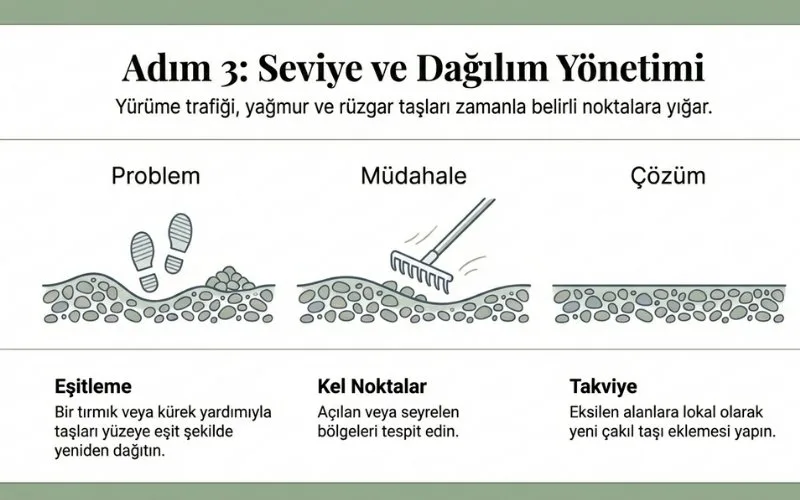
Over time, because of:
Foot traffic
Rain
Wind
stones can pile up in one spot.
Spread them evenly with a rake or shovel.
Add new pebble stone to areas that have thinned out.
Renewing Color and Appearance
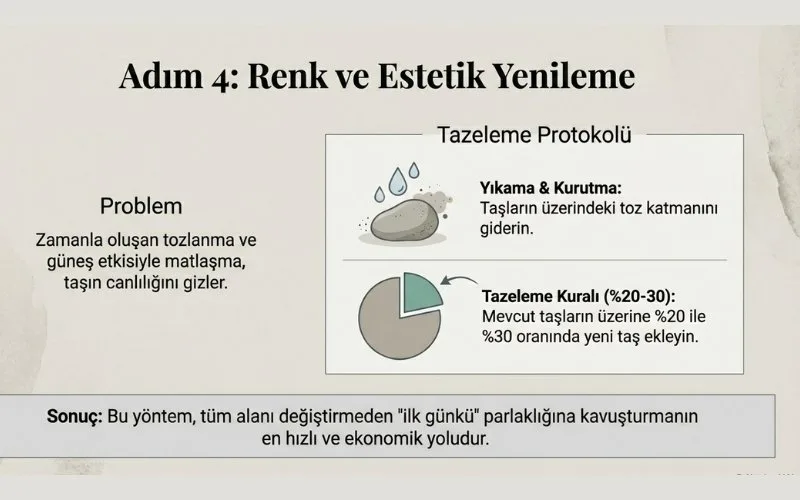
Over time, pebble stones:
Collect dust
Turn dull
Solution:
Washing + drying
If needed, adding 20–30% new stone to the top layer
This refreshes a dull surface.
Checking the Sub-Base
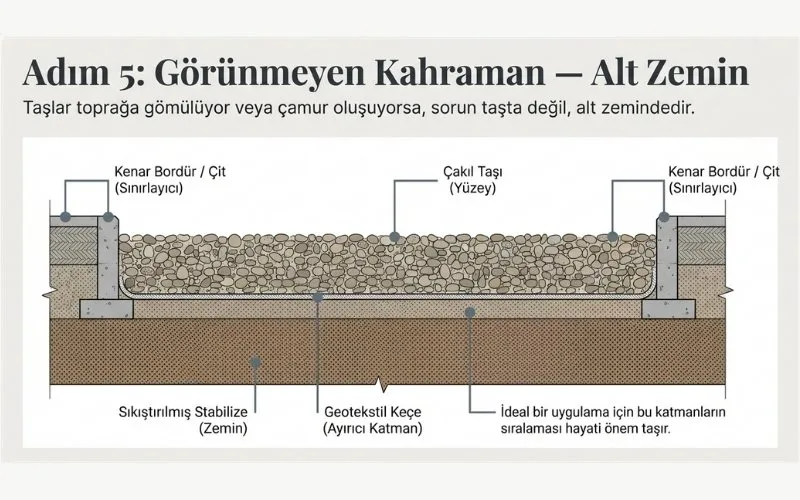
If the pebble stone is:
Sinking into the soil
Turning to mud
the sub-base is inadequate.
Ideal sub-base:
Compacted stabilized base
Geotextile felt
Edge curbs or fence systems
Maintenance Differences for Gardens, Walkways and Parking Areas
Pebble stones used on different surfaces have different maintenance routines. Let's look at them.
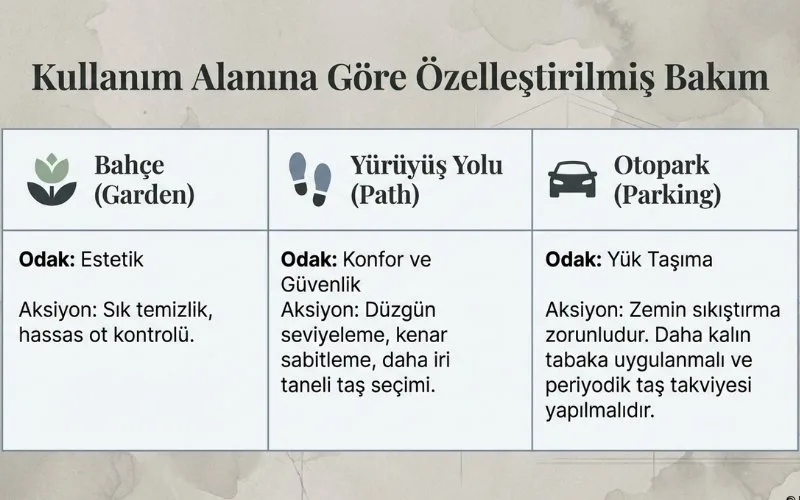
Garden Pebble Stone Maintenance
Appearance comes first
More frequent cleaning
Weed control is critical
Walkway Gravel
An even level is essential
Edge restraint is important
Larger stone is preferred
Parking Area Gravel
Compaction is mandatory
Apply a thick layer
Periodic top-ups are needed
The Most Common Pebble Stone Maintenance Mistakes
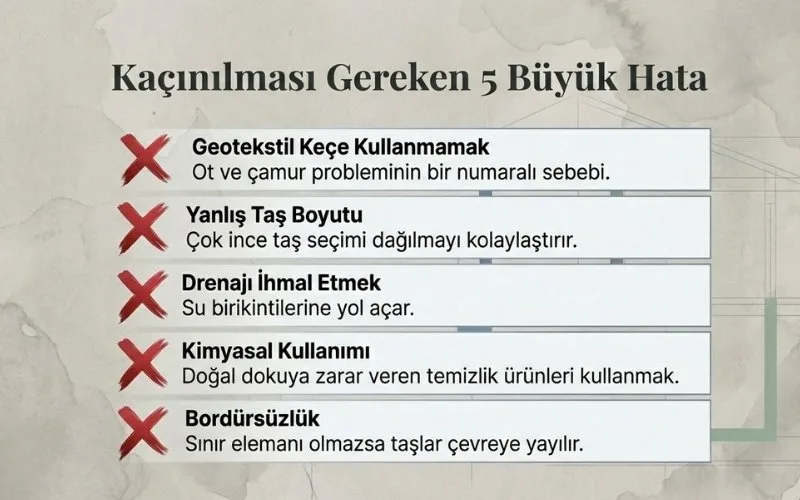
Not using geotextile felt
Choosing pebbles that are too fine
Neglecting drainage
Using chemical cleaning products
Not using curbs or edging
Jidar Group for pebble stone
We supply basalt, slate and pebble stones for gardens and landscaping and ship them to all 81 provinces of Türkiye. Options include dolomite, granite and round river pebbles. You can see the stone types on the natural stone page; send us the stone type, quantity and delivery province through the contact page and we will prepare a quote.
Conclusion: Regular maintenance keeps gravel neat
With proper installation and regular maintenance, pebble stone is a surface that is:
Attractive
Durable
Economical
all at once.
You can ask how much stone you need for a top-up, along with the size of the area, through the contact page.
Frequently asked questions
Is pebble stone hard to maintain?
No. With the right sub-base and regular cleaning, pebble stone needs little maintenance.
How often should pebble stones be renewed?
There is no fixed interval; new stone is added to the top layer as foot traffic, rain and vehicles scatter the stone or the surface turns dull. Heavily used areas need more frequent top-ups.
What should be laid under pebble stone?
Geotextile felt, which both prevents weeds and stabilizes the ground.
Does pebble stone turn to mud in the rain?
Yes, if there is no proper drainage and sub-base. With a proper installation, mud does not form.

0 comments
Leave a comment
Your comment will be published after review.