


Summarize this article with AI Open a summary of this article in your preferred assistant
Natural stone cleaning has two stages: regular basic care (warm water, a pH-neutral cleaner, a soft brush) and seasonal deep cleaning (a stone-specific cleaner, low-pressure water). Acidic and abrasive products, bleach and close-range high pressure damage the stone. Granite has low porosity; andesite, travertine and slate are porous and need a water-repellent sealer.
Natural stone is cleaned with warm water, a pH-neutral cleaner and a soft brush; acidic products, bleach and abrasives damage the surface and fade the color. Seasonal deep cleaning is recommended for outdoor stone, and water-repellent (impregnating) protection for porous stones such as andesite and travertine.
In this guide you will find answers to:
how natural stone should be cleaned
which products to use / avoid
maintenance differences by stone type
professional tips for a long service life
and related questions.
What Is Natural Stone?
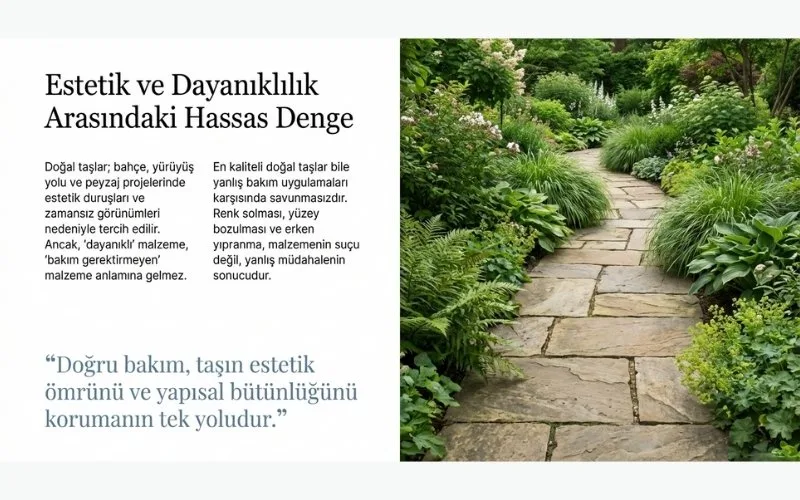
Natural stone is a durable flooring and cladding material formed by natural processes in the earth's crust, then cut and processed for use in building and landscape projects.
The most common types: granite, basalt, andesite, travertine, slate.
Why Does Natural Stone Need Regular Maintenance?
Natural stones are porous. As a result, they:
Can absorb dirt and oil stains
Can have their surface worn by the wrong chemicals
Can be damaged in freeze–thaw cycles
Can lose the depth of their color over time
How Is Natural Stone Cleaned?
When cleaning and maintaining natural stone, set up a two-stage routine: basic care and deep cleaning.
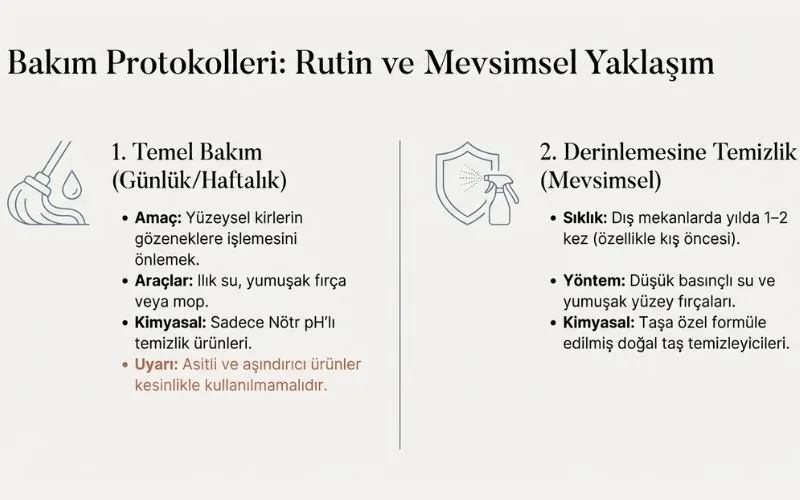
Daily / Weekly Cleaning (Basic Care)
Warm water
pH-neutral cleaning products
A soft brush or mop
Acidic products, bleach and abrasives must NOT be used.
Deep Cleaning (Seasonal)
Cleaners made specifically for natural stone
Low-pressure water
Soft surface brushes
Recommended 1–2 times a year, especially for garden and outdoor stone.
Cleaning and Maintenance Differences by Stone Type
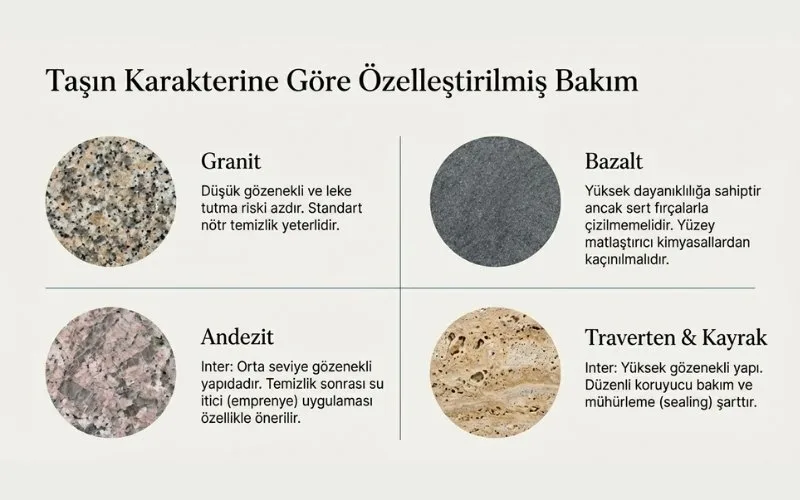
Granite Care
Low porosity
Low risk of staining
Neutral cleaning is enough
Basalt Care
Very durable
Stiff brushes are not recommended
Avoid chemicals that dull the surface
Andesite Care
Medium porosity
A water-repellent (impregnating) treatment is recommended
Travertine & Slate
Porous structure
Regular protective care is essential
How Should Natural Stone Be Cleaned?
Natural stone should be cleaned with pH-neutral products and soft tools.
Acidic and abrasive chemicals damage the stone surface and cause color fading.
Periodic care suited to the stone type ensures a long service life.
The Most Common Mistakes in Natural Stone Care

Using acidic cleaning products
Pressure washing from too close
Chemicals unsuited to the stone type
Neglecting protective treatments
These mistakes can leave permanent damage on the stone surface.
Professional Tips for Long-Lasting Natural Stone

Apply a surface protector after the initial installation
Clean and maintain before winter
Make sure drainage systems are working
Avoid contact with harsh chemicals
Conclusion: The right care means long-lasting natural stone
With the right cleaning and care, natural stone keeps its appearance for a long time; the wrong chemicals and close-range pressure washing will wear down even the hardest stone quickly.
Jidar Group for natural stone
We supply basalt, slate and pebble stones for gardens and landscaping and ship them to all 81 provinces of Türkiye. You can see the stone types on the natural stone page; send us the stone type, quantity and delivery province through the contact page and we will prepare a quote.
Frequently asked questions
Can natural stone be cleaned with bleach?
No. Bleach damages the stone surface and causes the color to lighten.
Can natural stone be pressure washed?
It can be done at low pressure and from a distance. High pressure at close range is not recommended.
How often should natural stone be maintained?
For outdoor stone, a seasonal deep clean (usually once or twice a year) is enough; leaves and dust are swept regularly. Indoors, clean as needed.
Which natural stone is the most durable?
Granite and basalt are among the most durable natural stones.


0 comments
Leave a comment
Your comment will be published after review.