

Summarize this article with AI Open a summary of this article in your preferred assistant
No poolside surface is completely slip-proof. The safest options are textured surfaces that drain quickly, such as well-installed artificial grass, rubber flooring, slip-resistant tiles or textured natural stone. Artificial grass grips well and feels soft, but needs a draining base.
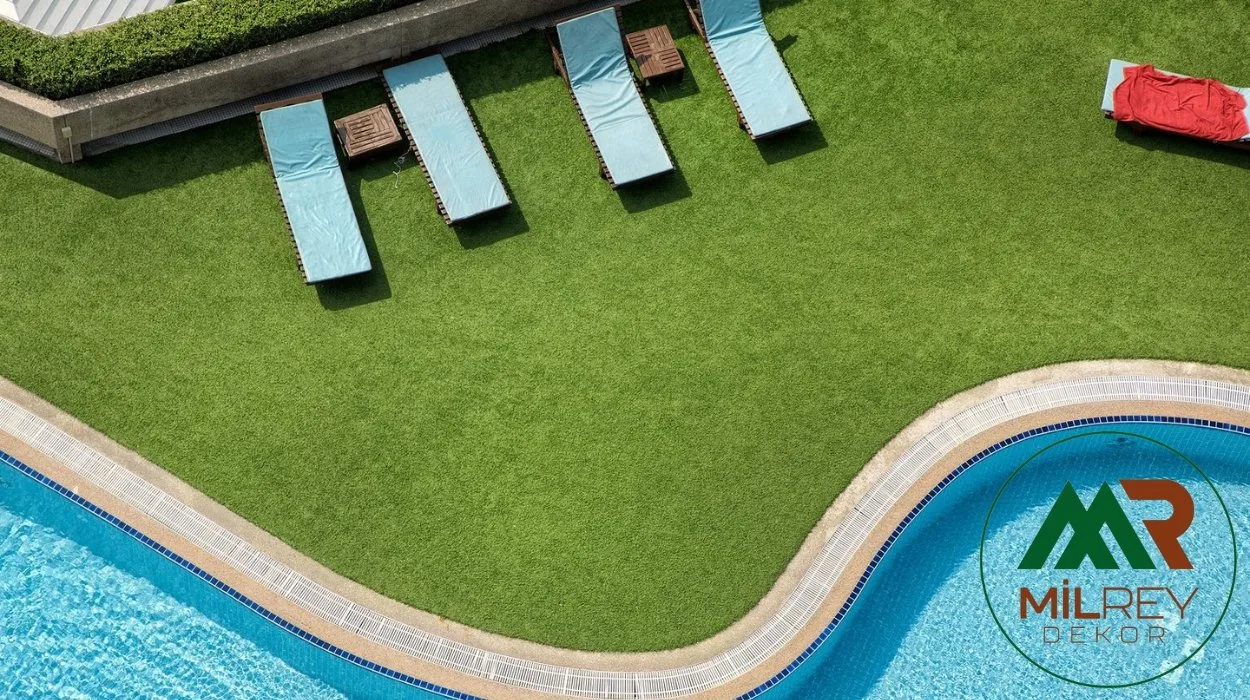
No poolside surface is completely slip-proof, so the safest choice is one that has texture and gets rid of water quickly. Well-installed artificial grass, rubber safety flooring, tiles rated as slip-resistant for wet barefoot areas and textured (not polished) natural stone all meet that description. Artificial grass stands out for its soft feel underfoot and its grip when wet, as long as it is laid on a base that drains and is rinsed regularly.
What makes a poolside surface safe?
Around a pool people walk barefoot on wet ground, children run, and splashed water often contains chlorine or salt. A safe surface therefore needs:
- Grip when wet: texture that the foot can hold on to, rather than a smooth or glazed finish.
- Fast drainage: water should not stand on the surface, because standing water is where slips and algae start.
- A forgiving feel: a softer surface reduces scrapes and bruises when someone does fall.
- Bearable temperature: dark or dense materials heat up in strong sun, which matters for bare feet.
- Resistance to pool water: the material and its joints should tolerate chlorinated or salt water and frequent wetting.
Comparing common poolside surfaces
| Surface | Grip when wet | Feel underfoot | Things to watch |
|---|---|---|---|
| Artificial grass | Good on a draining base | Soft | Can get warm in direct sun; needs rinsing and a permeable sub-base |
| Rubber safety flooring | Good | Soft | Appearance; joints and edges need care |
| Slip-resistant tiles | Good if rated for wet barefoot areas | Hard | Glazed or polished tiles are slippery; grout lines collect dirt |
| Textured natural stone | Good with a rough or tumbled finish | Hard | Polished stone is slippery; dark stone heats up |
| Timber or composite decking | Varies | Medium | Algae and wear can make boards slippery; timber needs upkeep |
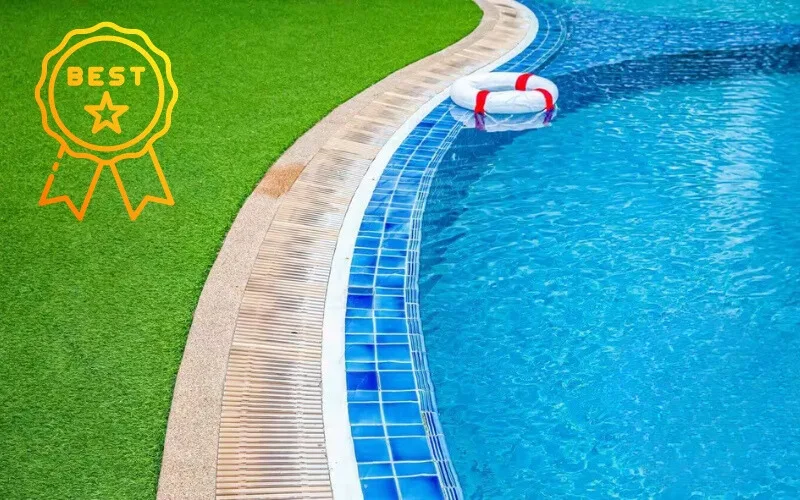
Many pool areas combine materials: a stone or tile coping at the pool edge, with grass or another softer surface on the wider terrace. If you are considering stone, our article on whether natural stone burns your feet in summer explains how colour and finish affect surface temperature.
Choosing artificial grass for a pool area
Fibre and backing
Choose a product with UV-stabilised fibres, since a pool terrace is usually in full sun, and a perforated or otherwise permeable backing so water passes straight through. A dense, medium-length pile gives a stable footing; very long, loose fibres flatten more quickly in walkways.
Look and layout
Colour and texture should suit the rest of the garden. Grass pairs well with stone borders, stepping stones or pebble strips, which also give a firm edge where the grass meets paving. See the natural stone products if you plan to combine the two.
Sub-base and installation
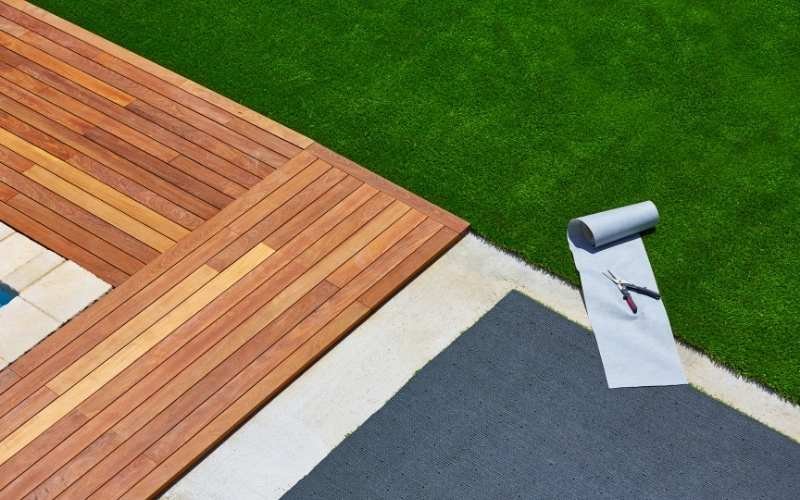
The base matters more than the grass itself. On soil, the ground should be excavated, levelled and compacted, with a free-draining aggregate layer so water from the pool and rain does not collect. Edges need to be fixed firmly so they do not lift where people step out of the pool. On existing concrete, check the slope: water must be able to run off or drain away under the grass.
Cleaning
Rinse the grass with fresh water from time to time to wash out chlorine or salt residue, sunscreen and dust, and brush it to keep the fibres upright. Remove leaves before they break down on the surface.
We supply and install artificial grass, including products from our garden and landscape artificial grass range. If you would like a suggestion for your pool area, send us the approximate area, the existing ground (soil, concrete or old paving), photos of the space and your country.

0 comments
Leave a comment
Your comment will be published after review.