

Summarize this article with AI Open a summary of this article in your preferred assistant
Plan a pebble or gravel landscape in five steps: choose the stone for the job (path, bed or drainage), prepare the ground with a weed membrane and drainage base, fix edges, plan colours, then compact and maintain the surface.
Designing a landscape with pebbles or gravel comes down to five decisions: which stone suits each area (paths, planted beds or drainage), how the ground underneath is prepared, how the stones are kept in place, how colours and shapes are combined, and how the surface will be looked after. Get the first two right and the rest is mostly about taste.
Pebbles are rounded stones, smoothed by water; gravel is usually crushed and angular. The difference matters: angular gravel locks together and stays put underfoot, while rounded pebbles look softer but roll when walked on.
1. Choose the stone for the job
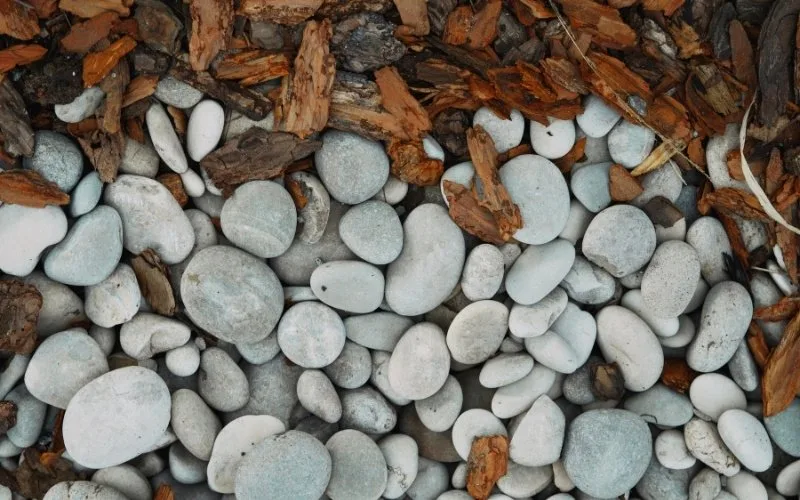
- Walking paths: medium-size, angular gravel is the most comfortable. Small stones get carried away on shoes, and large round pebbles move under each step.
- Planted beds and decorative areas: finer gravel, dolomite chips or small coloured pebbles give a tidy finish around plants and are easy to rake.
- Drainage strips and dry beds: larger stones leave bigger gaps for rainwater to pass through, so they suit gutters, downpipe outlets and the edges of paved areas. Our article on pebble stone paving for drainage problems goes into this in more detail.
- Feature areas: large river pebbles, flat river discs or boulders work as accents in small numbers rather than as a walking surface.
You can compare stone types, colours and shapes in our natural stone range.
2. Prepare the ground
Most problems with gravel areas (weeds, stones sinking into mud, puddles) come from skipped groundwork.
- Remove grass, roots and topsoil from the area.
- Level the ground and give it a slight fall away from buildings so water does not collect.
- On heavy or poorly draining soil, lay a compacted base of crushed stone and sand.
- Cover the base with a geotextile weed membrane. It stops weeds coming up and keeps the stones from mixing into the soil, while still letting water through.
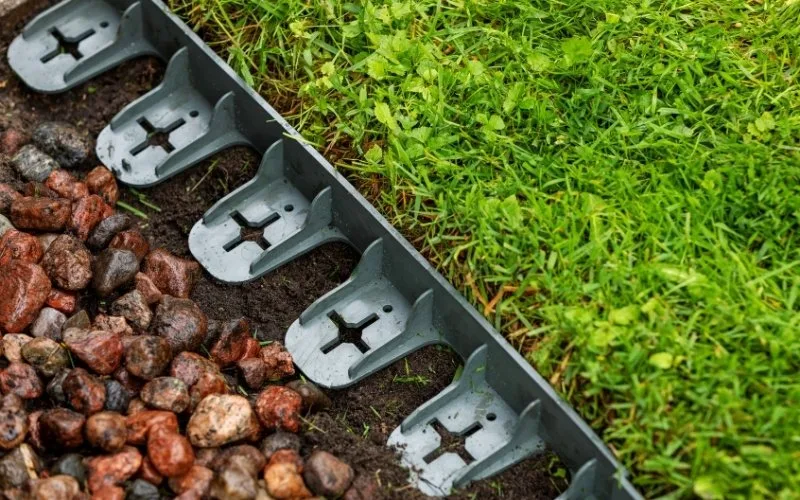
- Fit edging (stone, steel or timber) before spreading the stones, so they cannot drift onto lawns or paving.
3. Plan colours and patterns
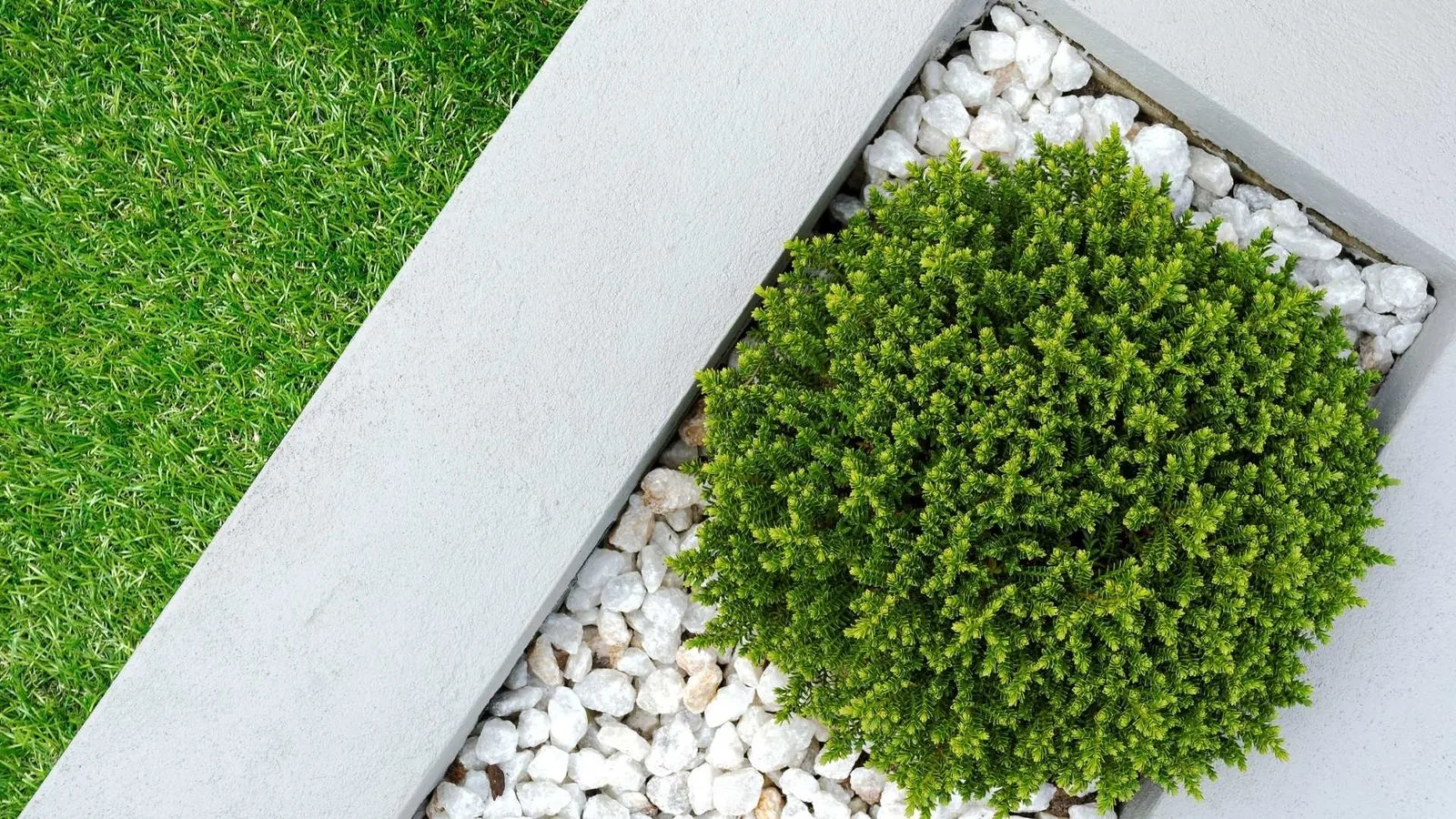
- Contrast: white or light pebbles next to dark borders, slate or lava stone give a clean, modern look.
- Shapes: curves, spirals or separate zones in different colours help guide the eye and divide a large area.
- Planting: cut crosses in the membrane to set plants among the stones; grasses and drought-tolerant plants suit gravel gardens.
- Heat and light: light stones reflect sunlight; dark stones absorb more heat in summer. For barefoot areas near pools or terraces, read does natural stone burn your feet in summer?
4. Lay and fix the stones
- Spread the stones evenly to a consistent depth; too thin a layer exposes the membrane, too thick a layer is hard to walk on.
- On paths, compact angular gravel with a roller or plate compactor so it settles and does not shift later.
- Where stones must stay put on slopes or busy paths, permeable stabilising grids or binders can hold them while still letting water drain.
5. Maintain through the seasons
- Autumn: rake or blow away fallen leaves before they rot into the gravel and form soil for weeds.
- Winter: keep drainage areas clear so water does not stand and freeze in the stone layer.
- Summer: a light watering cools stone surfaces in very hot weather.
- All year: top up thin spots and rake the surface level from time to time. For cleaning methods, see how to maintain pebble stone.
Jidar Group supplies and installs natural stone for landscaping. If you are planning a project, contact us with the area size, what it will be used for (path, bed or drainage), the colours you have in mind and your location or country, and we will suggest suitable stones.


0 comments
Leave a comment
Your comment will be published after review.