


Summarize this article with AI Open a summary of this article in your preferred assistant
Hybrid grass is natural grass reinforced with synthetic fibres: living grass grows through a synthetic carpet or around fibres stitched into the rootzone. It is more stable than natural turf but still needs mowing, water and light, unlike fully artificial grass.
Hybrid grass is a natural grass surface reinforced with synthetic fibres. The playing surface is living grass, but a small share of artificial fibres anchored in the rootzone helps the roots hold the soil together, so the pitch tears less under heavy use. It is therefore not artificial grass: it still needs mowing, watering, light and the care a natural pitch needs.
The term is also written as hybrid turf or reinforced natural grass. It is used mainly on football pitches where natural grass would wear out too quickly but clubs or owners want to keep a natural playing surface.
How hybrid grass is built
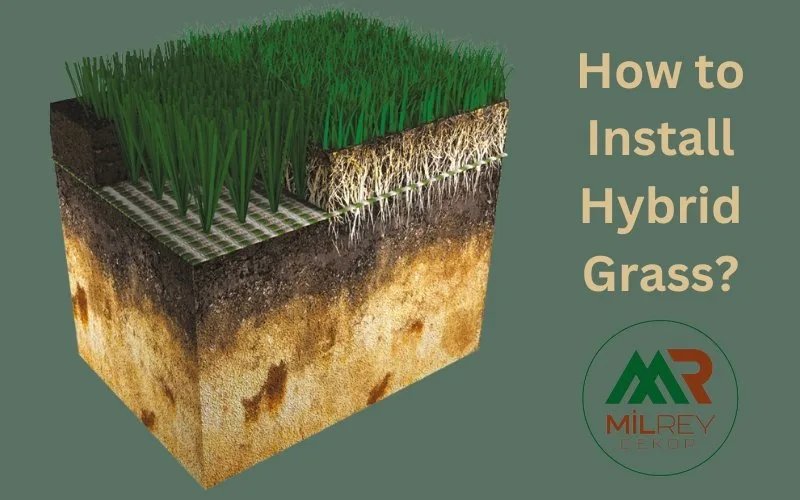
There are two common approaches:
- Carpet-based systems: a synthetic carpet with an open, permeable backing is laid on a prepared rootzone and filled with sand and soil. Natural grass is then seeded or grown into it, and its roots grow through the backing and wrap around the synthetic fibres.
- Stitched systems: synthetic fibres are injected vertically deep into an existing or newly built natural grass rootzone by specialist machines. Most of each fibre sits below the surface and only a short end shows among the natural grass.
In both cases the natural grass does the playing work, and the synthetic fibres act as reinforcement.
What hybrid grass does better than natural grass
- The surface is more stable, so divots and tearing in goalmouths and centre areas are reduced.
- Footing stays more even through a season of heavy use.
- Worn areas recover faster, because the fibres keep the rootzone in place while the grass regrows.
- The green fibres keep some colour in heavily used areas even when the natural grass thins.
What it does not change
Hybrid grass is still a living surface. It needs regular mowing, irrigation, fertilising and enough light; stadiums with deep shade often add grow lights. A well-built drainage layer under the rootzone is as important as for a natural pitch. Owners should plan for natural-grass maintenance, not the lower maintenance of artificial turf.
Hybrid grass or artificial grass?
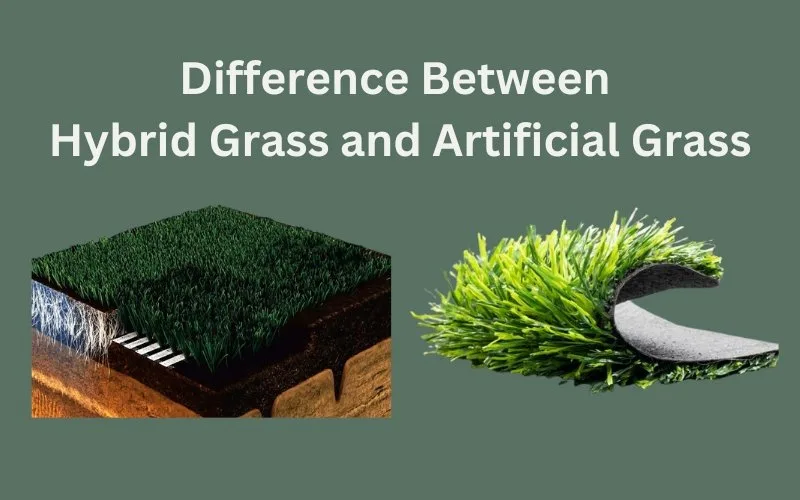
The question "is hybrid grass better than artificial grass?" has no single answer. Each suits a different kind of pitch.
| Point | Hybrid grass | Artificial grass |
|---|---|---|
| Playing surface | Living natural grass with synthetic reinforcement | Fully synthetic fibres, usually with infill |
| Maintenance | Mowing, irrigation, fertilising, light, rest periods | Brushing, infill top-up, cleaning; no mowing or watering for growth |
| Hours of use | Limited, because grass needs time to recover | High; suitable for daily, back-to-back bookings |
| Climate and light | Depends on growing conditions | Largely independent of growing conditions |
| Typical use | Stadiums and professional training pitches | Community pitches, schools, rental pitches, multi-sport areas |
If the aim is many hours of play per week with limited maintenance staff, artificial turf is usually the practical option. If the aim is a natural surface for a limited number of matches and training sessions, and a grounds team is available, hybrid grass is worth considering. For more on choosing synthetic surfaces, see our sports field artificial grass range and the guide to what DTEX means in artificial grass.
Planning a pitch
Jidar Group builds football pitches and supplies and installs artificial grass. Read about our football pitch construction work, or contact us with the pitch dimensions, the current ground condition, the expected hours of use per week and the project location or country.
0 comments
Leave a comment
Your comment will be published after review.