
Summarize this article with AI Open a summary of this article in your preferred assistant
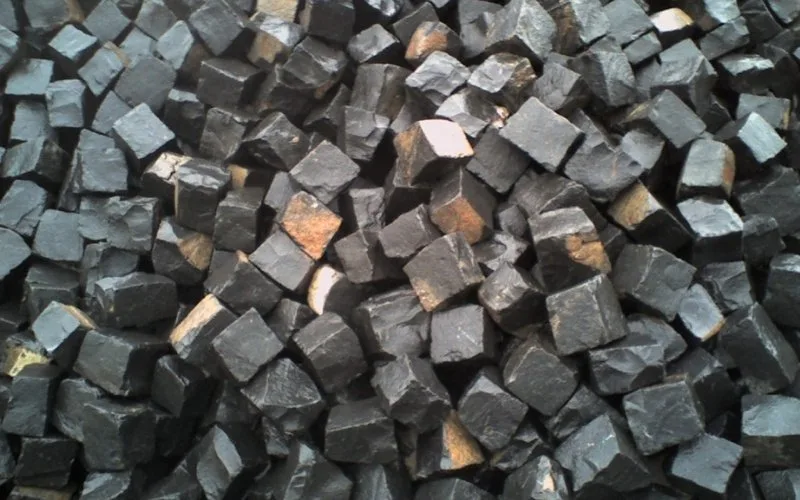
Basalt is a dense, fine-grained volcanic rock, usually dark gray to black. It is hard-wearing, so it is used for paving, garden paths, steps, wall cladding and water features, both indoors and outdoors.
Basalt is a dense, fine-grained volcanic rock that forms when lava rich in iron and magnesium cools quickly at the earth's surface. It is usually dark gray to black. Basalt is hard and wears slowly. You will find it in paving, garden paths, steps, wall cladding and water features, both inside and outside the home.
How basalt looks
Fast cooling leaves basalt with very small crystals. Its surface looks even and almost uniform, not speckled. Some basalt contains small gas holes (vesicles) that give a pitted face. Designers often pick it for minimalist and industrial schemes because of its dark, calm color. Rough-split basalt also suits traditional and rustic gardens.
Properties that matter for paving and cladding
- Density and strength: basalt is a heavy, compact stone that copes well with foot traffic. It has long been used for streets and public spaces.
- Grip: with a textured finish, basalt offers good slip resistance on wet and sloping surfaces. A polished finish is smooth and better kept for indoor or covered areas.
- Heat in the sun: dark stone absorbs sunlight, so basalt around pools or barefoot areas can get hot in summer. Our article on whether natural stone burns your feet in summer explains what to consider.
- Weight: its density means wall cladding needs a sound substrate and a fixing method suited to the panel weight.
Where basalt is used at home and in the garden
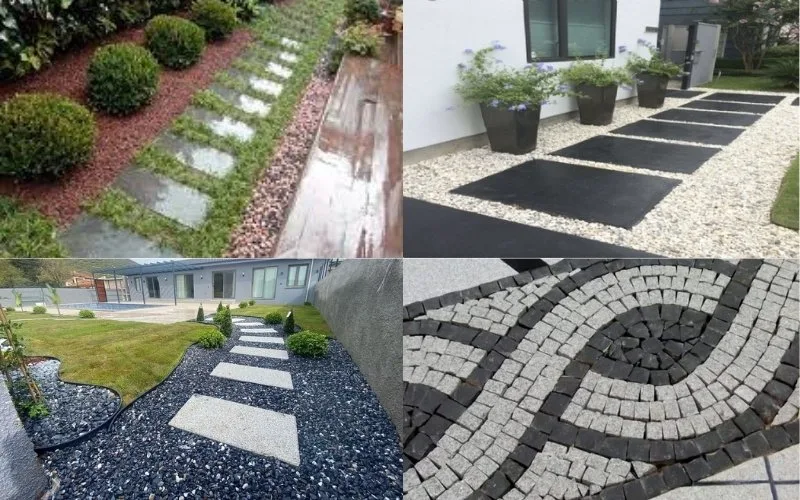
- Garden paths and terraces: slabs or setts laid alone or combined with gravel, pebbles or lawn.
- Steps, borders and edging: solid pieces give crisp lines around beds and level changes.
- Facades and feature walls: thin basalt cladding outside or indoors, for example around fireplaces or entrances.
- Water features: fountains, pond edges and water walls, where wet basalt turns an even deeper black.
- Indoor floors: honed basalt tiles in halls and living areas.
Choosing a surface finish
| Finish | Look and feel | Typical use |
|---|---|---|
| Polished | Smooth, slight sheen, darkest color | Interior walls, covered indoor floors |
| Honed | Smooth, matt | Indoor floors, sheltered terraces |
| Flamed | Rough, lighter gray surface | Outdoor paving, steps, pool surrounds |
| Sandblasted or brushed | Lightly textured, soft feel | Outdoor paving and wall cladding |
| Split or natural face | Irregular, rustic | Garden walls, edging, cladding |
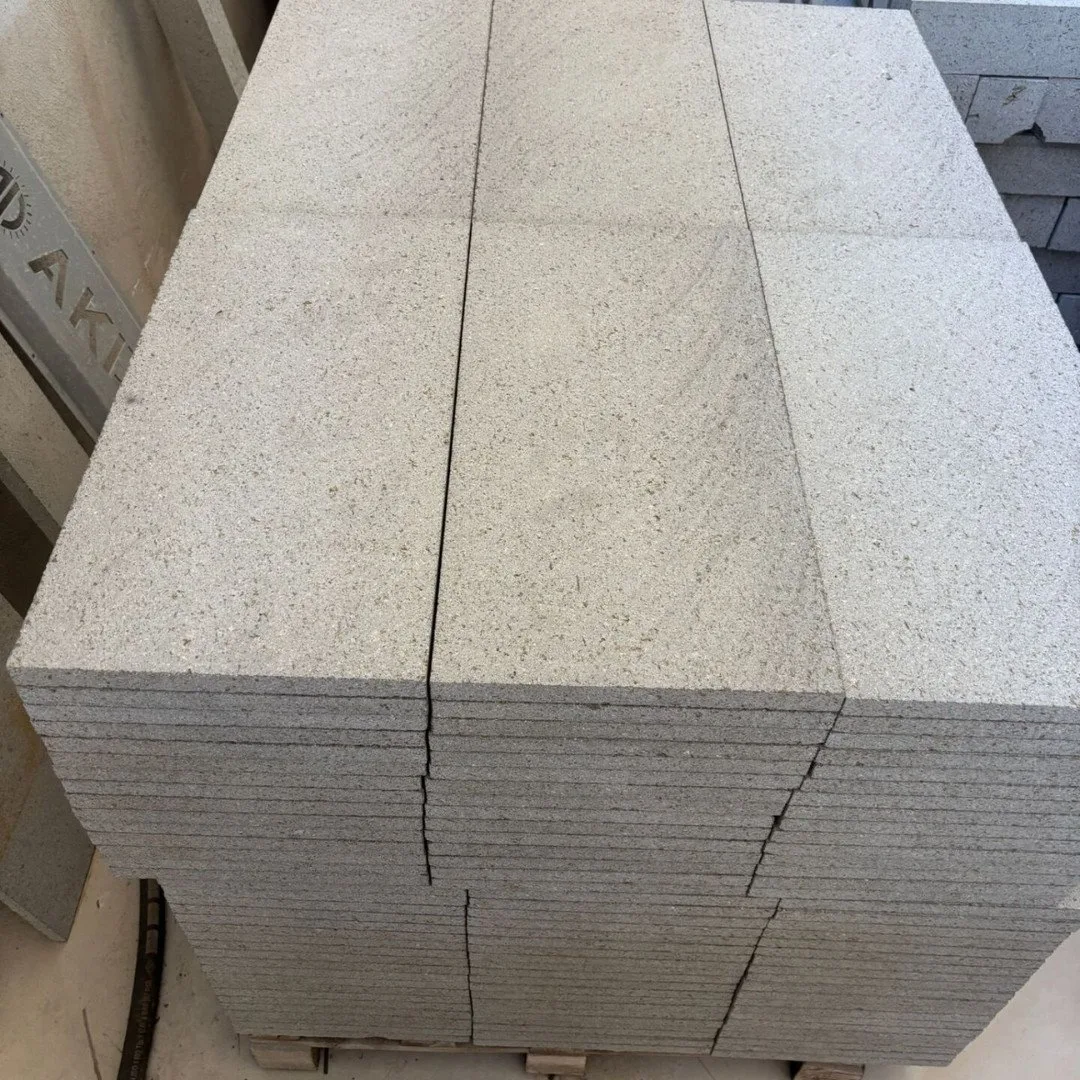
Finishing is done at the processing stage, so choose it before ordering rather than trying to change the surface on site.
Tips for laying basalt outdoors
- Lay paving on a compacted gravel sub-base with a bedding layer and a slight fall. Rainwater then drains away and does not collect under the stone.
- Leave wider joints if you want grass or decorative pebbles between stones. Tight joints give a formal, modern look.
- Order a little extra from the same batch, as color can vary between batches.
Basalt is easy to keep clean. For suitable cleaning products and sealing, see natural stone cleaning and maintenance. You can see our basalt natural stone and other stones in the natural stone range.
Jidar Group supplies and installs basalt. For a quotation, contact us with the area and where it will be laid (path, terrace, wall or water feature). Tell us the finish you prefer and your location too.


0 comments
Leave a comment
Your comment will be published after review.