

Summarize this article with AI Open a summary of this article in your preferred assistant
To install artificial grass, remove existing grass and debris, build a compacted, level and free-draining base, lay a weed membrane, roll out the turf in one direction, join seams with tape and adhesive, fix the edges, then add infill if needed and brush.
Installing artificial grass comes down to preparing the ground well and then laying the turf like a carpet. On soil, that means removing the old surface, building a compacted, level, free-draining base and adding a weed membrane. On concrete, it means a clean, sound slab with a fall for water. In both cases the turf is rolled out in one direction, seamed with tape and adhesive, fixed at the edges and brushed. Most problems with artificial grass later on, such as dips, puddles, visible seams or weeds, come from the base, not the grass.
Which ground can artificial grass go on?
| Existing ground | Suitable? | What it needs |
|---|---|---|
| Soil | Yes, the most common case | Excavation, crushed-stone base, compaction, levelling, weed membrane |
| Natural lawn | Not directly | Remove the grass and roots first, then prepare as for soil |
| Concrete or paving | Yes | Clean, crack-free slab, a fall towards a drain; often a shock pad or drainage layer |
| Terrace or balcony | Yes | Open drains, intact waterproofing, adhesive or tape instead of pegs |
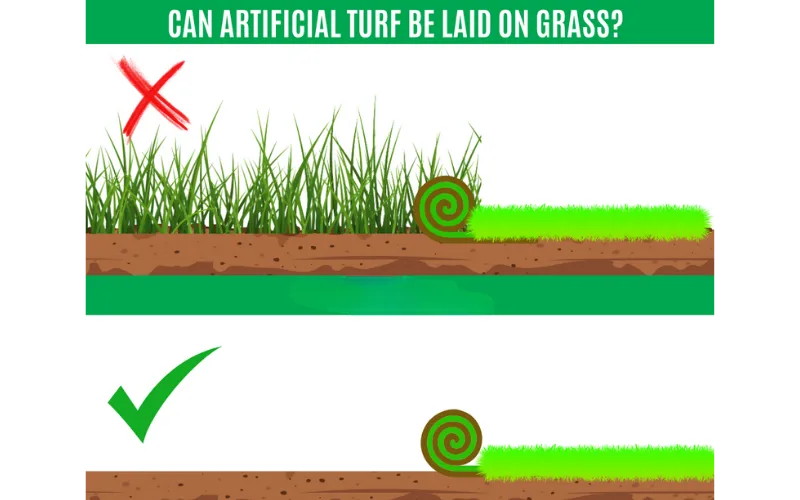
Why you cannot lay artificial turf on top of grass
Laying turf straight over an existing lawn causes problems for four reasons:
- Unevenness: a lawn is never flat, and every bump or hollow shows through the new surface as waves.
- Rotting: the old grass decomposes under the backing, the ground sinks in places and smells can develop.
- Drainage: the old turf and thatch hold water instead of letting it pass, so water collects under the backing.
- Height: the new surface ends up higher than paths and paving next to it.
Removing the lawn and topsoil gives you a controllable base to build on.
Installing artificial grass on soil, step by step
- Measure and plan. Measure the area and decide which way the rolls will run, ideally so that the grass leans towards where you usually look at it from. Plan seams away from main walking lines.
- Clear the area. Remove existing grass, roots, stones and debris, and dig out the topsoil to make room for the base.
- Install edging. Fit a timber, steel or plastic edge along borders that are not already enclosed by paving or walls, so the base and turf have something to hold against.
- Build the sub-base. Spread crushed stone in layers and compact each one with a plate compactor. This layer carries water away and stops the ground from sinking.
- Level and fine-grade. Add a thin layer of finer material, level it with a straightedge or screed board, give it a slight fall for water, lightly dampen it and compact again.
- Lay a weed membrane. A geotextile membrane on top of the base stops weeds growing up through the backing.
- Roll out the turf. Lay all rolls with the pile in the same direction and let them relax flat before cutting.
- Cut and join. Trim the factory edges, butt the pieces tightly together without overlap, and bond them over seam tape with outdoor adhesive. Weight the seams while the adhesive cures.
- Fix the edges. Secure the perimeter with ground pins or attach it to the edging.
- Add infill if the product needs it. Spread sand or the specified infill evenly and brush it in, in several passes.
- Brush up the pile. Brush against the direction of the pile to stand the fibres up and hide the seams.
Laying artificial grass on concrete
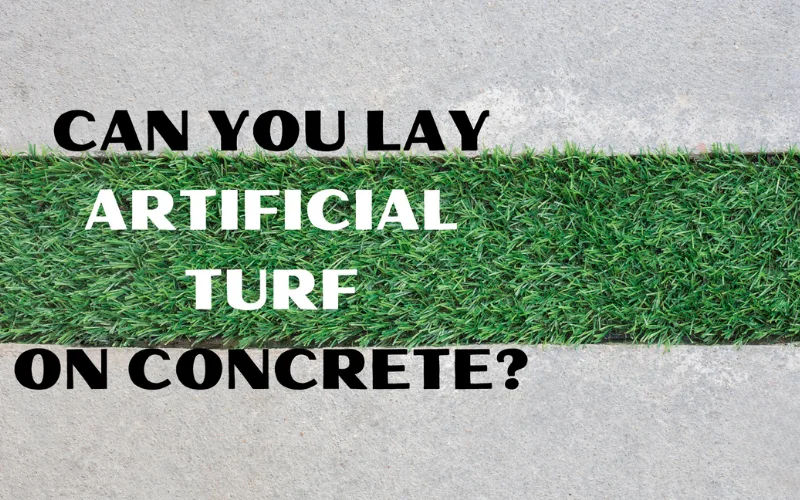
Concrete is a good base because it is already firm and flat, but water has nowhere to soak in. Before laying:
- Clean off dirt, moss and loose material, and repair cracks and hollows; any unevenness will show through.
- Check that the slab falls towards a drain or an open edge. Where water collects, drill drainage holes or add a drainage channel.
- Consider a shock pad or foam underlay. It lets water flow underneath, softens the surface and hides small imperfections in the concrete.
- Fix the turf with an adhesive suitable for outdoor use, or with tape and edge restraints. On small, sheltered areas loose laying with weighted edges can work, but wind can lift unsecured grass.
Where artificial grass on soil is used
The same preparation applies to private gardens, parks, playgrounds and nurseries, hotel and restaurant landscaping, and walking paths. Areas with heavy use, such as play areas, benefit from a shock pad, and sports fields need an engineered base and drainage system; see our football pitch construction page for that type of project.
Common installation mistakes
- Skipping compaction, which leads to dips a few months later.
- No fall or drainage, so water stands under the turf.
- Rolls laid in different directions, which makes each piece look like a different shade.
- Overlapping seams instead of butting them, leaving a visible ridge.
- Choosing a product without checking its intended use; read how to pick the right artificial grass and which pile height suits your area first.
DIY or professional installation?
A small, flat area on an existing concrete patio is a manageable DIY job. Larger gardens on soil involve excavation, moving a lot of stone and using a compactor, and seams are hard to make invisible without practice, so many owners hire an installer for those.
Jidar Group supplies and installs artificial grass with its own team. Send us the area size, the current ground (soil, old lawn, concrete or terrace), photos of the site and your location or country, and we will explain what the installation would involve.

0 comments
Leave a comment
Your comment will be published after review.