

Artificial grass fence goes either on an existing fence or on a new panel fence. For a new fence, set the posts and mount the panels. Then unroll the grass fence along the panels and fix it with clips or cable ties at the top, bottom and in between. That keeps it tight in the wind.
There are two ways to install artificial grass fence panels. You can fix the grass fence onto a fence you already have. Or you can build a new fence first (posts and wire mesh panels) and attach the grass fence to it. Either way, the grass fence is unrolled along the panels and fastened with clips or cable ties at the top, bottom and intermediate points. That keeps it tight so it does not flap in the wind.
If you already have a wire mesh panel fence, our separate guide on grass fence systems on panel fences covers that case in detail, and our guide to covering a chain link fence with grass fence covers woven wire fences. This article focuses on the full installation, from an empty boundary to a finished green screen.
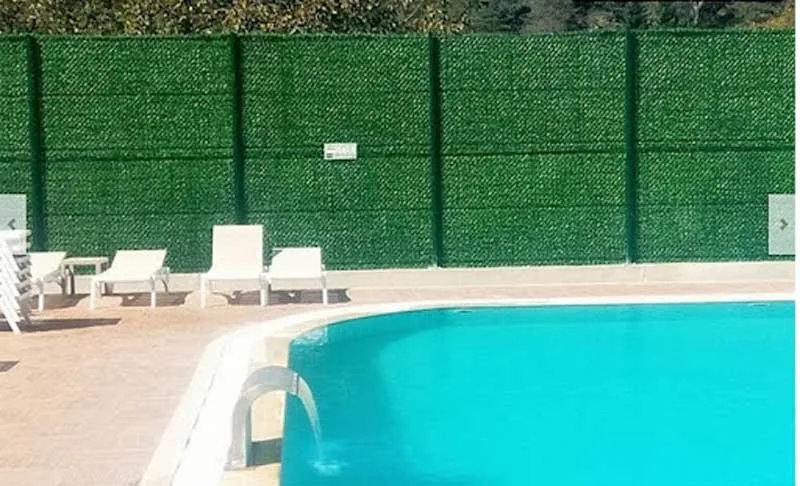
Before you start
- Height and length: measure the whole run, including corners and gate openings, and decide on the screen height. Common grass fence heights match standard panel heights, so plan both together.
- Rules and neighbors: check local rules on boundary fence height and where exactly the boundary runs.
- Ground: note whether posts will go into soil or onto a concrete or wall base, as this decides the post type and fixing method.
- Wind: a dense grass fence blocks wind much more than open mesh. On exposed sites and tall fences, plan stronger posts, closer spacing or deeper foundations.
Summarize this article with AI Open a summary of this article in your preferred assistant
What you will need
- Posts with brackets or clamps for the panels, plus concrete or base plates and anchors
- Galvanized and/or coated wire mesh panels
- Grass fence rolls in the chosen height
- UV-resistant cable ties or metal fixing clips
- String line, spirit level, tape measure, post-hole tools, side cutters and a sharp knife.
Installation steps
- Mark the line. Stretch a string line along the boundary and mark post positions at the spacing that matches the panel width.
- Set the posts. Concrete the posts into holes in soil, or bolt base-plate posts onto concrete or a wall. Keep each post plumb and at the same height along the string line. If you are still choosing posts, compare the options in steel post or concrete post.
- Let the concrete cure. Do not hang panels on freshly concreted posts. Wait until the footing has set.
- Mount the panels. Fix each panel to the posts with the brackets or clamps supplied, checking level as you go. On sloping ground, step the panels rather than tilting them.
- Unroll the grass fence. Start at a post or corner and unroll the grass fence along the face of the panels, keeping the top edge level with the panel top.
- Fix the top edge. Fasten the grass fence to the top wire of the panel at short intervals, pulling it taut as you work along the run.
- Fix the bottom and middle. Fasten the bottom edge and then add rows of ties or clips across the height. More fixing points mean less movement and wear in strong wind.
- Join and finish. Butt or slightly overlap the ends of two rolls on a post or vertical wire and fix both edges. Trim excess with a knife and cut tie tails short.
Gates, corners and slopes
Cover gates separately so they open freely, leaving a small gap at the hinge side. At corners, end the roll on the corner post and start a new piece rather than bending the grass fence around it. On slopes, cut the grass fence to follow each stepped panel so the top line stays tidy.
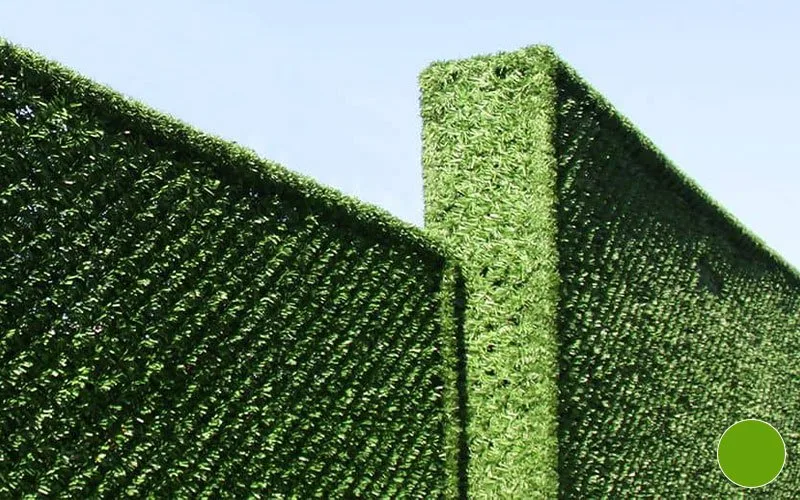
Color and product choice
Green is the most common choice. From a distance, the finished fence reads as a hedge. Anthracite and other colors are also used where the fence should match a building or a modern garden. Density and height affect both privacy and wind load, so choose them together with the posts. You can compare options in our grass fence range, which we produce at our facility in Arnavutköy, Istanbul.
Looking after the fence
Check the ties after the first windy spell and replace any that have snapped. Rinse dust off with a hose when needed, and inspect the posts and panels for damage to the coating once in a while.
To plan an installation or a supply-only order, send us the total fence length and the height you want. Tell us whether there is an existing fence, the ground type (soil or concrete) and the project location or country.



0 comments
Leave a comment
Your comment will be published after review.