


Summarize this article with AI Open a summary of this article in your preferred assistant
Garden paving stone is chosen by four criteria: traffic, slip resistance, climate (frost risk) and landscape fit. Andesite is volcanic, has a non-slip surface and suits garden paths; basalt absorbs little water and stands out in frost-prone areas; concrete pavers are economical but do not last as long as natural stone; granite is very hard and costly.
The best paving stone for a garden is chosen based on traffic, ground conditions, climate and appearance expectations. In general, andesite and basalt offer outdoor durability, while concrete pavers are the economical option.
The right stone determines both the visual value and the service life of the garden.
Why Does Choosing Garden Paving Stone Matter?
Garden surfaces:
Are constantly exposed to rain, frost and sunlight
Carry foot traffic
Shape the overall look of the landscape
The wrong paving stone leads to problems such as:
Slippery surfaces
Cracking over time
Color fading
Constant maintenance
Choosing well at the start avoids these problems.
What Types of Paving Stone Are Used in Gardens?
Andesite Paving Stones

Properties
Natural stone of volcanic origin
Non-slip surface texture
Medium–high strength
Advantages
Attractive color options
Suitable for outdoor use
Blends with the landscape
Where It Is Used
Garden paths
Walking areas
Landscape projects
Basalt Paving Stones
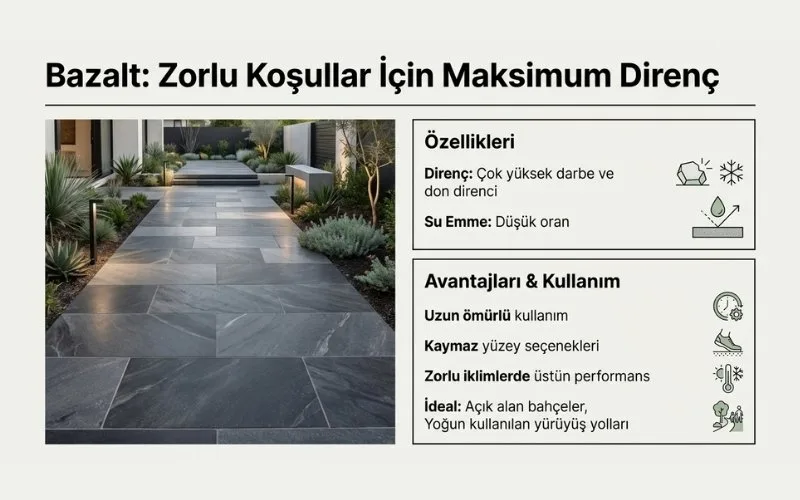
Properties
Very high impact and frost resistance
Low water absorption
Advantages
Long service life
Non-slip surface options
Performs in harsh climates
Where It Is Used
Open gardens
Heavily used walkways
Steps and passageways
Concrete Pavers

Properties
Industrially produced
Standard size and color options
Advantages
Economical
Easy to source
Quick to lay
Disadvantages
Not as long-lasting as natural stone
Colors may fade over time
Granite Pebble Stone

Properties
Very high hardness
Resistant to wear
Advantages
Suitable for heavy use
Stays intact for many years
Disadvantages
High cost
Usually too industrial-looking for gardens
Criteria to Consider When Choosing Garden Paving Stone
There are 4 basic criteria to consider when choosing garden paving stone:
- Traffic
- Slip Resistance
- Climate
- Appearance and Landscape Fit
Let's look at each one in detail.
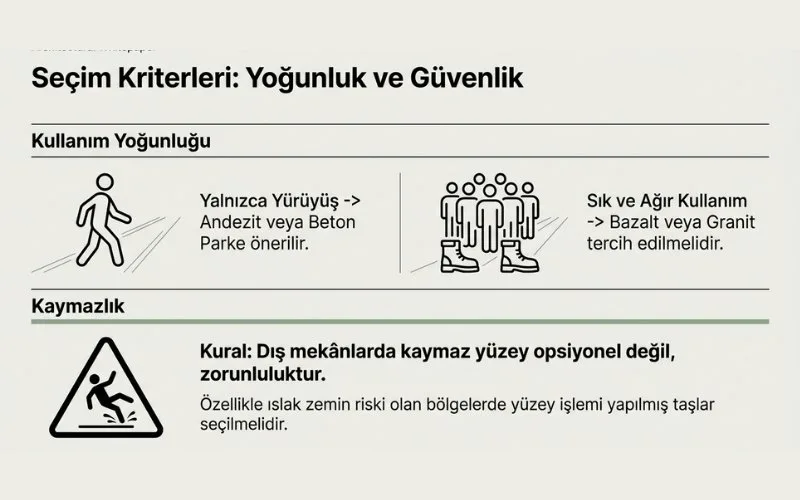
Traffic
Walking only → Andesite / Concrete pavers
Frequent use → Basalt / Granite
Slip Resistance
Outdoors, a non-slip surface should always be chosen.

Climate
Areas with high frost risk → Basalt
Mild climate → Andesite
Appearance and Landscape Fit
Natural stones blend better with plants.
Comparison Table: What Are the Differences Between Garden Paving Stones?

| Stone Type | Strength | Slip Resistance | Appearance | Cost |
|---|---|---|---|---|
| Andesite | Medium-High | High | High | Medium |
| Basalt | Very High | Very High | Medium | Medium-High |
| Concrete Pavers | Medium | Medium | Medium | Low |
| Granite | Very High | Medium | Low-Medium | High |
The most durable paving stone depends on how the natural stone will be used:
Granite: Highest hardness and wear resistance
Basalt: High resistance to impact and the elements
Andesite: Medium-high strength with a good balance of looks
The right choice is made by weighing traffic loads, climate, how the surface is used and long-term maintenance cost together.
Jidar Group for garden stone
We supply basalt, slate and pebble stones for gardens and landscaping and ship them to all 81 provinces of Türkiye. For floors and walls, see slate; for gravel ground, see basalt. You can see the stone types on the natural stone page; send us the stone type, quantity and delivery province through the contact page and we will prepare a quote.
Conclusion: The right stone means a trouble-free garden
Your choice of garden paving stone directly affects all three of these:
Appearance
Safety
Durability
That is why they should be weighed together.
Send us the size of your garden and the stone you want to use through the contact page, and we will choose the right product together.
Frequently asked questions
What is the most durable paving stone for a garden?
Basalt and granite are the most durable options.
Which garden stone is non-slip?
Andesite and surface-treated basalt are non-slip.
Can concrete pavers be used in a garden?
Yes, they suit economical projects, but they do not last as long as natural stone.
How do I decide which stone to choose?
First determine how much the area will be used and the frost risk. Andesite is a common choice for walkways, basalt for heavy use and cold climates, and concrete pavers when budget comes first.
0 comments
Leave a comment
Your comment will be published after review.