
Summarize this article with AI Open a summary of this article in your preferred assistant
Clean artificial grass by clearing leaves and debris, brushing the fibers against the grain so they stand up, and rinsing with water. Rinse spills and pet mess promptly with mild soap. Avoid harsh chemicals and sharp tools.
To clean artificial grass, clear away leaves and loose debris and brush the fibers against their natural direction so they stand upright again. Then rinse the surface with a garden hose. Spills, sticky stains and pet mess should be dealt with straight away using water and a mild soap. Synthetic turf needs no mowing, feeding or aeration. It does need regular attention to stay clean and look even.
How often should you clean it?
There is no fixed schedule. The right frequency depends on how the area is used and what lands on it. Plan for more frequent cleaning if:
- dogs or other pets use the lawn
- children play on it every day, or it is used for training
- trees drop leaves, needles or blossom onto it
- the site is windy or dusty, so fine soil settles between the fibers.
Rain rinses the surface naturally. On a correctly installed lawn, water passes through the perforated backing into a compacted, free-draining sub-base, so puddles should not form. If water stands on the grass after rain, check the drainage underneath. More cleaning on top will not fix it.
Routine cleaning, step by step
- Remove debris. Use a leaf blower, a flexible plastic rake or a stiff broom to lift leaves, twigs and litter before they break down and stain or block drainage.
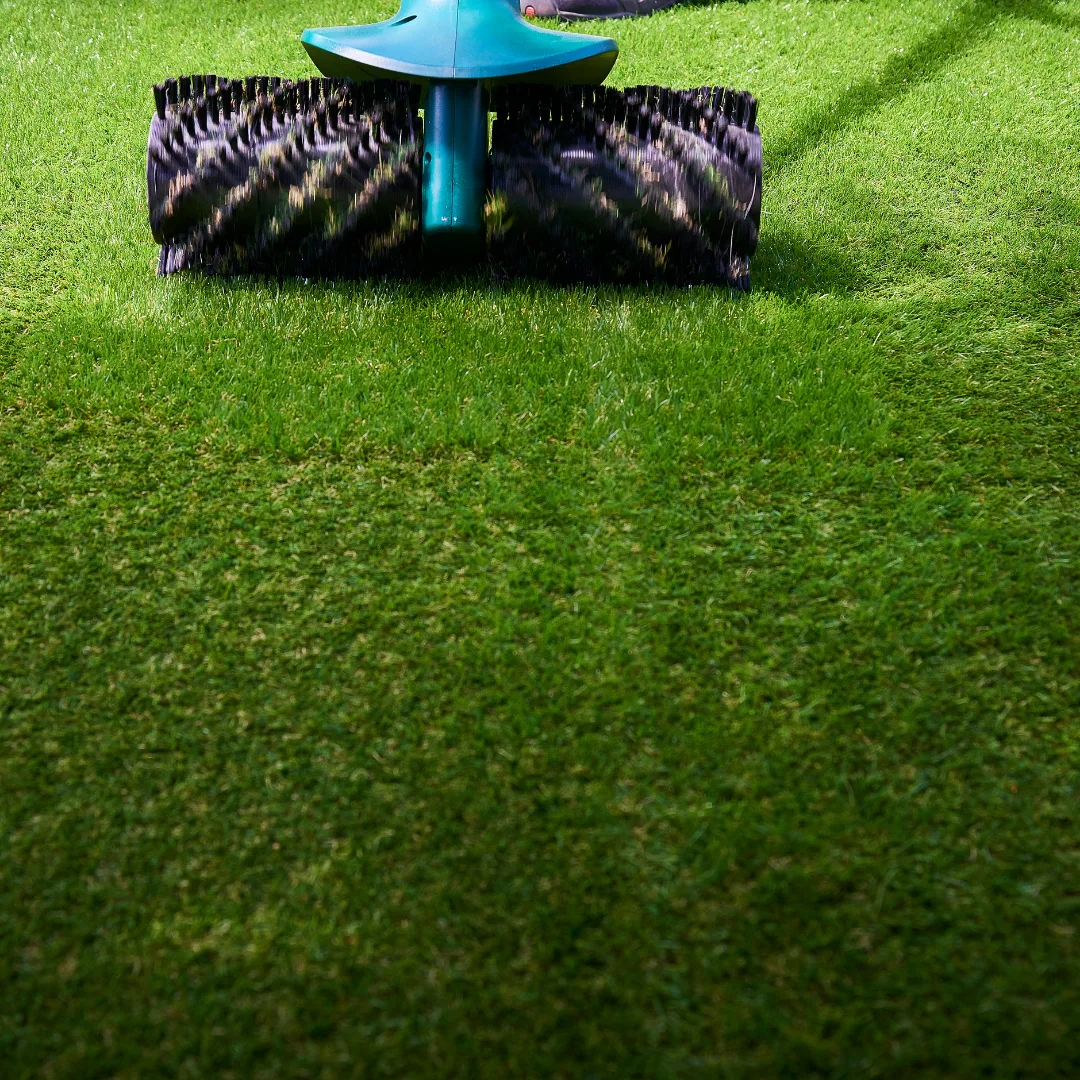
- Brush the pile. Brush against the direction the fibers lean. This lifts flattened areas, especially in walkways and under garden furniture, and keeps the surface looking even. Use synthetic bristles, never a wire brush.
- Rinse. Hose the area down to wash away dust and pollen. Moderate pressure is enough. A pressure washer held too close can disturb the infill or loosen seams.
- Check edges and seams. While you work, look for lifted joints or loose edges and fix them early, before they catch feet or let weeds through.
Removing stains and spills
Most marks come off with lukewarm water and a little mild washing-up liquid. Blot liquids first, apply the soapy water with a sponge or soft brush, then rinse well so no soap residue is left in the fibers. For sticky substances such as chewing gum or tree sap, harden them with ice and lift them off gently rather than scraping.
For pet areas, pick up solid waste promptly and rinse the spot with plenty of water. If odor builds up, use a cleaner made for synthetic turf, usually an enzyme-based one. It breaks down the residue that water alone leaves behind. Rinsing urine spots regularly in warm weather prevents smells from settling into the infill and sub-base.
What can damage synthetic turf?
- Heat: barbecues, fire pits, cigarettes and fireworks can melt fibers. Strong sunlight reflected from windows can do the same in some spots.
- Harsh chemicals: bleach, solvents and strong acids can discolor fibers and weaken the backing.
- Sharp tools: metal rakes, spades and wire brushes can cut fibers or pull them loose.
- Weed killer on the surface: weeds at the edges usually root below the turf or grow in dirt on top. Remove them by hand and keep the surface free of soil build-up.
Infilled and sports turf
Lawns and pitches filled with sand or rubber granules need one extra task. The infill shifts with use and rain. Brush it back into an even layer and top it up where it has thinned, typically at goalmouths and along walking lines. Heavily used sports surfaces usually get mechanical brushing on a regular program. If you are planning a pitch, build that maintenance into the plan from the start (see our page on football pitch construction).
The type of grass also affects cleaning. Dense, shorter piles are easier to keep free of leaves, while long, soft landscape grass hides debris more easily. Our guide on how to pick the right artificial grass product covers these differences. You can see the products we supply in the artificial grass range.
For a new lawn or a replacement for a worn one, send us the approximate area in square meters and the current ground (soil, concrete or old turf). Tell us how it will be used and your country, and we can suggest a suitable grass and installation approach.



0 comments
Leave a comment
Your comment will be published after review.