


Summarize this article with AI Open a summary of this article in your preferred assistant
Clean a grass fence by brushing off dust and debris, rinsing it with a hose, and washing stubborn dirt with mild soap and a soft brush. Rinse off all soap, let it dry fully, and avoid harsh chemicals and abrasive tools.
To clean a grass fence, brush off loose dust and leaves, rinse the fence with a garden hose, and wash any stubborn dirt with warm water, a mild soap and a soft brush. Rinse away all soap afterwards and let the fence dry completely. Harsh chemicals and abrasive tools should be avoided because they can damage the synthetic fibres.
A grass fence stays outdoors all year, so dust, pollen, bird droppings and traffic grime gradually dull its colour. Cleaning brings the original look back and gives you a chance to check the fixings at the same time.
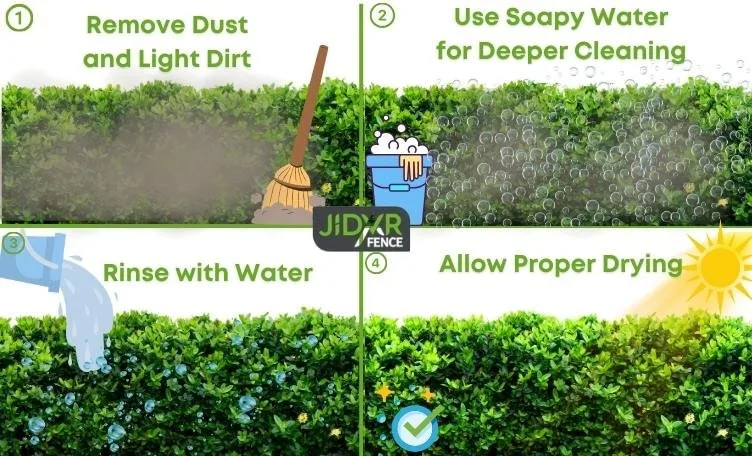
Cleaning steps
- Remove loose dirt. Sweep the surface gently with a soft-bristled hand brush, or use a leaf blower or a vacuum with a brush attachment, working from top to bottom. Clear leaves and litter from the base of the fence.
- Rinse with water. Spray the fence with a garden hose at moderate pressure, again from the top down. Where there is no hose, pouring water from a bucket along the fence works for light dust.
- Wash with mild soap. For dirt that rinsing does not remove, mix a little mild soap or washing-up liquid with warm water and wipe the surface with a soft sponge or cloth.
- Treat stubborn marks. Work on sticky residue or bird droppings with a soft brush and soapy water, using gentle strokes. Do not scrape with metal tools or scouring pads.
- Rinse thoroughly. Wash off all soap so it does not attract new dirt or leave marks.
- Let it dry. Allow the fence to dry fully, ideally on a dry, sunny day, so moisture does not stay trapped behind the grass where mould can develop.
What to avoid
- Bleach, solvents and strong detergents: they can discolour the fibres and make them brittle.
- Pressure washers at close range: a strong jet can loosen fibres or tear ties; if you use one, keep the nozzle at a distance and the pressure low.
- Wire brushes and scrapers: they cut and fray the grass.
How often does a grass fence need cleaning?
It depends on the location. A fence along a quiet garden may only need an occasional rinse. Fences next to busy roads, construction sites or under trees collect dirt faster and benefit from more regular washing. Industrial boundaries face particularly heavy dust; our article on grass fence around factories and industrial sites looks at that setting.
Check the fence while you clean
- Ties and clips: replace any that have broken or loosened, especially along the top edge, where wind loads the fence most.
- Grass fence material: look for torn or frayed sections and repair or replace them before the damage spreads.
- Panels and posts: check the panel fence behind the grass for damaged coating or rust spots and treat them early.
- Base of the fence: keep soil, mulch and plants from piling up against the bottom edge, as constant damp there makes dirt and growth harder to remove.
If part of your fence needs replacing or you are planning a new one, send us the fence length and height, a photo of the current fence and your location or country, and we can advise on a suitable grass fence.

0 comments
Leave a comment
Your comment will be published after review.