

Summarize this article with AI Open a summary of this article in your preferred assistant
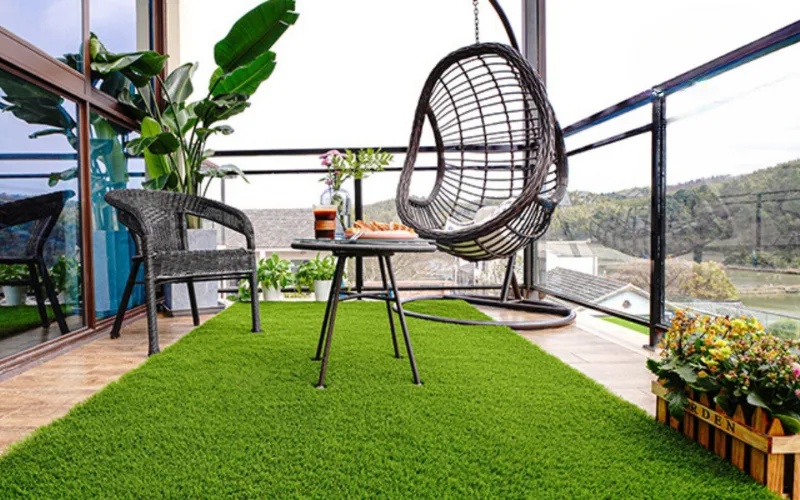
Artificial grass works on terraces and balconies if you protect the waterproofing, keep drains open and choose a short, dense landscape grass. Lay it loose or with outdoor-grade tape or adhesive, never with nails or pegs through a roof membrane.
Yes, you can put artificial grass on a terrace or balcony. The right product is usually a landscape grass with a short to medium, dense pile and a drainage backing. The main risks come from the surface underneath: the turf must not block drains or damage the waterproofing, so on roofs and balconies it is laid loose or fixed with outdoor-grade tape or adhesive, never pegged or nailed.
Which artificial grass suits a terrace?
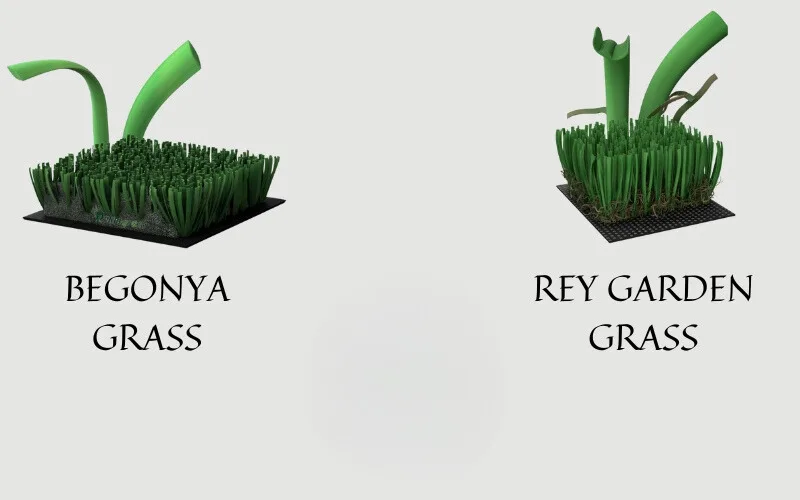
Terraces are used for sitting and walking, not for sport, so landscape grass is the natural choice. Points to compare:
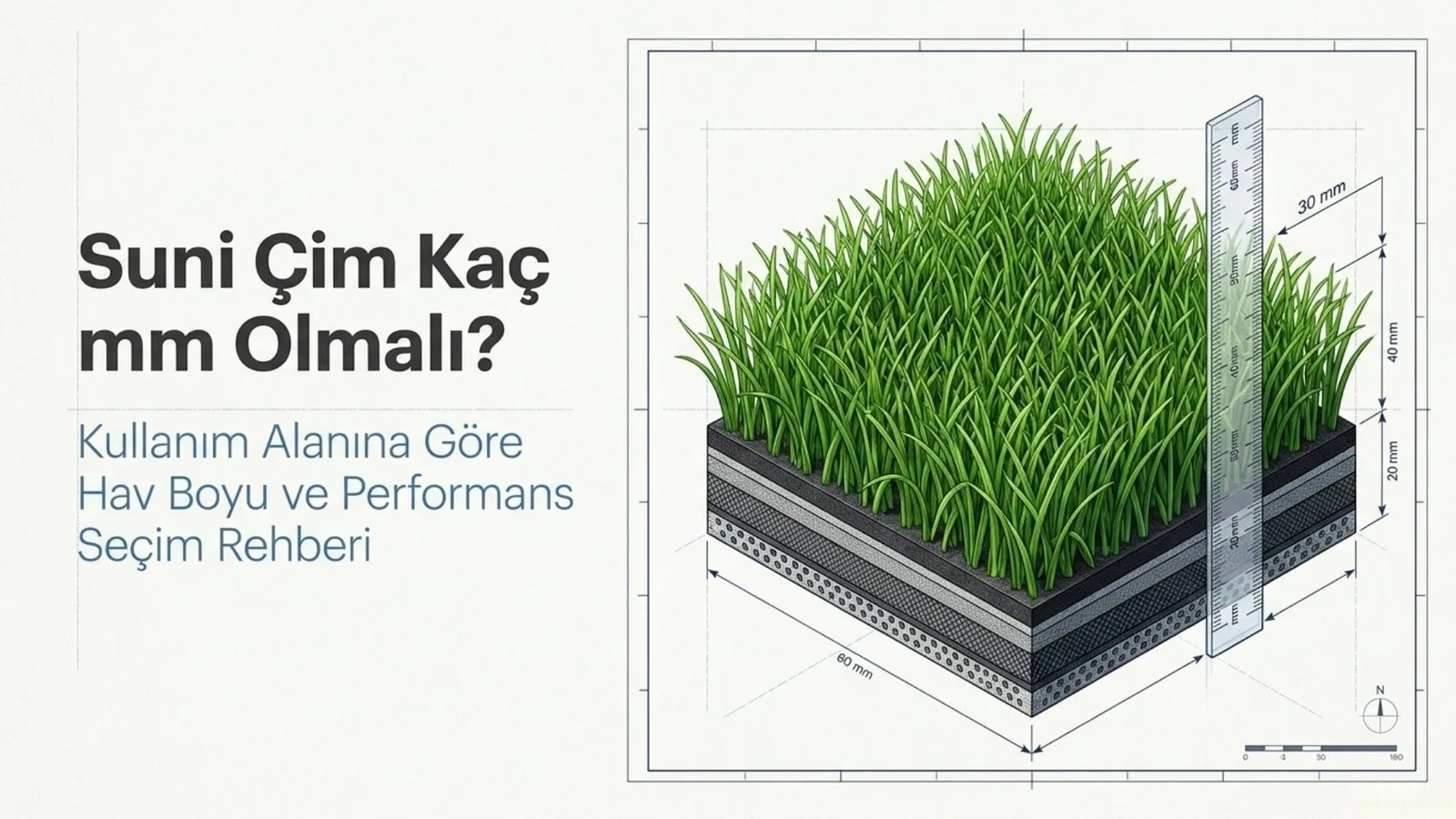
- Pile height: a shorter pile is easier to keep clean of leaves, crumbs and dust, and furniture stands more steadily on it. Longer piles feel softer but flatten under chairs and tables. Our guide on how many mm artificial grass should be goes into the details.
- Density: a dense pile hides the backing and recovers better where people walk.
- Look: grasses with mixed shades of green and a few brown curled fibres look closer to a real lawn.
- Backing: it should let water through and should not be so heavy that a single person cannot handle a balcony-sized roll.
- Infill: most terrace installations use little or no infill, so no sand washes into drains.
You can browse suitable products in our garden and landscape artificial grass category.
Before you lay it: check the surface
- Waterproofing: find out whether the floor is a roof over living space. If it is, the membrane must stay intact.
- Fall and drains: the floor should slope towards a drain or outlet. Mark the drains so you can cut access openings in the grass.
- Condition: repair cracked tiles or screed and remove moss and dirt so the grass lies flat.
- Building rules: in apartments, check the building's rules on floor coverings and fire safety before ordering.
How to lay artificial grass on a terrace
- Clean the surface thoroughly and let it dry.
- Optionally lay drainage tiles or a thin foam underlay. This lets water run freely underneath and makes the surface softer.
- Roll out the grass with all pieces facing the same direction and let it relax in the sun for a while.
- Cut it to fit along walls and around posts, leaving the drains accessible.
- Join pieces edge to edge (never overlapping) using seam tape and outdoor adhesive.
- Secure the perimeter with outdoor-grade double-sided tape, spots of adhesive or edging, depending on the surface. On a roof membrane, choose a method the membrane supplier allows.
- Brush the pile upright.
On balconies that are exposed to strong wind, make sure the perimeter is properly fixed; loose grass can lift.
Looking after terrace grass
- Remove leaves and debris regularly so they do not decompose on the surface.
- Rinse with water occasionally; on a balcony, check that the water reaches the drain.
- Lift the edges once in a while to check for trapped dirt or standing water.
- Keep barbecues and hot items off the grass, because synthetic fibres melt.
Where to get balcony and terrace grass

Jidar Group supplies and installs artificial grass for terraces, balconies and gardens. To get a proposal, send us the floor size in square metres, the surface type (tiles, screed, roof membrane), the number and position of drains, a few photos and your location or country.
0 comments
Leave a comment
Your comment will be published after review.