

Summarize this article with AI Open a summary of this article in your preferred assistant
A steel post is a light galvanized or painted steel profile that installs quickly, can be dismantled and relocated, and is common on panel fences. A concrete post is reinforced concrete, heavy and hard to install but rigid, and suits farmland and heavy chain link runs. On panel fences, post spacing equals the panel width (250 cm for a 250 cm panel), and on wire fences 2.5-3 m is common.
Steel posts are light and flexible, and they go in quickly.
Concrete posts are stronger, last longer and take heavy loads better.
Which one you need depends on the application, site conditions, load requirements and maintenance expectations.
On professional projects, "which one is stronger?" is only part of the question.
The decision rests on engineering calculations and long-term cost analysis.
Why Is Post Selection a Critical Decision?
Posts are the load-bearing backbone of panel fences, wire fences, security barriers, perimeter enclosures and infrastructure systems.
Choosing the wrong post leads to
Bending in the fence system
Deformation over time
Extra maintenance costs
Security weaknesses
and other problems that are hard to reverse.
What Is a Steel Post and How Does It Work?
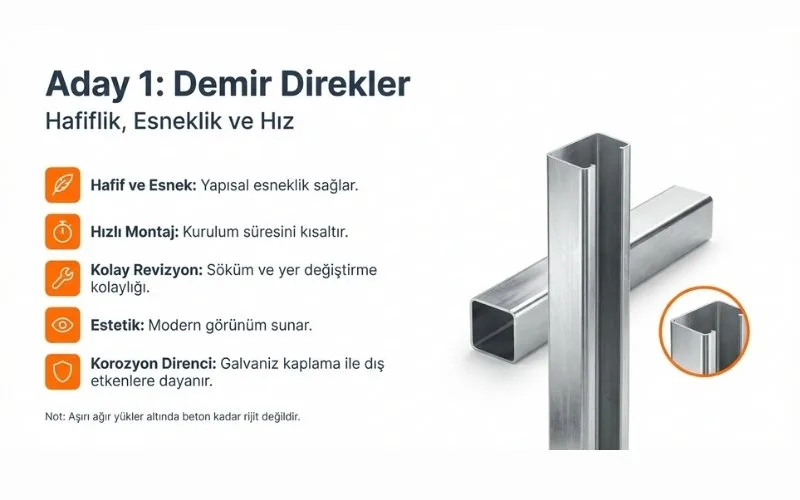
Steel posts are the metal supports of a fence or perimeter system.
They are usually galvanized steel or painted steel profile.
Advantages
Light and flexible structure
Fast installation
Easy removal and modification
Modern, clean appearance
Corrosion resistance with galvanized coating
Disadvantages
Not as rigid as concrete under heavy impact and heavy loads
When Should You Choose a Steel Post?

Panel fence systems
Perimeters of residential complexes, villas and commercial sites
Projects where appearance is a priority
Systems that can be dismantled and relocated
What Is a Concrete Post and How Does It Work?
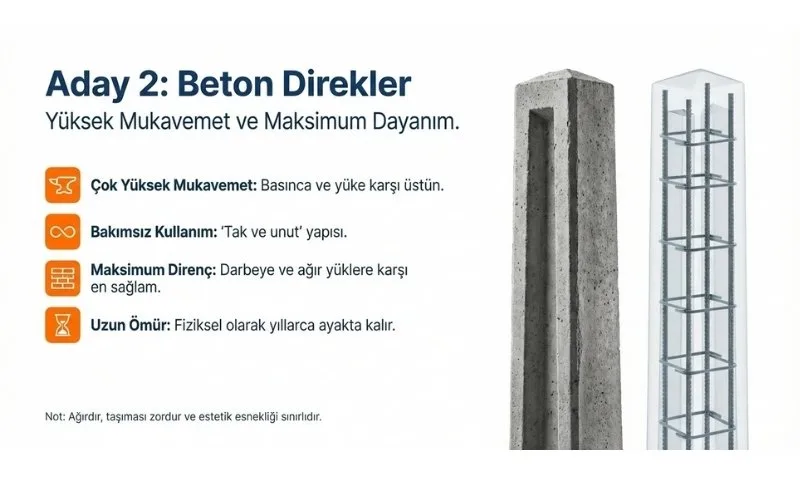
Concrete posts are made from reinforced concrete and have high compressive and load strength.
Advantages
Very high strength
Long service life, low maintenance
Suits heavy chain link and industrial applications
High impact resistance
Disadvantages
Heavy, so transport and installation are difficult
Limited design flexibility
High cost of modification and removal
When Should You Choose a Concrete Post?

Agricultural land
Industrial and factory perimeters
Areas requiring high security
Projects that will be left untouched for a long time
Steel Post or Concrete Post? Comparison Table
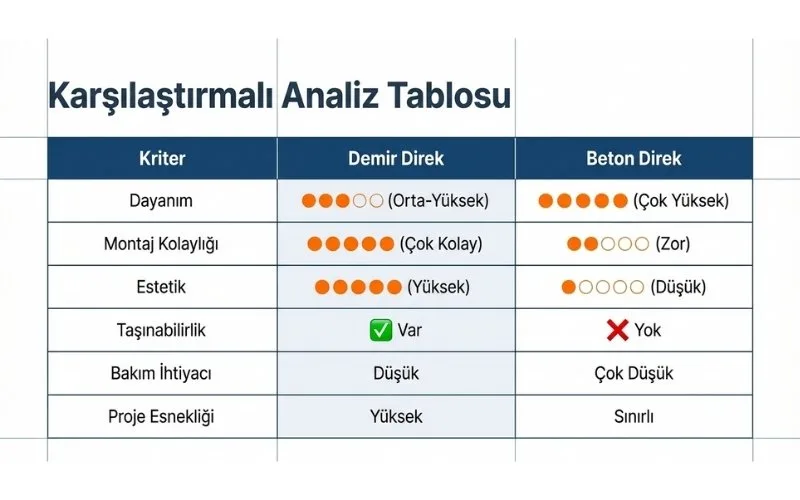
| Criterion | Steel Post | Concrete Post |
|---|---|---|
| Strength | Medium – High | Very High |
| Installation | Very Easy | Difficult |
| Appearance | High | Low |
| Portability | Yes | No |
| Maintenance | Low | Very Low |
| Project Flexibility | High | Limited |
How Is Post Spacing Determined for Different Garden Fence Types?
Post spacing varies with fence type, wind load and ground conditions. The values below are common practice. The exact spacing is set for each project.
How Far Apart Are Panel Fence Posts Installed?
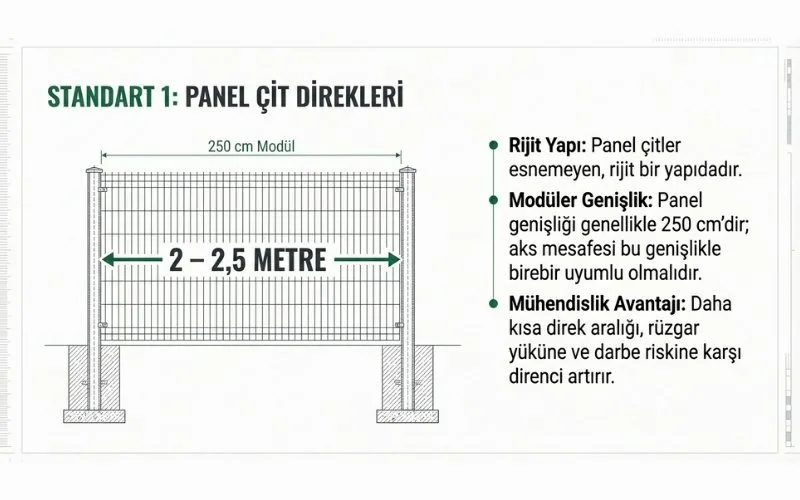
Recommended spacing: equal to the panel width (250 cm for a 250 cm wide panel)
Why?
Panel fences are rigid
Panel width is usually 250 cm
Shorter post spacing increases wind and impact resistance
In panel fence systems, the post center spacing must match the panel width exactly.
How Far Apart Are Wire Fence Posts Installed?
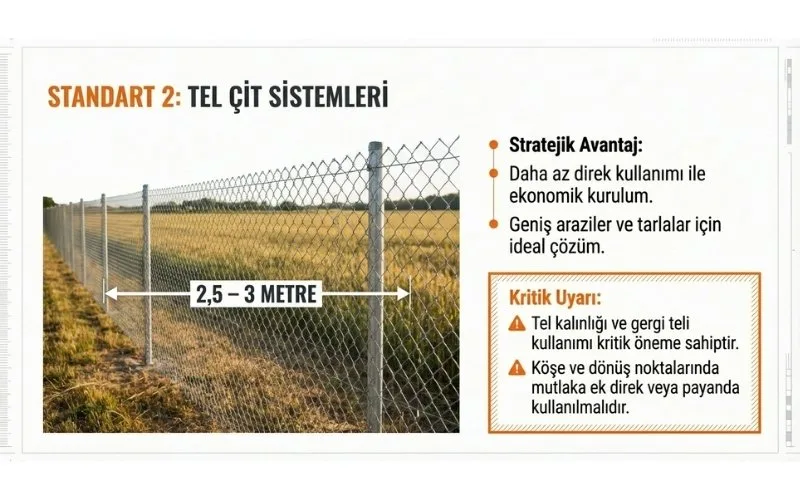
Recommended Spacing:
2.5-3 meters
Advantages
Fewer posts
More economical installation
Suits large areas
Points to Watch
Wire thickness
Use of tension wire
Extra posts at corners and turning points
What Should the Spacing Be for Concrete Posts?
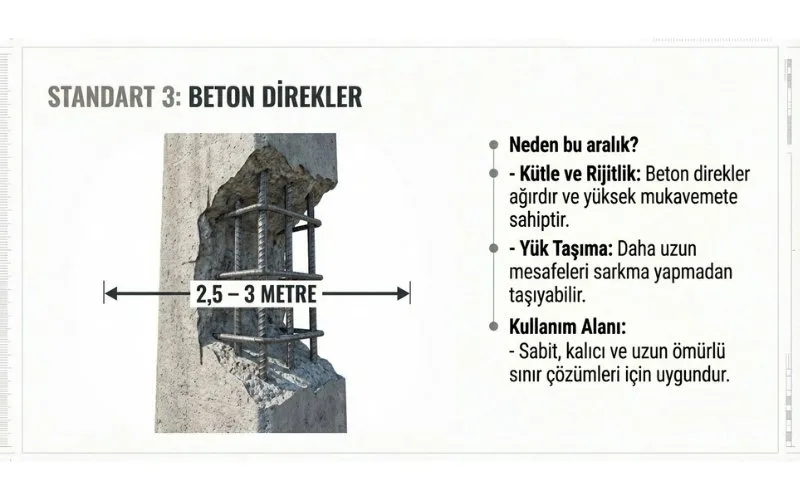
Recommended Spacing:
2.5-3 meters
Why?
Concrete posts are heavier and more rigid
They can carry a longer span
Suit fixed, permanent installations
Jidar Group for panel fences and posts
We manufacture grass fence at our facility in Arnavutköy, Istanbul, and supply panel fences, posts and gates. We install grass fences and panel fences across Türkiye. We work out the post type and spacing together with you in the quote, based on panel size, ground and the length of the run. See the panel fence and grass fence pages for products.
Choosing between a steel post and a concrete post
The answer to "steel post or concrete post?"
depends on the conditions of the project.
For a quote, send us the length of the run, the panel height and the ground type through the contact page.
Frequently asked questions
Which lasts longer, a steel post or a concrete post?
Are concrete posts attractive?
Which post is used for panel fences?




0 comments
Leave a comment
Your comment will be published after review.