

Summarize this article with AI Open a summary of this article in your preferred assistant
Galvanized wire fence is economical and suits large farmland, and barbed wire is a low-cost deterrent add-on that carries an injury risk. Panel fence looks neat but costs more, and wire fence on concrete posts is very rigid but hard to install. Choose by weighing land size, animal pressure, budget and maintenance expectations together.
Fencing farmland usually means one of these: wire fences, panel fences, barbed wire, concrete post systems or modular fence solutions.
The right one depends on the size of the land, the pressure from animals, security needs and budget.
Weigh long-term durability and maintenance cost together before you decide.
Why Should Farmland Be Fenced?
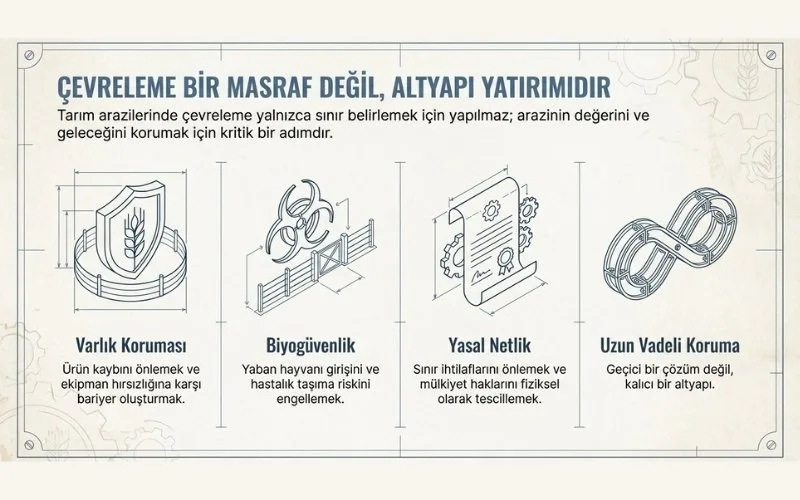
On agricultural land, a fence is built to:
Keep animals out
Prevent crop loss
Secure the land
Make legal boundaries clear
Protect a long-term investment
In short, a fence protects both the crop and the land.
What Are the Methods for Fencing Farmland?
Fencing Farmland with Wire Fence
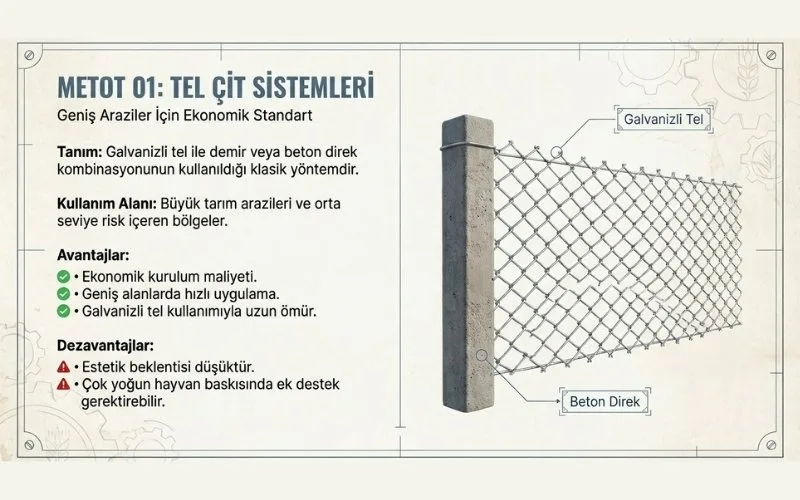
The classic method, using galvanized wire combined with steel or concrete posts.
Advantages
Economical
Suits large areas
Lasts a long time (with galvanized wire)
Disadvantages
Low visual appeal
May need reinforcement under heavy animal pressure
Where It Is Used
Large agricultural plots
Areas at risk of animal intrusion
Fencing Farmland with Barbed Wire
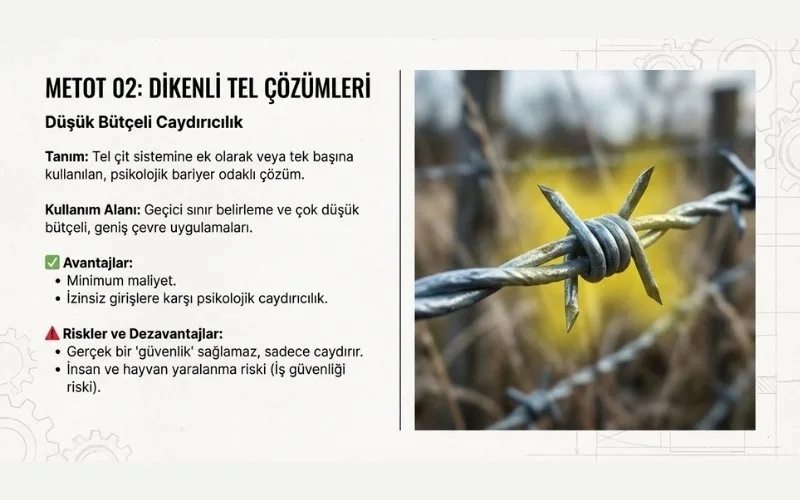
A deterrent security measure used in addition to a wire fence system.
Advantages
Low cost
Deters animals and unauthorized entry
Disadvantages
Provides deterrence more than security
Risk of injury to people and animals
When Should It Be Chosen?
Temporary solutions
Low-budget applications
Fencing Farmland with Panel Fence
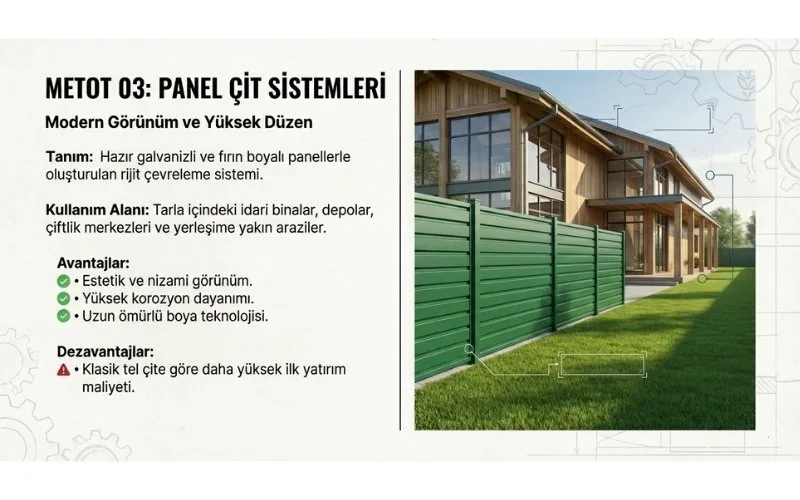
A modern perimeter system built with ready-made galvanized and painted panels.
Advantages
Neat, orderly appearance
High strength
Long service life
Disadvantages
Higher cost than wire fence
Where It Is Used
Farmland combined with storage or farm buildings
Agricultural land close to settlements
Concrete Post Systems for Farmland
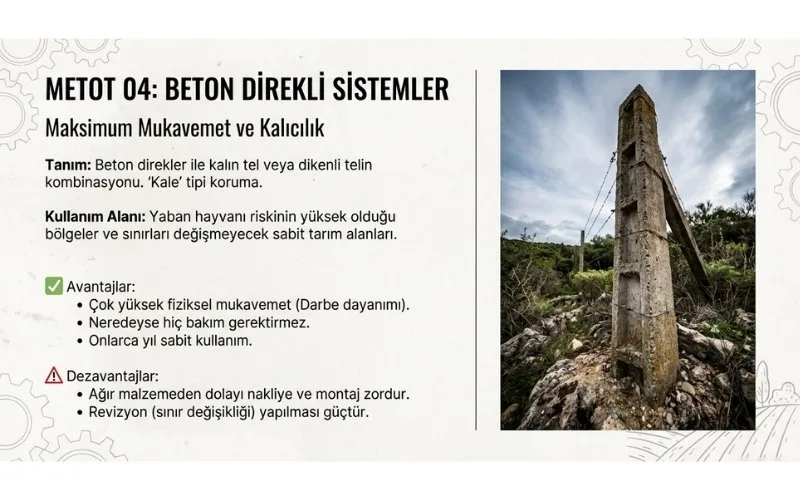
A combination of concrete posts with wire or barbed wire.
Advantages
Very high strength
Low maintenance
Stays fixed in use for many years
Disadvantages
Installation and modification are difficult
High transport cost
When Should It Be Chosen?
Large, permanent agricultural areas
Areas with a high risk from wild animals
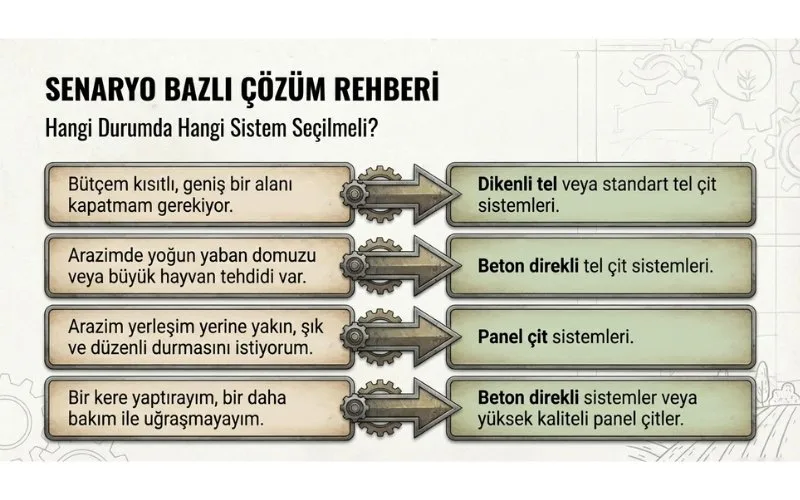
Comparison of Farmland Fencing Methods
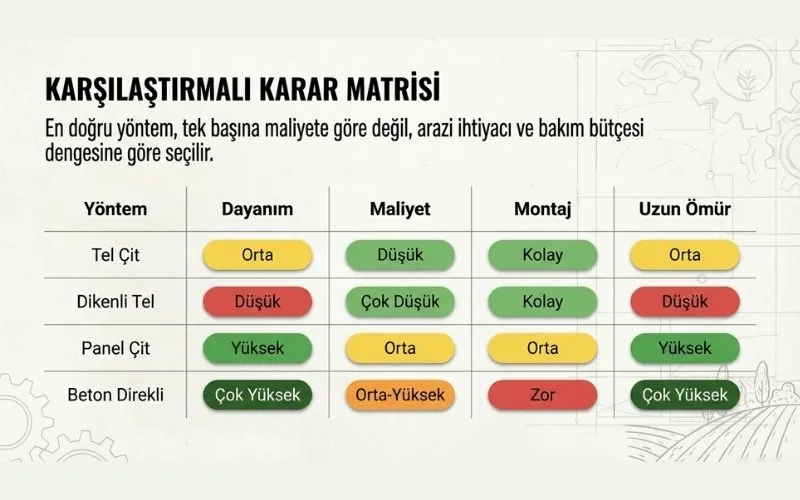
| Method | Strength | Cost | Installation | Service Life |
|---|---|---|---|---|
| Wire Fence | Medium | Low | Easy | Medium |
| Barbed Wire | Low | Very Low | Easy | Low |
| Panel Fence | High | Medium | Medium | High |
| Concrete Post System | Very High | Medium-High | Difficult | Very High |
Which Farmland Fencing Method Suits You? (Decision Table)

| Need | Recommended System |
|---|---|
| Security | Panel fence |
| Economical solution | Wire fence |
| Long service life | Concrete post system |
| Appearance + prestige | Wall + fence |
| Natural look | Wood / planting |
What Is the Most Sensible Way to Enclose the Front of a Garden?
For the front of a garden, panel fence or wire fence systems are the most sensible choice. Which one fits depends on the size of the area, security needs and appearance expectations.
Galvanized and PVC-coated systems offer a long service life and low maintenance.
Jidar Group for farm and garden fencing
We manufacture grass fence at our facility in Arnavutköy, Istanbul, and supply panel fences, posts and gates. We install grass fences and panel fences across Türkiye. See the panel fence and grass fence pages for products.
What a poorly chosen farmland fence costs
A poorly chosen perimeter system leads to:
Crop loss
Extra cost
Constant maintenance
Choosing the right system at the start avoids these costs.
For a quote, send us the perimeter length and location of the land and the fence type you want through the contact page.
Frequently asked questions
What is the cheapest way to fence farmland?
Which system works best against wild animals?
Is panel fence suitable for farmland?
Does Jidar Group install farm fencing?



0 comments
Leave a comment
Your comment will be published after review.