

Summarize this article with AI Open a summary of this article in your preferred assistant
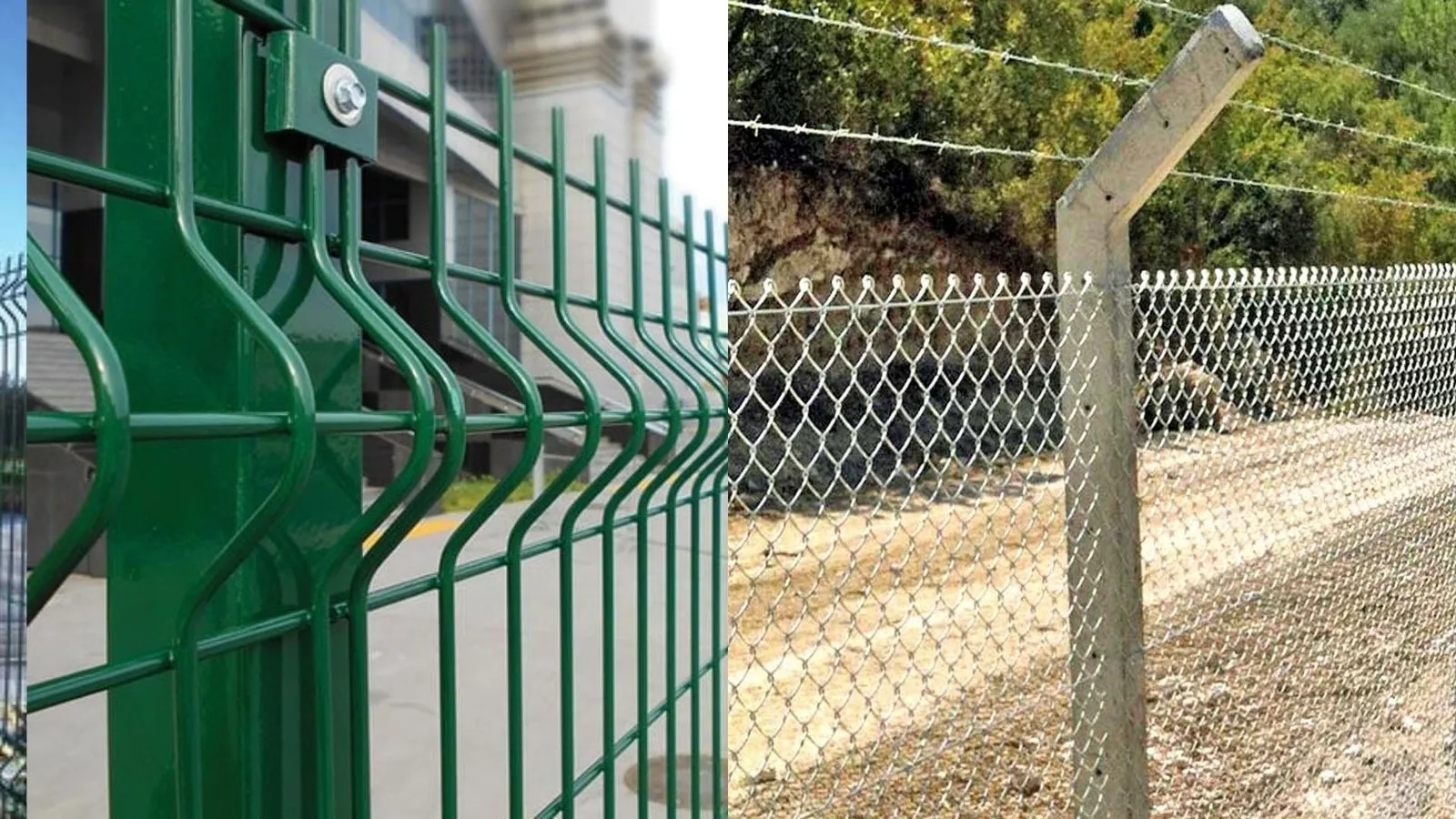
A welded panel fence is generally more durable than a woven wire mesh fence: rigid panels and fixed posts resist impact and sagging, and coated panels resist corrosion better. Wire mesh costs less to start with and suits long, low-security boundaries.
In most outdoor settings a welded panel fence lasts longer than a woven wire mesh fence. Panels are rigid and fixed to posts, so they resist impact and do not sag, and they are usually both galvanized and PVC- or powder-coated. Wire mesh is cheaper to buy and install, and it is a sensible choice for long, low-security boundaries such as fields, but it needs more attention over the years.
How the two fences are built
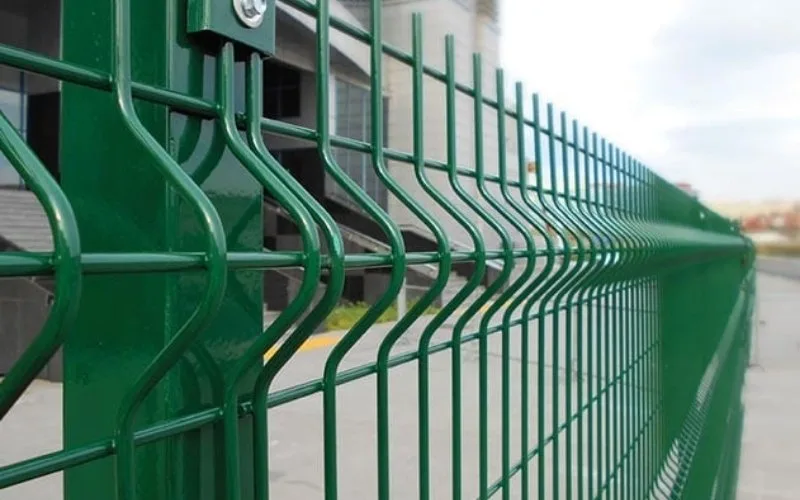
A panel fence is made of straight steel wires welded together at each crossing into a flat, rigid panel. The panels are bolted to posts with clamps. A wire mesh fence (often called chain-link or woven mesh) is made by weaving wire into a diamond pattern; it comes in rolls and is stretched between posts with tension wires.
That difference explains most of the comparison below. A welded grid keeps its shape when pushed or hit. A woven mesh is flexible: it absorbs impact by deforming, and once stretched or dented it rarely returns to its original shape.
Side-by-side comparison
| Factor | Panel fence | Wire mesh fence |
|---|---|---|
| Structure | Rigid welded panels | Flexible woven mesh from a roll |
| Resistance to impact and pushing | High; panels keep their shape | Lower; dents and stretches |
| Corrosion protection | Usually galvanized plus PVC or powder coating | Often galvanized only; PVC-coated versions exist |
| Installation | Panels clamped to fixed posts; straight, even line | Mesh tensioned between posts; follows uneven ground easily |
| Upkeep | Occasional washing; check clamps and post fixings | Re-tensioning, straightening and repairs over time |
| Appearance | Orderly, modern | Functional, agricultural |
| Typical uses | Homes, housing complexes, schools, factories, sports areas | Fields, pastures, orchards, temporary enclosures |
Corrosion: the coating decides the lifespan
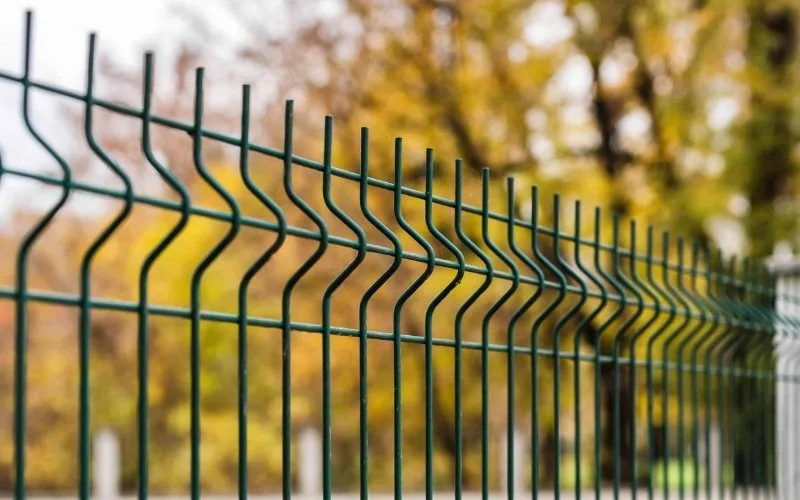
Both fence types start as steel wire, and bare steel rusts outdoors. Galvanizing (a zinc layer) protects the steel; a PVC or powder coating on top adds a second barrier against moisture and gives the fence its colour. A fence with both layers will generally outlast one with galvanizing only, especially near the sea, in wet climates or where fertiliser and irrigation water reach the fence. When comparing offers, ask what coating each one has rather than only which fence type it is.
Installation and stability
Panel fences rely on posts fixed firmly into concrete or the ground, and the panels add stiffness to the whole line. Wire mesh relies on tension: if a post leans or a tension wire loosens, the mesh starts to sag. For either type, post choice and foundation matter as much as the fence itself; our article on steel or concrete posts covers that decision.
Cost over time
Wire mesh costs less at the start. A coated panel fence costs more but usually needs fewer repairs, so over a long period the difference narrows. If the fence is temporary or protects open land where appearance does not matter, wire mesh often makes more sense. If it surrounds a home, a business or a facility for many years, a panel fence is usually the better value.
Which one should you choose?
- Choose a panel fence for security, a tidy appearance and long-term use with little maintenance. The mesh opening also affects how hard it is to climb; see how mesh size affects panel fence security.
- Choose wire mesh for long agricultural boundaries, uneven terrain or temporary fencing where low initial cost matters most.
- Need privacy as well? Both can carry a grass fence screen, and both can be topped with razor wire where higher security is required.
Common questions
Does a panel fence need maintenance?
Very little. Wash off dirt occasionally and check that clamps and post fixings are tight, especially after storms.
Can I add privacy to a wire mesh fence?
Yes. Grass fence or another screen can be fixed to it, but a screen increases wind load, so the posts and tension wires must be strong enough.
Jidar Group supplies and installs panel fence and razor wire, and produces grass fence in Istanbul. To compare options for your site, send us the fence length and height, the ground type, whether you need privacy screening, and your location or country.



0 comments
Leave a comment
Your comment will be published after review.