

Summarize this article with AI Open a summary of this article in your preferred assistant
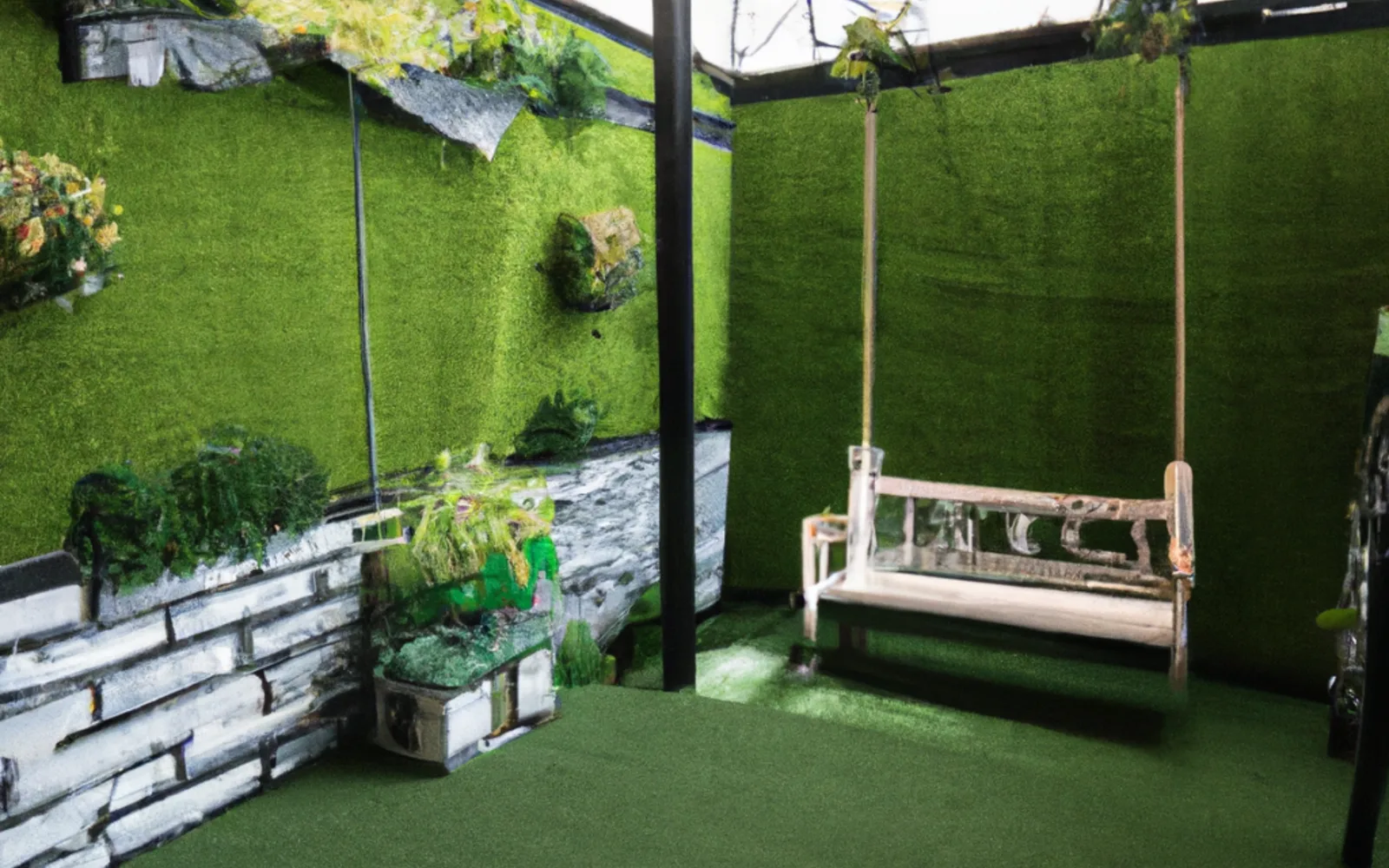
A grass wall is artificial grass fence material fixed to a wall, frame or mesh to create a green surface. Outdoors it screens terraces, garden walls and boundaries; indoors it is used as an accent wall in homes, shops and offices.
A grass wall is artificial grass fence material fixed to a wall, a frame or a wire mesh so that the surface looks like a continuous green hedge. Outdoors it is used to screen terraces, cover plain garden walls and hide unsightly boundaries; indoors it works as an accent wall in homes, shops, cafés and offices. The same material can serve both settings, but fixing method, fire safety and cleaning differ between them.
What is a grass wall made of?
Most grass walls use the same material as a grass fence: synthetic grass blades attached to a flexible backing or mesh, supplied in rolls of a set height. Products made specifically as a green wall fence are designed to be mounted vertically and cover large areas evenly. Leaf-type screens, which imitate a hedge of leaves rather than grass, give a different texture for the same purpose.
Outdoor uses
- Garden walls: a bare concrete or block wall becomes a green backdrop without the watering and trimming a living hedge needs.
- Restaurant and café terraces: grass walls screen tables from the street and soften a hard-surfaced space.
- Balconies and roof terraces: fixed to railings or a frame, they add privacy where planting is difficult.
- Event and venue entrances: a green wall makes a simple backdrop for signage or photographs.
- Site and roadside boundaries: fixed to fencing, grass panels hide work areas or storage from view.
For more ways to dress up an outdoor boundary, see our creative garden fence decoration ideas.
Indoor uses
- Living rooms and bedrooms: one covered wall can act as a green feature behind a sofa or bed; pictures, lighting or artificial flowers can be added on top.
- Shops: a grass wall behind a display or in a corner gives customers a recognisable spot for photos.
- Offices and meeting rooms: a green wall brings colour to plain interiors, reception areas and break rooms.
Indoor and outdoor: what changes?
| Point to check | Outdoors | Indoors |
|---|---|---|
| Sunlight | Choose UV-stabilised material to limit fading | Usually not a concern, except next to large windows |
| Wind and water | Fix at many points; leave space for water to drain behind | Lighter fixing is usually enough |
| Fire safety | Keep away from barbecues and heaters | Public and commercial interiors may have fire-safety rules for wall finishes; check them and ask for product documentation before installing |
| Cleaning | Rinse with a hose | Vacuum with a brush attachment or wipe with a damp cloth |
How grass wall panels are mounted
- Measure the wall and plan the number of rolls or panels so joints fall in sensible places, such as corners or behind fittings.
- Prepare a fixing base. On masonry, timber battens or a light metal frame give something to fix into and leave a small air gap behind the grass. On a fence or railing, the mesh itself is the base.
- Fix from the top. Attach the top edge first, keeping it level, then work downwards, using screws with washers or staples on battens, and ties or clips on mesh.
- Join neatly. Butt the edges of neighbouring pieces closely and fix both sides so the joint is hard to see.
- Finish the edges. Trim with a sharp knife and cover cut edges with a frame, trim strip or planter where needed.
We produce grass fence at our facility in Arnavutköy, Istanbul. If you are planning a grass wall, send us the wall width and height, whether it is indoors or outdoors, what the wall is made of and your country, and we can suggest a suitable product.


0 comments
Leave a comment
Your comment will be published after review.