

Summarize this article with AI Open a summary of this article in your preferred assistant
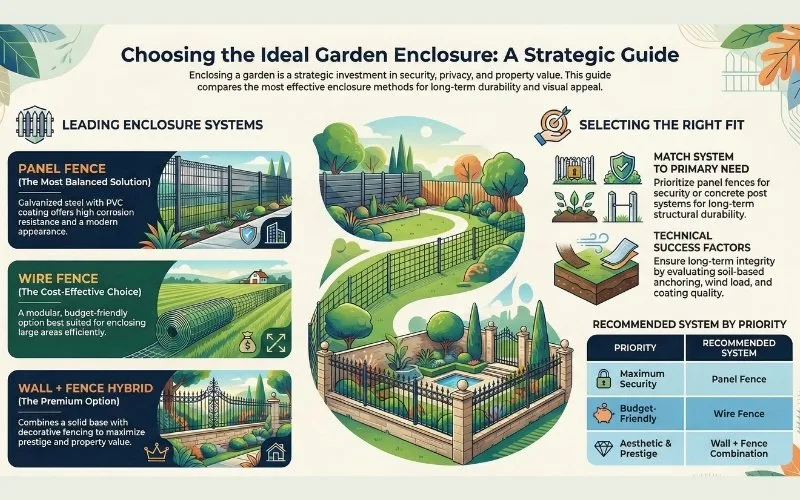
Most front gardens are enclosed with a coated panel fence on steel posts, a wire fence for long or low-priority boundaries, or a low wall with a fence on top. The right choice depends on security, privacy, the ground and local rules.
To enclose the front of a garden, most homeowners choose one of four options: a coated steel panel fence on fixed posts, a wire fence for long or less visible boundaries, a low garden wall with a fence on top, or a natural option such as a hedge or wooden fence. Choose by what the enclosure has to do first (keep people or animals out, give privacy, or simply mark the boundary), then check the ground and local rules.
What a front garden enclosure is for
Front gardens face the street, so the enclosure is both a security element and the first thing visitors see. Typical reasons to enclose one are:
- keeping out uninvited people and stray animals;
- keeping children and pets inside;
- marking the property line clearly;
- reducing views from the street into the garden;
- giving the front of the house a tidier look.
If two or more of these matter, a combined solution (for example a fence with a privacy screen) usually works better than one material doing everything.
The main options
Panel fence
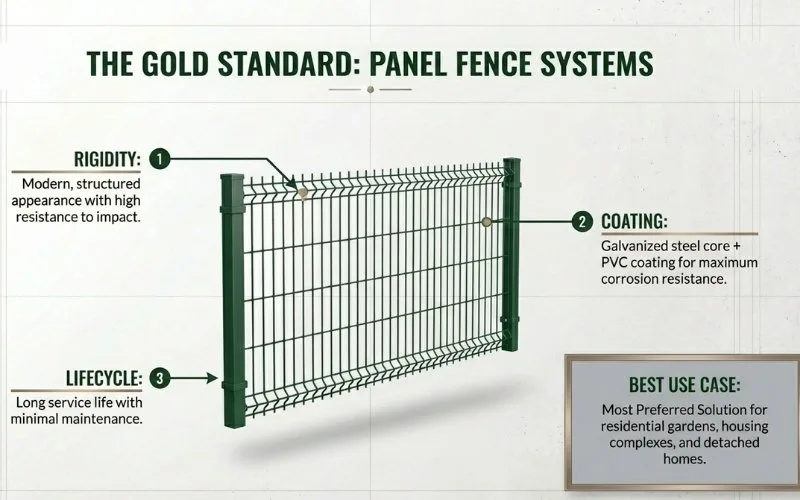
A panel fence consists of rigid welded steel wire panels fixed to posts. The steel is galvanized against corrosion and normally coated with PVC or powder paint, which adds a second protective layer and the colour. It looks orderly, does not sag, and is quick to install in sections. A matching panel fence gate keeps the entrance in the same style. On its own it is see-through.
Wire fence
Wire fence is stretched between posts rather than built from rigid panels. It is practical for long boundaries, sloping land and fields, and the post spacing can be adjusted to the terrain. It is less rigid than a panel fence and may need re-tensioning over time. For privacy it needs a screen added.
Concrete posts with wire
Wire fence on concrete posts is common on agricultural land and plot boundaries where stability in soil matters more than appearance. If you are unsure which post type suits your site, see steel post or concrete post.
Low wall with fence on top
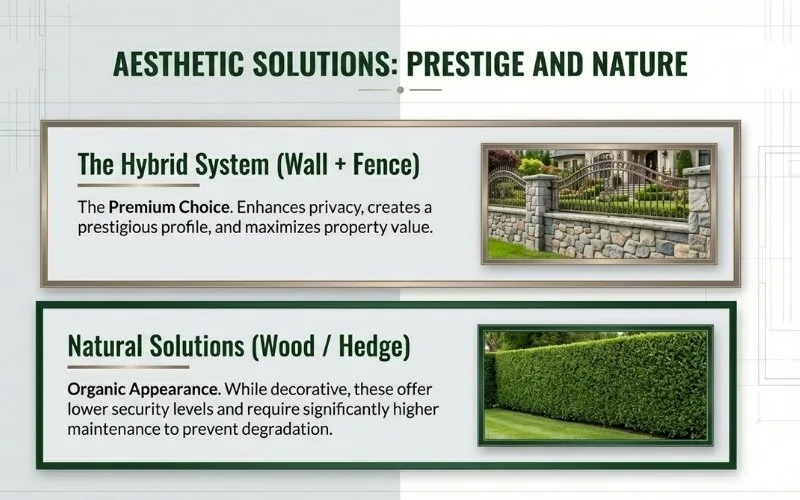
A low masonry or stone wall at the base with a panel or decorative fence above is the most solid-looking option. The wall keeps small animals out and hides the lower part of the garden; the fence adds height without making the frontage feel closed. It needs a foundation, so it takes longer to build and is more likely to need a permit.
Hedges and wooden fences
Hedges and wood give a natural look but offer less security, and they need regular trimming or treatment. If you want a green look with less upkeep, artificial grass fence fitted onto a panel or wire fence is another route; see grass fence systems on panel fences.
Which option fits which need
| Main need | Usually suitable |
|---|---|
| Security and a rigid barrier | Panel fence with a lockable gate |
| Long boundary or sloping plot | Wire fence on steel or concrete posts |
| Privacy from the street | Panel or wire fence with a grass fence screen, or a wall-and-fence combination |
| Solid, architectural frontage | Low wall with fence on top |
| Natural look, low security need | Hedge or wooden fence |
Checks before installation
- Local rules. Many municipalities limit front fence height or require approval for walls. Check first.
- Exact boundary. Install on your own side of the property line, especially at shared corners.
- Ground. Soil, rock and existing paving need different post fixing; soft or filled ground needs deeper or concreted posts.
- Slope and wind. Sloping ground needs stepped panels or adjustable wire; a solid privacy screen catches more wind, so post spacing and fixing must allow for it.
- Coating. Galvanized steel with a PVC or powder coating needs far less upkeep than bare or painted steel.
- Gates and access. Decide the width for pedestrians, cars and deliveries before the posts go in.
Common questions
Do I need permission to enclose the front of my garden?
It depends on the municipality. Fences under a certain height are often allowed without a permit, while walls and taller structures may need approval. Ask the local authority before ordering.
Which needs the least maintenance?
A galvanized and PVC- or powder-coated panel fence usually needs little more than occasional washing. Wood and hedges need the most ongoing care.
Jidar Group supplies and installs panel fence and produces grass fence for privacy screening. To get a proposal, contact us with the length of the frontage, the height you want, the ground type, the number and width of gates, and your location or country.


0 comments
Leave a comment
Your comment will be published after review.