Perforated Natural Stone

Be the first to rate

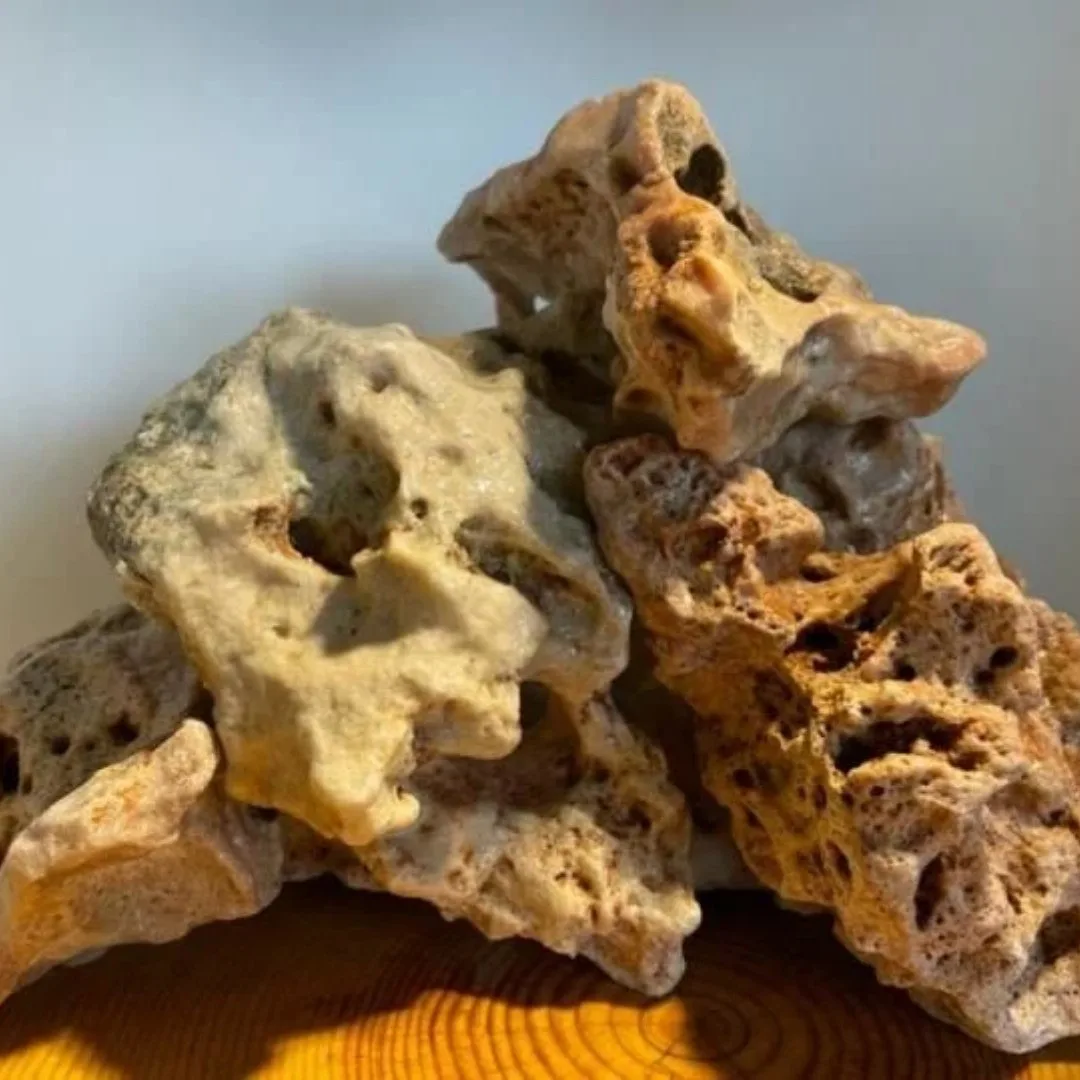
Perforated Natural Stone is a landscape stone supplied as pieces with a holed surface. It comes in two sizes, 10-20 cm and 20-40 cm, and is used along ornamental pond edges, around waterfalls and fountains and in rock gardens.

Product description

Perforated stone for around water features

Perforated Natural Stone is a landscape stone supplied as pieces with a holed surface. Its trade name, Perforated, means "with holes." The holed surface gives the stone a carved look that differs from plain rock. It is used along ornamental pond edges, around waterfalls and fountains, meaning landscape designs in contact with water, and in rock gardens.

Placing it at the water's edge

Set stones that will line the edge of an ornamental pond on a solid spot over the pond's edge liner or membrane. If the stone's underside is left unsupported, the edge can collapse. Algae can form on the surface of stones near water over time; this gives a natural look, and if you do not want it, clean it off with a brush. Rinse leaves and sediment that collect in the surface holes with water from time to time.

Pieces sized 10-20 cm are lined up in a row along a pond edge. Pieces sized 20-40 cm work alone as a focal point beside a waterfall or fountain.

Quote for Perforated Natural Stone

Send us the size, the approximate number of pieces or quantity, and the province for delivery. If you are looking for porous volcanic stone for a rock garden, see the Lava Stone (Lava Natural Stone) page. You can reach us through our contact page.

What is Perforated Natural Stone used for?

  • Perforated surface

    The holes give the stone a carved look; light and shadow shift in the holes.

  • For around water features

    Used in landscape designs around ornamental ponds, waterfalls and fountains.

  • Two sizes

    Small pieces for edge rows, large pieces as a standalone focal stone.

How does Perforated Natural Stone work?

The pieces are placed by hand. The small size forms a row along a pond edge, and the large size stands alone beside a water feature. Each piece must sit on solid ground.

  • Size 10-20 cm Pond edge row One of the two sizes listed in the product data sheet.
  • Size 20-40 cm Focal point beside a waterfall or fountain One of the two sizes listed in the product data sheet.

Using and installing Perforated Natural Stone

  1. Mark the spots

    Mark where the stones will go around the water feature.

  2. Set it on solid ground

    Leave no gap under the stone; at a pond edge, check that nothing sharp could puncture the liner or membrane.

  3. Orient the holes

    Turn the holed face toward the direction it will be viewed from.

Care: Rinse leaves and sediment out of the holes with water; if you do not want algae, clean it off with a brush.

Where is Perforated Natural Stone used?

  • Ornamental pond edge
  • Around waterfalls
  • Around fountains
  • Rock garden

Product details

Technical Specifications

Product Type
Landscape stone, supplied as pieces
Surface
Perforated
Size
10-20 cm and 20-40 cm
Applications
Ornamental pond edges, around waterfalls and fountains, rock gardens
Rock Type
The trade name describes the surface; ask about the rock type before ordering
Sales Unit
Quantity and packaging are stated in the quote
Shipping
Shipping to all 81 provinces of Türkiye

Frequently Asked Questions

What does Perforated mean?

It is English for "with holes." The stone's trade name comes from the holes in its surface.

What type of rock is it?

The trade name describes the stone's surface, not its rock type. If you need to know the rock type, ask us before you order.

Can it be placed inside an ornamental pond?

The product is sold for landscape designs in contact with water. If you will put it in a pond with fish, we recommend soaking the stone in a separate container first and measuring the water parameters.

Which size should I choose?

Choose 10-20 cm to line up in a row along a pond edge, and 20-40 cm to stand alone beside a waterfall or fountain.

What should I do if the holes fill with dirt?

Rinse leaves and sediment out of the holes with a hose; use a soft brush for stubborn dirt.

Reviews

There are no reviews for this product yet — be the first to write one.

Write a Review
Your rating:

Your review will be published after moderation.

Call now WhatsApp